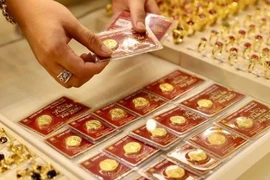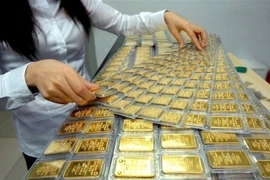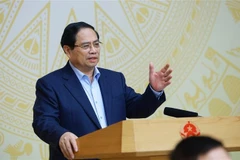
Hanoi (VNA) – Prime Minister Pham Minh Chinh’s directive to put a national gold exchange into operation as early as February is not merely a response to recent volatility in gold prices.
More fundamentally, it reflects a strong policy resolve to tackle a long-standing challenge: improving transparency in the gold market, curbing speculation and manipulation, and gradually mobilising gold resources held by the public for the economy.
In an official dispatch issued on January 24, the PM instructed the State Bank of Vietnam (SBV) to urgently complete research and assessment dossiers and consider proposals for establishing a national gold exchange or trading platform. The National Assembly has also repeatedly urged the Government to devise timely solutions and an appropriate roadmap to stabilise the gold market.
New approach needed
After more than a decade of managing the gold market primarily through administrative measures, Vietnam’s gold policy is entering a critical phase of adjustment. The Government's Decree No. 232/2025/ND-CP, which amends Decree No. 24/2012/ND-CP on gold trading management, has ended the State monopoly on gold bar production, paving the way for a more institutional and market-based approach.
Against this backdrop, the establishment of a national gold exchange is expected to help standardise pricing and enhance market transparency.
Dr Can Van Luc, Chief Economist of the Joint Stock Commercial Bank for Investment and Development of Vietnam (BIDV) and a member of the National Financial and Monetary Policy Advisory Council, said the key issue lies not simply in whether a gold exchange exists, but in clearly defining which types of gold should be subject to strict regulation.
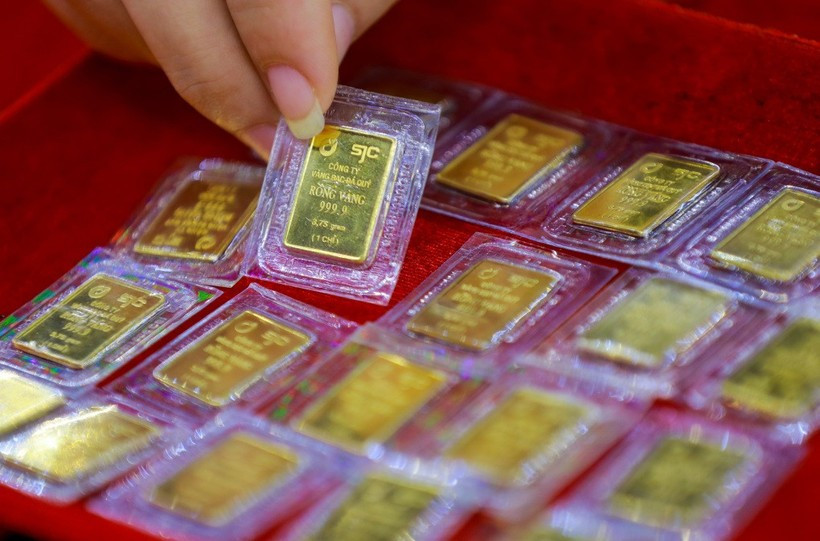
Gold bars and bullion serve investment and reserve purposes and are closely linked to financial stability, so they must be tightly managed. Jewellery gold, which is primarily for consumption, requires a more appropriate mechanism, he said. To reduce systemic risks, Luc added, Vietnam needs to gradually disclose data on gold holdings in the economy and put an end to gold-based borrowing and lending practices that carry latent ríks.
Amid a persistent gap between domestic and global gold prices, he identified boosting legitimate supply as an urgent solution, through standardising gold bar specifications, cutting processing costs, and facilitating gold imports and production. Once prices are formed in a centralised and transparent manner, with international benchmarks taken into account, opportunities for speculation and “rumour-driven” pricing will be significantly reduced.

Luc believes a practical option is to treat gold as a physical commodity traded on existing commodity exchanges, which already have operational systems and processes in place, requiring only the addition of gold to their product lists.
Cautious rollout
From a regulatory perspective, the SBV views a gold exchange as a component with multidimensional impacts on macroeconomic stability. In response to opinions from National Assembly deputies, the central bank described a gold exchange as a centralised trading mechanism for standardised gold, including both physical and non-physical products.
While acknowledging that a gold exchange would enhance transparency and better reflect supply and demand, the SBV also warned it could stimulate increased investment demand for gold.
Given current priorities to channel capital into economic recovery and production, the SBV stressed that any rollout must be carefully assessed and timed appropriately.
According to the SBV’s Foreign Exchange Management Department, a pilot gold exchange is expected to be implemented in three phases. The initial phase will focus on physical gold products within the domestic market only, involving banks and licensed importers. Gold bars will be added in the next stage, followed by derivatives at a later stage.
From the business community, Nguyen The Hung, Vice Chairman of the Vietnam Gold Traders Association (VGTA), said Vietnam has sufficient technological capacity to build a modern gold exchange if the roadmap is properly followed. Initially, he suggested allowing imports of internationally certified gold materials under strict technical and reporting requirements.
The biggest benefit is that all transactions will be recorded, helping to reduce speculation, manipulation and the risk of price bubbles, Hung said. However, he cautioned against opening the market too quickly, noting that only 30–40% of gold businesses have invested properly in machinery and input control processes.
Lawyer Nguyen Thanh Ha, Chairman of SBLAW, said the Government’s push for a gold exchange is a well-considered step after studying international experience. An exchange should not be limited to physical gold but expanded modern trading forms, helping narrow the domestic – global price gap, ensure supply – demand balance, and curb speculation.
A gold exchange is not a “magic cure”, however, if implemented properly and with public trust, it could become a pillar in building a more stable and healthier gold market over the long term./.