Opening gold market: A breakthrough step in management reform

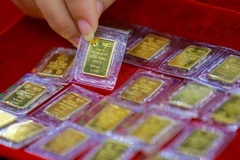
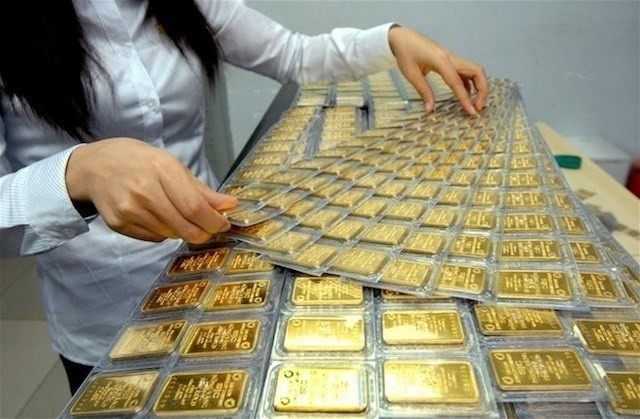
Decree No. 232/2025/ND-CP, effective from October 10, 2025, provides a new legal framework for the precious metal.

Decree No. 232/2025/ND-CP, effective from October 10, 2025, provides a new legal framework for the precious metal (Photo: VietnamPlus)

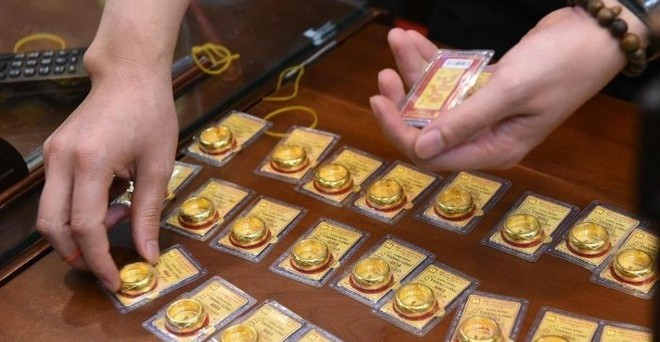
Hanoi (VNA) - The upcoming Government decree lifting the State monopoly on gold bullion production and allowing gold imports is set to usher in a new era for Vietnam’s gold market, marking a critical step in long-awaited regulatory reforms.

Decree No. 232/2025/ND-CP, effective from October 10, 2025, provides a new legal framework for the precious metal. Accordingly, the State Bank of Vietnam (SBV) will licence qualified enterprises and commercial banks to produce, import, and export gold bullion and raw gold materials. Transactions of gold exceeding 20 million VND (757 USD) per customer per day must be conducted via bank transfer.

This policy shift is more than regulatory - it lays the foundation for a transparent, modern gold market. The ultimate goal is to establish a centralised gold exchange, starting with commodity gold and expanding to derivatives, aiming to align domestic gold prices more closely with global prices, while enhancing market stability and oversight.

Market preparation

Many gold enterprises are finalising their licences to import and produce gold, ready to commence operations once the decree takes effect.

Pham Quang Thang, Deputy CEO of Techcombank, confirmed the bank’s readiness to import and produce gold bullion under the new decree and SBV guidelines, aiming to contribute to a transparent, sustainable gold market.

gold-market-2.jpg
Experts note that while gold imports may pressure the exchange rate, stabilising the gold market is crucial and justifies sacrificing some foreign currency reserves (Photo: VietnamPlus)

Dao Cong Thang, Acting CEO of SJC, stated that after the government abolished the gold production monopoly, SJC will continue reprocessing previously produced gold and is actively applying for licences to import and produce new gold to meet legitimate market demand.

Although the current price gap between domestic and international gold remains significant, Dao Xuan Tuan, Director of the Foreign Exchange Management Department at SBV, acknowledged that the impact of the new regulations on domestic gold prices will take time to materialise, given the decree only takes effect on October 10.

Dr. Nguyen Tri Hieu, an economic expert, estimated that Vietnam loses about 10 billion USD annually to unofficial gold imports. He suggested that SBV should immediately allow around 1 billion USD worth of gold raw materials imports at the decree’s inception to quickly ‘quench’ market demand and help stabilise prices.

Experts note that while gold imports may pressure the exchange rate, stabilising the gold market is crucial and justifies sacrificing some foreign currency reserves. Official import permissions would also curb the large unofficial outflows of foreign currency currently used for illicit gold imports.

Towards national gold exchange

At an SBV meeting on implementing Decree 232, Deputy Governor Pham Quang Dung announced ongoing studies and international consultations to propose a national gold exchange. Possible approaches include integrating gold trading into commodity exchanges or establishing a dedicated gold exchange at Vietnam’s international financial centre.
gold-market3.jpg
Dr. Nguyen Tri Hieu estimates that Vietnam loses about 10 billion USD annually to unofficial gold imports (Photo: VietnamPlus)

The national gold exchange proposal enjoys broad support from economists and financial experts, as it promises to reduce domestic-international price disparities, increase transparency, and stabilise the market.

Associate Professor Dr Ngo Tri Long emphasised that a centralised physical gold market with public pricing and links to international gold exchanges would boost credibility and enable SBV to manage supply and demand more effectively.

Hoang Van Cuong, a member of the National Assembly’s Finance-Budget Committee, highlighted that such an exchange would facilitate electronic gold trading, enable gold storage via credit accounts, and simplify gold withdrawals, reducing processing costs and foreign currency demand for gold imports.

He said that mobilising household gold savings into funds will create a significant resource for the economy.

Dr. Hieu added that gold certificates traded on an exchange would eliminate queues for physical gold purchases, improve market transparency, and reduce unnecessary physical gold demand.

Experts concurred that if implemented, the national gold exchange would help narrow the price gap without requiring large foreign currency expenditures on physical gold imports./.


VNA

See more

A trial UAV-based delivery at the Saigon Hi-Tech Park. (Photo: VGP)

Domestic firms position for booming UAV industry in Vietnam

Ho Chi Minh City’s Department of Science and Technology has recently partnered with the Management Board of Saigon Hi-Tech Park (SHTP) and technology firms to pilot UAV-based delivery services within SHTP. Though currently limited to short-distance routes, the trial represents an initial step towards integrating UAVs into daily life in Vietnam’s largest economic hub.

Prime Minister Pham Minh Chinh, Head of the National Steering Committee for the Implementation of the Politburo’s Resolution No. 79-NQ/TW on the Development of the State-owned Economic Sector, chaired the first meeting of the steering committee in Hanoi on February 1. (Photo: VNA)

PM chairs first meeting of steering committee for development of state-owned economic sector

According to the steering committee, the Politburo’s Resolution No. 79-NQ/TW on the Development of State-Owned Economic Sector was issued in the context that the whole country is striving and determined to innovate and reform in many fields, aiming to become a developing country with modern industry and upper-middle income by 2030; and a developed country with high income by 2045.

At the seminar to launch the 2 million USD initiative on green banking capacity development (Photo: VNA)

ADB, SBV launch 2 million USD green banking initiative

The initiative is a component of the technical assistance project “Inclusive and Climate Finance” funded by the Japanese Government through the Japan Fund for Prosperous and Resilient Asia and the Pacific (JFPR).

Prime Minister Pham Minh Chinh speaks at the meeting on January 31. (Photo: VNA)

PM urges flexible investment models for North–South high-speed railway

On the North–South high-speed railway, PM Chinh underscored its urgency for achieving double-digit growth, urging rapid completion of pre-feasibility and feasibility studies, parallel land clearance, and consideration of all three investment models—State, private, and PPP—ensuring balanced interests.

Deputy Prime Minister Nguyen Hoa Binh delivers a speech at the headquarters of the Switzerland Global Enterprise. (Photo: VNA)

Deputy PM concludes working visit to Switzerland

Vietnam will closely coordinate with Switzerland and other members of the European Free Trade Association to conclude a free trade agreement in 2026, meeting expectations of businesses in both countries and creating new drivers for bilateral economic cooperation.

At the fourth session of the National Steering Committee for the implementation of the Politburo’s Resolution 68-NQ/TW on private sector development (Photo: VNA)

PM sets digital, green priorities for private sector

Ministries, agencies, and local authorities must foster open mechanisms and streamlined administrative procedures, deliver synchronous and seamless infrastructure, cultivate smart workforce and governance, pool all possible resources for private firms, and share trials and tribulations faced by them.

A corner of Ho Chi Minh City (Photo: VNA)

Ho Chi Minh City – A magnet for global capability centres

Quality talent, cost advantages, and an expanding pipeline of ESG-compliant Grade A office space are turning Ho Chi Minh City into an increasingly strategic long-term destination for multinational corporations establishing or expanding Global Capability Centres (GCCs).