Hanoi (VNA) – Vietnam’s economy has entered 2026 on a positive note, building on the stable foundation laid in 2025 and propelled by ongoing reforms to improve the business environment, cut compliance costs and remove barriers to market entry while new growth sectors are also creating fresh momentum and investment opportunities.
According to the Ministry of Finance, Vietnam ended 2025 with more than one million active enterprises nationwide. In January alone, an estimated 54,000 businesses entered or re-entered the market, up around 62% year on year. Notably, nearly 1,000 business households transitioned into formal enterprises, accounting for about a quarter of all such conversions recorded during the whole of 2025.
The trend points to accelerating formalisation of business activity, supported by continued efforts to ease entry conditions and gradually reduce regulatory burdens.
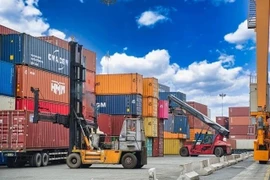
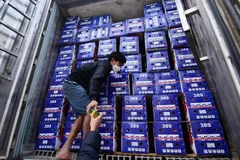
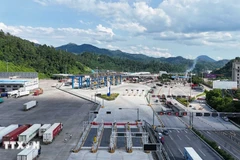
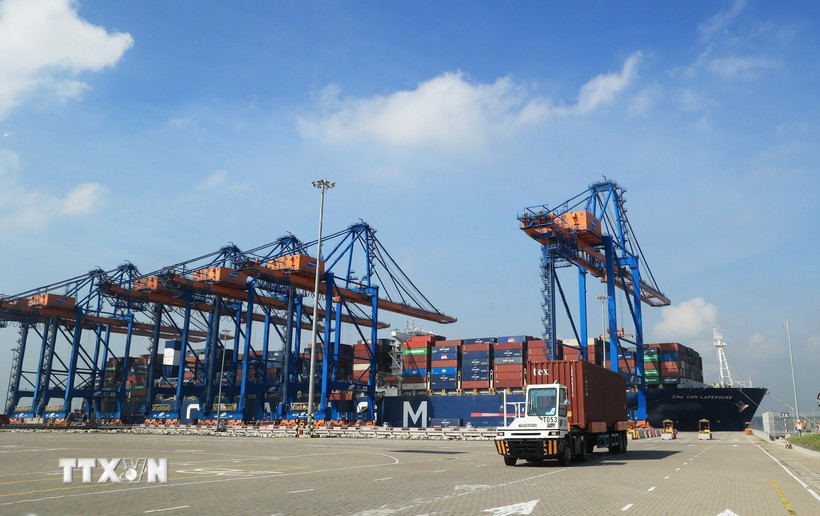
Trade figures have also shown encouraging signs. Customs authorities reported that in the first 15 days of January, exports reached 18.05 billion USD, up 9.6% compared with the same period last year, while imports climbed 17.8% to 21.29 billion USD.
Exports fell by 24.2% compared with the second half of December 2025, with several key groups recording steep declines, including computers, electronic products and components, machinery and equipment, and textiles – garments. However, compared with the same period of 2025, overseas shipments still rebounded, with strong growth in computers and electronics, phones and components, and machinery, equipment and spare parts.
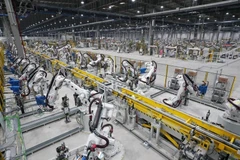
Foreign-invested enterprises continued to dominate export performance, generating 14.03 billion USD and accounting for roughly 78% of total export turnover.
On the import side, figures in the first half of January represented a decline from the later half of December, standing at 21.29 billion USD. The trend was seen in such commodities as machinery, equipment, crude oil, and steel. Year on year, however, imports rose sharply, 17.8%, according to Vietnam Customs.
Nguyen Thi Huong, Director of the National Statistics Office under the Ministry of Finance, said Vietnam’s solid growth in 2025 demonstrated the gradually strengthened internal capacity and resilience, providing an important springboard for 2026 and beyond. Still, she cautioned that the 2026–2030 period will bring intertwined opportunities and uncertainties, requiring exceptional effort to sustain momentum.
Improving growth quality
“To achieve the growth target, maintaining macroeconomic stability is the prerequisite,” Huong said, stressing inflation control, public debt safety, balanced economic fundamentals, and flexible yet cautious fiscal and monetary governance.
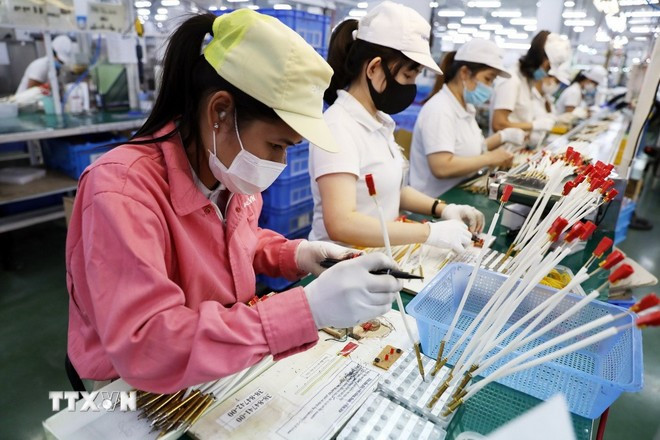
She highlighted the need to mobilise resources effectively. Public investment should continue to play a leading role, focusing on key infrastructure and ensuring timely disbursement for national priority projects. At the same time, private investment must be encouraged as a crucial growth engine while FDI attraction should become more selective, linked to technology transfer, environmental protection and stronger connections with domestic firms.
Vietnam must shift from a model reliant on capital and labour towards one based on productivity gains, efficient resource allocation and economic restructuring towards sustainability and modernity. Breakthroughs in labour productivity and investment efficiency will depend heavily on science – technology application and digital transformation, particularly in high-tech sectors, alongside workforce training aligned with market demand.
Hong Sun, honorary chairman of the Korean Chamber of Commerce in Vietnam (KOCHAM), said Vietnam’s 8.02% GDP growth in 2025 was highly significant amid domestic and global headwinds, serving as a psychological launchpad for future ambitions. To reach double-digit growth in 2026 and through 2030, he suggested stronger focus on energy infrastructure, digital administration and macroeconomic stability.
With optimistic forecasts for 2026–2030, Hong Sun argued Vietnam has shifted from a “preferred option” to a “strategic necessity” in Korean supply chains, with new waves of high-tech and renewable energy satellite firms moving in.
Economist Dr Nguyen Bich Lam, former Director of the National Statistics Office, said achieving high growth in 2026 will require macroeconomic stability, effective resource use, stronger institutions and greater adaptability to ensure sustainable development over the medium and long terms./.