Economic, trade, investment ties seen as pillar of Vietnam – EU Comprehensive Strategic Partnership

Professor Nguyen Van Phu emphasised that Vietnam – EU economic collaboration is rapidly expanding beyond traditional goods trade into strategic sectors such as energy, critical raw materials, high technology, semiconductors, artificial intelligence, digital transformation and supply chain restructuring.

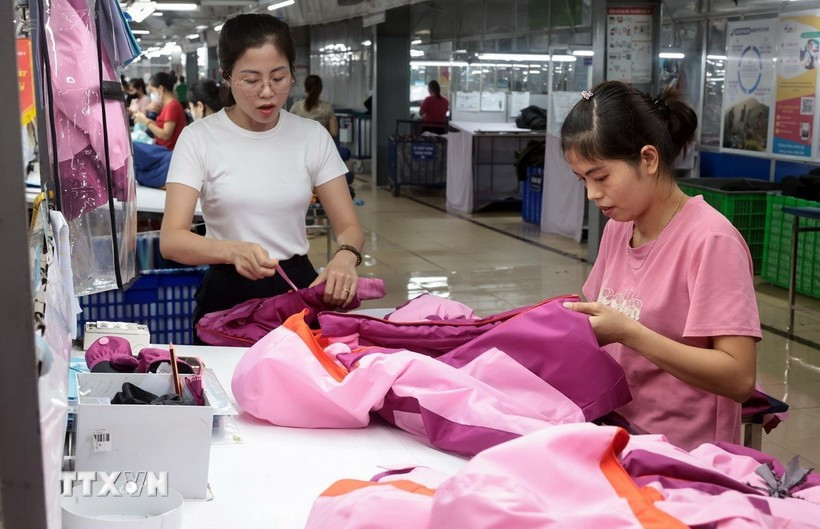
Garment production for export to the EU at TNG Garment Company in Thai Nguyen province. (Photo: VNA)

Paris (VNA) – Economic, trade and investment cooperation forms the core pillar of the Vietnam – European Union Comprehensive Strategic Partnership, reflecting a growing convergence of long-term economic interests and development stategies between the two sides.

Professor Nguyen Van Phu of Paris Nanterre University, said the significance of the upgraded relationship lies less in political symbolism than in its solid economic foundations and strategic complementarities.

Speaking to Vietnam News Agency correspondents in France, Phu noted that a key driver of Vietnam – EU economic ties today is the shift toward reducing excessive dependence on any single major market, particularly the US.

For Vietnam, he said, diversifying trade and investment partners has become a risk-mitigation strategy amid unpredictable policy shocks and trade tensions. From the EU’s perspective, expanding economic links beyond the US is equally critical to safeguarding supply chain security and maintaining Europe’s economic competitiveness.

In this context, economic, trade and investment cooperation has emerged as the central pillar of the Comprehensive Strategic Partnership, shaping and guiding the overall bilateral relationship. The two sides have reaffirmed their commitment to fully and effectively implementing the EU – Vietnam Free Trade Agreement (EVFTA) while intensifying dialogue to remove technical barriers and expand market access for each other's goods and services.
evfta.jpg
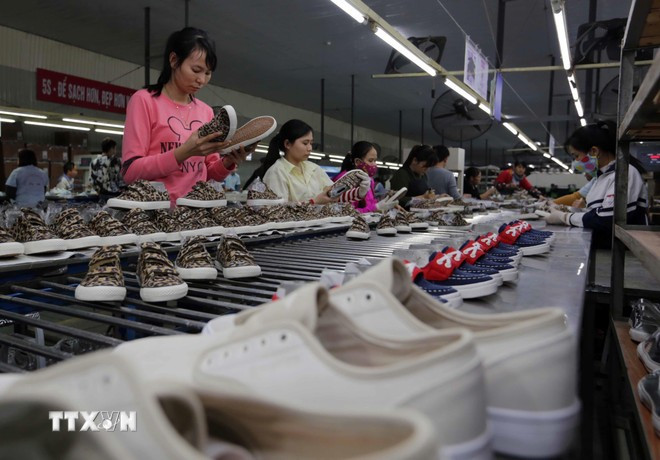
The EU–Vietnam Free Trade Agreement (EVFTA) is expected to create opportunities for Vietnam’s footwear industry to expand exports to the EU market. (Photo: VNA)

Against a backdrop of global trade uncertainties, rising protectionism and increasingly fierce geoeconomic competition, he went on, the EVFTA has evolved beyond a conventional free trade agreement. It is increasingly viewed as a strategic instrument that helps both Vietnam and the EU secure a safe, stable and predictable economic space.

Phu emphasised that Vietnam – EU economic collaboration is rapidly expanding beyond traditional goods trade into strategic sectors such as energy, critical raw materials, high technology, semiconductors, artificial intelligence, digital transformation and supply chain restructuring. The EU is positioning itself as a partner in supporting Vietnam’s economic modernisation and its gradual alignment with green, sustainable and responsible trade standards—criteria that are becoming mandatory for access to the European market.

The proffessor said at the heart of the partnership lies strong complementarity. Vietnam needs long-term capital, advanced technology, governance expertise and high standards from Europe, home to many of the world’s most developed economies. Conversely, the EU sees Vietnam as an attractive investment destination, a dynamic market and a vital link in its Asia-Pacific supply chain diversification strategy. This strategic compatibility underpins the durability of bilateral cooperation.

However, Phu cautioned that fully capitalising on the upgraded partnership will require deeper and more consistent institutional reforms in Vietnam. Meeting EU standards is not merely a partner obligation, but an internal necessity for sustainable development. Exports to Europe must comply with strict requirements on safety, quality, origin, the carbon border adjustment mechanism (CBAM), labour, gender equality and sustainability. Similarly, EU-funded investment projects in Vietnam are expected to meet high environmental, social and governance (ESG) standards.

In this broader picture, developing a transparent, stable and internationally compliant financial market is seen as a decisive condition for attracting European capital. The legal framework must be clear, predictable and resistant to abrupt policy changes. EU investors place particular importance on the rule of law, property rights protection, contract enforcement and effective, independent dispute resolution.

Enhancing transparency and governance standards in capital markets is essential. Businesses and financial institutions must adhere to international accounting and auditing standards and ensure accurate, timely disclosure of information to reduce risks and strengthen investor confidence. Promoting green and sustainable finance—through green bonds, green credit and ESG-linked instruments—also needs to align closely with EU strategic priorities, according to him.

Overall, the upgrade of Vietnam – EU relations to a Comprehensive Strategic Partnership opens a new phase of cooperation, with economic, trade and investment ties serving as the main pillar and driving force.

While opportunities are substantial, they are accompanied by demanding and long-term reform requirements, Phu said, adding that how Vietnam responds to these expectations will ultimately determine the substance of the partnership in the years ahead./.
VNA

See more

A trial UAV-based delivery at the Saigon Hi-Tech Park. (Photo: VGP)

Domestic firms position for booming UAV industry in Vietnam

Ho Chi Minh City’s Department of Science and Technology has recently partnered with the Management Board of Saigon Hi-Tech Park (SHTP) and technology firms to pilot UAV-based delivery services within SHTP. Though currently limited to short-distance routes, the trial represents an initial step towards integrating UAVs into daily life in Vietnam’s largest economic hub.

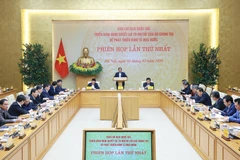
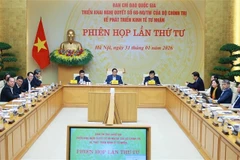
Prime Minister Pham Minh Chinh, Head of the National Steering Committee for the Implementation of the Politburo’s Resolution No. 79-NQ/TW on the Development of the State-owned Economic Sector, chaired the first meeting of the steering committee in Hanoi on February 1. (Photo: VNA)

PM chairs first meeting of steering committee for development of state-owned economic sector

According to the steering committee, the Politburo’s Resolution No. 79-NQ/TW on the Development of State-Owned Economic Sector was issued in the context that the whole country is striving and determined to innovate and reform in many fields, aiming to become a developing country with modern industry and upper-middle income by 2030; and a developed country with high income by 2045.

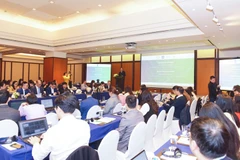
At the seminar to launch the 2 million USD initiative on green banking capacity development (Photo: VNA)

ADB, SBV launch 2 million USD green banking initiative

The initiative is a component of the technical assistance project “Inclusive and Climate Finance” funded by the Japanese Government through the Japan Fund for Prosperous and Resilient Asia and the Pacific (JFPR).

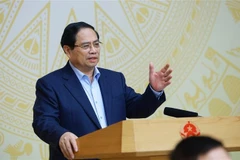
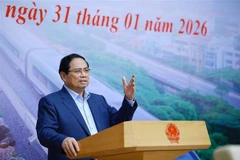
Prime Minister Pham Minh Chinh speaks at the meeting on January 31. (Photo: VNA)

PM urges flexible investment models for North–South high-speed railway

On the North–South high-speed railway, PM Chinh underscored its urgency for achieving double-digit growth, urging rapid completion of pre-feasibility and feasibility studies, parallel land clearance, and consideration of all three investment models—State, private, and PPP—ensuring balanced interests.

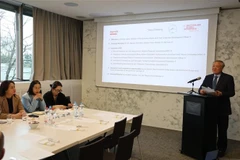
Deputy Prime Minister Nguyen Hoa Binh delivers a speech at the headquarters of the Switzerland Global Enterprise. (Photo: VNA)

Deputy PM concludes working visit to Switzerland

Vietnam will closely coordinate with Switzerland and other members of the European Free Trade Association to conclude a free trade agreement in 2026, meeting expectations of businesses in both countries and creating new drivers for bilateral economic cooperation.

At the fourth session of the National Steering Committee for the implementation of the Politburo’s Resolution 68-NQ/TW on private sector development (Photo: VNA)

PM sets digital, green priorities for private sector

Ministries, agencies, and local authorities must foster open mechanisms and streamlined administrative procedures, deliver synchronous and seamless infrastructure, cultivate smart workforce and governance, pool all possible resources for private firms, and share trials and tribulations faced by them.

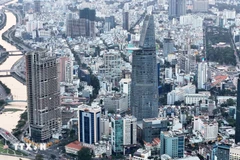
A corner of Ho Chi Minh City (Photo: VNA)

Ho Chi Minh City – A magnet for global capability centres

Quality talent, cost advantages, and an expanding pipeline of ESG-compliant Grade A office space are turning Ho Chi Minh City into an increasingly strategic long-term destination for multinational corporations establishing or expanding Global Capability Centres (GCCs).

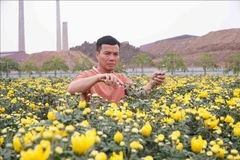
Leveraging the fertile alluvial soil along the Red River, Trinh Ngoc Tiep of Hiep Cuong commune, Hung Yen province, boldly develops a large-scale flower-growing model that generates high income and creates jobs for many local workers. (Photo: VNA)

Flower villages enter final sprint for Tet season

As the Lunar New Year (Tet) 2026 approaches, flower and ornamental plant villages nationwide are entering their peak season, with the market showing a mix of vibrant prospects and mounting challenges.

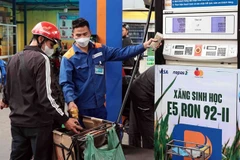
E10 bio petrol will be sold from June 1, 2026 while the production and use of E5 RON92 gasoline will continue to be maintained until December 31, 2030 (Photo: VNA)

Ministry unveils mandatory roadmap for E10 biofuel

Starting from June 1, all unleaded gasoline that meets current technical standards will be required to be blended into E10 gasoline for consumption on the domestic market, Nguyen Anh Tuan, head of the petroleum and gas business management division under the ministry's Domestic Market Management and Development Department, said at a regular press briefing for the fourth quarter of 2025 held in Hanoi on January 29.