Gold market structure needs to fundamentally change

​Many experts believe that in order to sustainably stabilise the domestic gold market, it is necessary to realise the requirement of eliminating the monopoly of gold bars, as directed recently by the General Secretary Tô Lâm.

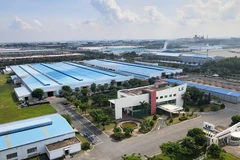
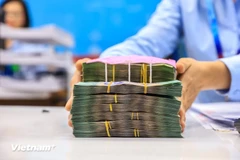
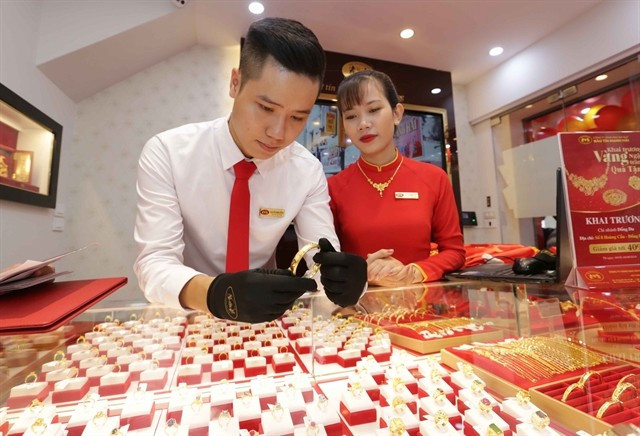
At Bao Tin Manh Hai gold company (Photo: VNA)

Hanoi (VNS/VNA) - It is time to fundamentally change the gold market structure through eliminating the monopoly and building a gold trading exchange to effectively manage the market, experts said.

Many experts believe that in order to sustainably stabilise the domestic gold market, it is necessary to realise the requirement of eliminating the monopoly of gold bars, as directed recently by Party General Secretary To Lam.

Only when more businesses are allowed to participate in the production and import of gold bars legally and transparently, can the market achieve a state of healthy competition, bringing domestic gold prices closer to world prices.

Talking about the goal of narrowing the gap between domestic and world gold prices, Vice President of the Vietnam Gold Business Association Nguyen The Hung said that this depends entirely on actual supply and demand in the market. In principle, when demand exceeds supply, prices will increase, and gold is no exception. If the local gold supply is supplemented, domestic gold prices will decrease.

According to Hung, a major bottleneck at present are the activities of gold jewellery manufacturing enterprises. Although Decree 24/2012 allows the import of raw gold, gold manufacturing and trading enterprises have not been granted import quotas for more than ten years. As a result, they have to buy gold on the market unofficially at high prices with unknown origin. It means the ultimate risk will be pushed to consumers because they will have to buy gold at prices much higher than the world price.

Another bottleneck of the gold market is the 1% export tax currently applied to jewellery. Vietnamese businesses import raw gold at global prices but are taxed when exporting, making the cost even higher. Therefore, they cannot compete against their foreign rivals. Meanwhile, they also have to bear a series of additional costs such as labour, machinery and depreciation.

Hung believes if the export tax is removed and the supply of raw gold is ensured, it will create a strong driver for jewellery gold exports, attracting foreign currency revenues into the country.

According to deputy Tran Anh Tuan of the National Assembly delegation of Ho Chi Minh City, if the Government shifts to market-based management and create conditions for qualified enterprises to participate in the production, trading and distribution of gold as a normal commodity, the gap between domestic and global gold prices will be narrowed.

“It is necessary to open the door to qualified enterprises. If they have a licence, they should be allowed to import according to their actual capacity. When supply increases sharply, the market will have more options. At that time, domestic gold prices will gradually approach world prices, which will contribute to stabilising gold price and limiting gold smuggling across the border,” Tuan said.

Tuan added that it is necessary to gradually remove barriers for domestic gold bar production. The current mechanism of designating a few enterprises to exclusively produce gold bars should not continue, but it should be expanded to all companies which meet the conditions.

According to Tuan, the State still maintains a controlling role through general regulations and a strict monitoring technology system from input to output. However, besides the control, it is also necessary to create conditions for gold bars to circulate as a normal commodity in the market. When the supply is abundant and the market operates smoothly, measures of price control, speculation restriction and macro-economic stability will prove to be much more effective./.

VNA

See more

The upcoming Made-in-Vietnam fair in Hanoi from December 18-22 will feature product display areas, business networking spaces, and food courts. Illustrative photo: VNA)

Vietnam Brand Week to promote e-commerce, Made-in-Vietnam products

Co-organised by the Vietnam E-Commerce and Digital Economy Agency and the Hanoi Department of Industry and Trade, the event series includes a supply-demand connectivity conference to promote the consumption of Vietnamese and local products on e-commerce and digital platforms, alongside a Made-in-Vietnam fair.

Cat Lo Fishing Port in Phuoc Thang ward, Ho Chi Minh City. (Photo: VNA)

HCM City earmarks over 2.54 million USD for fisheries transition

The project targets the conversion of around 6% of the city’s fishing fleet, focusing on nearshore and inshore vessels and part of the offshore trawler fleet, towards fishing methods with lower environmental impact, including hook-and-line, gillnets, purse seines, traps and cages, as well as fisheries logistics services.

LS Eco Energy factory (Photo: Iscns.co.kr)

RoK company expands rare earth metal production in Vietnam

LS Eco Energy, a company specialising in renewable energy and rare earth elements under the Republic of Korea (RoK)'s LS Cable & System, has approved a plan to expand its rare earth metal business in Vietnam, in a bid to seek long-term growth in the strategic materials sector.

Prime Minister Pham Minh Chinh speaks at the fourth meeting of the Central Steering Committee for Housing Policy and Real Estate Market on December 17. (Photo: VNA)

PM calls for stronger efforts to meet housing demand, ensure people's right to housing

PM Chinh noted that the real estate and housing market showed positive changes in 2025. With the engagement of the entire political system and society, Vietnam completed the elimination of temporary and dilapidated housing nationwide with more than 334,000 units, five years ahead of schedule. Nonetheless, continued efforts are needed to ensure no one is left without shelter.

Officers of the Hon Gai port border gate guard station coordinate inspections and handle vessels engaged in illegal fishing activities in Ha Long Bay. (Photo: Quang Ninh Newspaper)

Quang Ninh province strengthens fishing vessel controls

In the coming period, Quang Ninh will continue to implement government and ministerial directives on combating IUU fishing, contributing to efforts to meet the EC’s recommendations and move toward the lifting of the yellow card warning against Vietnam’s seafood exports.

The draft is designed to implement a plan to simplify business regulations for banks, in line with the Government's Resolution No. 66/NQ-CP. (Photo: VNA)

SBV plans to simplify business regulations for banks

Under a draft circular to replace Circular 32/2024/TT-NHNN, now open for public comment, many administrative procedures for establishing and relocating commercial bank branches and transaction offices will be significantly shortened.

Illustrative image (Photo: VNA)

Vietnam consolidates position as one of Asia’s economic bright spots

Next year, Vietnam is expected not only to maintain a high growth rate relative to the region but also to further reinforce its status as one of Asia’s economic bright spots thanks to macroeconomic stability, a dynamic domestic market, and a clear orientation towards attracting strategic investments.

Many vessels have installed additional vessel monitoring systems to ensure uninterrupted information connectivity with shore-based stations during fishing trips. (Photo: VNA)

Decisive moment of fight against IUU fishing violations

Under the close direction of the Prime Minister, coastal localities nationwide, particularly in central Vietnam, are urgently implementing assigned tasks with clear schedules and milestones, delivering tangible weekly progress.