Government directs capital hike for State-owned banks

The Government is directing ministries and agencies to raise capital for State-owned commercial banks through the use of dividends or share sales this year, Deputy Prime Minister Vuong Dinh Hue said at a recent meeting.
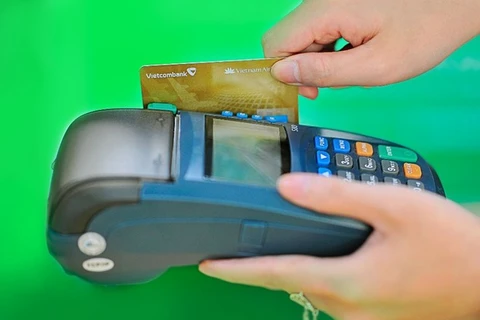
Government directs capital hike for State-owned banks ảnh 1Vietcombank needs to raise capital to meet BASEL II standards. (Photo: VNA)

Hanoi (VNS/VNA) -The Government is directing ministries and agencies to raise capital forState-owned commercial banks through the use of dividends or share sales thisyear, Deputy Prime Minister Vuong Dinh Hue said at a recent meeting.

Hue revealed the news after four State-ownedbanks – Vietcombank, Agribank, BIDV and VietinBank – proposed the capital hikeat the meeting on bad debt resolution last week as they are facing difficultiesto fulfill the plan.

Currently, the banks are under greatpressure to hike capital to satisfy the State Bank of Vietnam (SBV)’sregulations to meet Basel II standards in 2020. Under SBV’s Circular, banksmust maintain a capital adequacy ratio (CAR) of at least 8 percent as per BaselII norms, starting in 2020. With the new regulation, the CAR of the banks willfail to reach the minimum level set by the SBV if they fail to increasecapital.

Basel II is the second of the Basel Accords,which are recommendations on banking laws and regulations issued by the BaselCommittee on Banking Supervision.

At the meeting, Nghiem Xuan Thanh, Chairman ofVietcombank, asked the Government and SBV to consider increasing capital ofState-owned banks or allowing the banks to either retain dividends or issueprivate placement shares to foreign investors to ensure both the value of theState capital and the interests of shareholders.

According to Thanh, the divestment of the banksis currently facing difficulties due to complicated regulations.

Besides being large and prestigious institutionsfrom developed countries, foreign qualified buyers are also required to holdthe stake for at least one year, Thanh said, adding it was hindering investorsas the stock prices in the market constantly fluctuate.

Under the current legal regulations, the salesof the banks’ stake must be also in large lots and the sales price must not belower than the market price, Thanh said.

Vietcombank had so far still failed to findpartners from developed economies who agree to pay the bank’s shares at themarket listed price – or nearly four times of the bank’s book value, Thanhsaid, adding that market listed prices of leading banks’ shares in the region,not only in Southeast Asia but also in Asia, only double that of the banks’book value.

It also takes BIDV several years to find astrategic partner, but no one paid as high as the bank’s market listed price ofover 30,000 VND per share.

While facing difficulties in the divestment, thebanks are not allowed to keep profits for the capital hike purpose as theystill have to pay dividends in cash, which are supposed to be paid to the Statebudget. Representatives of State capital at State-owned banks often require tovote for dividend payout to be in cash at the banks’ annual general meetings sothat the State receives money from dividends.

Last year, for example, it was estimated theState budget got nearly 6.1 trillion VND (268.7 million USD) extra from thedividend payout of three State-owned banks – VietinBank, Vietcombank andBIDV.-VNS/VNA
VNA

See more

Ahmad Haikal Hasan, Head of the Halal Product Assurance Organising Agency (BPJPH) of Indonesia, speaks at the seminar (Photo: VNA)

Indonesia ready to cooperate with Vietnam in halal sector

Ahmad Haikal Hasan, Head of the Halal Product Assurance Organising Agency (BPJPH) of Indonesia, described Vietnam as a “potential supplier” of halal products with the capacity to play a larger role in the market, particularly in the fast-moving consumer goods (FMCG) sector. He revealed a plan to visit Vietnam next week to discuss the country’s progress in the global halal industry.

Delegates perform the opening ceremony. (Photo: VNA)

Thailand Week 2026 opens in Hanoi

The event brings together more than 100 companies, including Thai enterprises and Vietnamese importers, across about 120 booths. It features a wide range of Thai products aligned with consumer trends in Vietnam, including food and beverages, health and beauty, mother-and-baby and pet products, fashion and jewellery, household goods and tourism services.

Illustrative image (Photo: VNA)

Vietnam remains Singapore’s third-largest seafood supplier in 2025

Data released by the Accounting and Corporate Regulatory Authority of Singapore (ACRA) show that Singapore spent 125.5 million SGD (97.7 million USD) importing seafood from Vietnam last year, up 10.7% year on year, accounting for 10.3% of the city-state’s total seafood import market.

Workers assemble mobile phone components at Diem Thuy Industrial Park in the northern province of Thai Nguyen. (Photo: VNA)

Electronics exports surpass 107 billion USD in 2025

With an export turnover of 107.75 billion USD in 2025, computers, electronic products and components not only maintained their position as Vietnam’s largest export by value, but also contributed more than half of the overall increase in the country’s export turnover in 2025.

Experts said that Vietnam’s economic outlook continues to be underpinned by stable foreign direct investment inflows and public investment, which is playing an important role in driving growth. (Photo: thoibaotaichinh.vn)

Foreign investors maintain strong confidence in Vietnam’s market

Looking ahead to 2026, prospects remain bright as manufacturing, economic growth and foreign investment in Vietnam are expected to stay robust, with the country forecast to post the highest growth rate in the region this year, according to Adam Sitkoff, Executive Director of the American Chamber of Commerce (AmCham) in Vietnam.

Toy production at a Hong Kong-invested factory (Photo: VNA)

Vietnam targets deeper market penetration in Hong Kong in 2026

Vietnam-Hong Kong trade hit 62.3 billion USD in the first 11 months of 2025, soaring 73.1% annually. Vietnamese exports to Hong Kong amounted to 36.8 billion USD, a 90.6% hike, ranking fourth among Hong Kong’s import sources, while imports from Hong Kong stood at 25.5 billion USD, up 52.9% and ranking third.

Vietnam’s start-up market enters restructuring phase

Vietnam’s start-up market enters restructuring phase

In 2026, venture capital inflows into Vietnam’s start-up ecosystem are expected to recover gradually, though in a more selective manner. VinVentures forecasts that capital will focus on start-ups that have survived the rigorous screening of 2024–2025, possess clear business models, strong commercialisation capacity, and the ability to generate real cash flows.