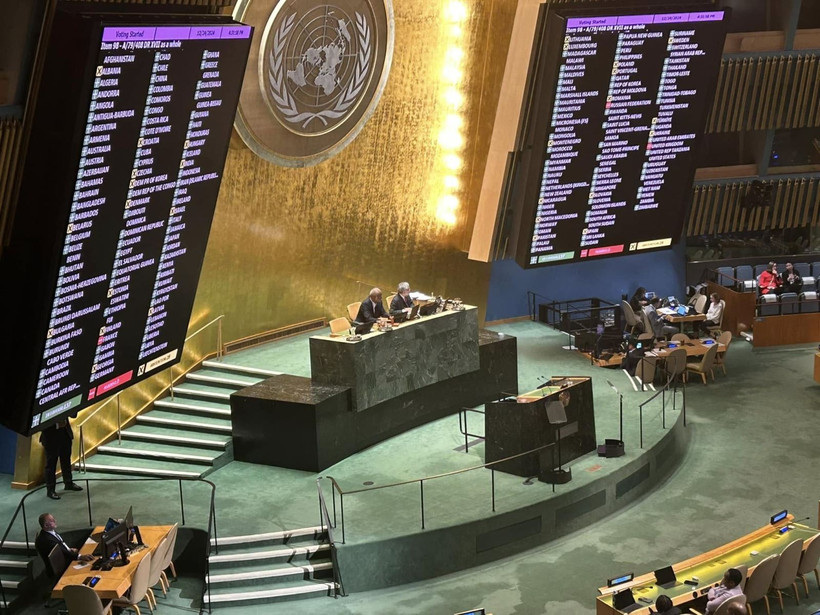
Hanoi (VNA) - After a grueling three-year negotiation marked by near-deadlocks, the United Nations Convention against Cybercrime, dubbed the “Hanoi Convention”, has reached fruition, heralding a new era of global cooperation to combat digital threats.
The talks, among the challenging and intricate multilateral negotiations in recent years, began under UN General Assembly Resolution 74/247 in 2019. Spanning February 2022 to August 2024, the process involved seven official sessions, one extended meeting, and five intersessional gatherings. Over 150 nations participated, joined by tech giants like Microsoft, Meta, Google, and Amazon, human rights and technology-focused NGOs as well.
Negotiations repeatedly stumbled over deep-seated differences in legal and political systems, and cultural values among member states. Strategic rivalries among global powers, conflicting visions of cyberspace governance, and competing economic and technological interests created roadblocks. Some Western nations raised alarms about potential misuse of the treaty to curb free speech, while developing countries stressed the need to bolster law enforcement and international technical collaboration. At times, internal divisions within the Ad Hoc Committee threatened to derail the entire process.
Concerns also surfaced about political factors, technological gaps, and the feasibility of partnering with global tech firms to enforce the treaty. Moving forward, rolling out the Hanoi Convention will hinge on forging robust enforcement networks, refining domestic legal frameworks, and upgrading digital infrastructure to ensure compliance.
Despite these challenges, the final outcome represents a global compromise, underscoring a collective resolve to establish a unified legal framework to tackle cross-border cybercrime in the digital age.
Ambassador Do Hung Viet, Permanent Representative of Vietnam to the UN, said the adoption of the Hanoi Convention after years of negotiation marks a vital affirmation that multilateralism remains on the right track during difficult times, reaffirming the role and importance of multilateralism and international law in addressing global challenges.
The signing ceremony’s theme “Countering Cybercrime - Sharing Responsibility - Securing our Future” encapsulates the Convention’s spirit and message. Xiaohong Li, Director of the UN Office on Drugs and Crime (UNODC) New York Liaison Office, praised Vietnam’s constructive, inclusive, and responsible role throughout the talks, particularly during moments of stalemate, which helped narrowed divisions and achieve consensus. She noted that hosting the event in Hanoi sends a powerful message of multilateralism in action.
Sudhanshu Mittal, Director of Technical Solutions at India’s Nasscom, called the Hanoi Convention the UN’s first global treaty in this domain in nearly two decades. The document seeks to harmonise national laws, enhance cross-border investigations, facilitate electronic evidence sharing, and enhance mutual legal and technical assistance. For nations like India, Mittal said, it opens doors to deeper international cooperation, stronger capacity building and legal frameworks.
Mittal also highlighted Vietnam’s credentials as host, citing its 2018 Cybersecurity Law, robust enforcement capabilities, and a skilled digital workforce. Vietnam’s ranking among the top 20 nations in the 2024 Global Cybersecurity Index, with over 80% of its population online, makes it a “bright spot” and an ideal venue for this landmark event.
The Hanoi signing ceremony also carries deep symbolic meaning. In 1999, UNESCO named Hanoi a “City for Peace” for its peace building and preservation efforts. As a safe, hospitable, and vibrant capital, it serves as an apt backdrop for launching a treaty aimed at securing global cyberspace.
The negotiation and signing of the Hanoi Convention also underscore Vietnam’s growing multilateral footprint, reflecting its strategic shift from a passive participant to a proactive player, elevating the country’s stature in global diplomacy in the new development period.
Ambassador Jaime Hermida Castillo, Permanent Representative of Nicaragua to the UN, said the choice of Hanoi reflects international confidence in Vietnam’s leadership and organisational capacity, cementing its role as a trusted partner in digital governance.
Vietnam’s consistent contributions to the Convention’s development showcase its effective engagement in the UN’s common agenda, balancing diverse national interests. Successfully hosting the signing ceremony will further spotlight Vietnam’s proactive, innovative and responsible diplomacy.
With thorough preparation, professionalism, and a spirit of international cooperation, the Hanoi Convention signing ceremony is poised to succeed, projecting an image of Hanoi as a “City for Peace” and a dynamic Vietnam ascending confidently on the global stage./.