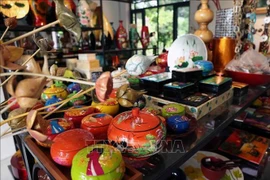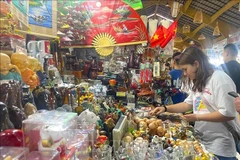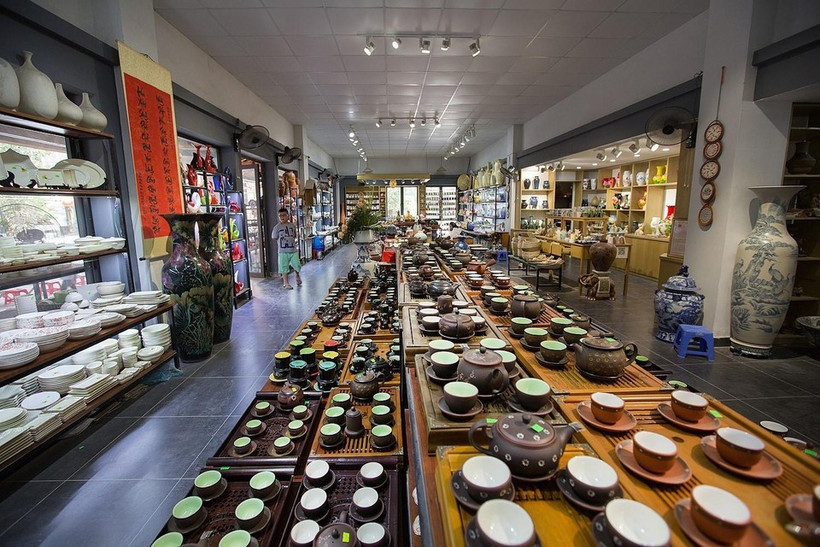
Hanoi (VNA) – The capital city of Hanoi recognises both potential and challenges in preserving its traditional craft villages, especially in the modern economy.
Hanoi is home to more than 1,300 craft villages, accounting for roughly one-quarter of the national total. These villages collectively generate over 24 trillion VND (nearly 1 billion USD) annually, making a significant contribution to Hanoi’s Gross Regional Domestic Product (GRDP).
Some villages have reported remarkable earnings. For example, Son Dong, famous for its fine art wood carving, generates over 1 trillion VND annually, while Phung Xa, known for metalworking, more than 1.2 trillion VND annually.
These figures highlight the strong trade potential of traditional crafts.
Recognising this, the government has launched numerous policies to support preservation and development efforts.
Prime Minister Pham Minh Chinh approved a national programme on restoring at least 129 traditional crafts and 208 villages by 2030.
The programme also ensures that more than 80% of craft villages operate effectively and that handicraft exports from these villages reach 6 billion USD.
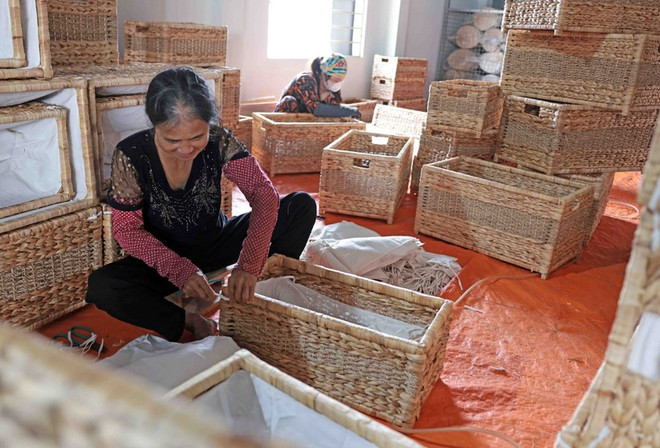
Hanoi, known for having the highest number of craft villages in the country, has incorporated the preservation and development of these villages into its 2024 Capital Law.
Recently, the city unveiled a master plan for the development of craft villages, outlining objectives up to 2030 and a vision extending to 2050.
The city aims to restore at least five traditional crafts and craft villages that are at risk of disappearing by 2030.
Investments will also be made in infrastructure and the restoration of traditional cultural spaces.
Hanoi plans to develop at least three craft villages in conjunction with tourism and establish 10 tourism routes featuring craft village experiences.In a significant step toward global integration, Bat Trang pottery village and Van Phuc silk village recently joined the UNESCO Creative Cities Network in crafts and folk art.
This recognition opens up new opportunities for international cooperation, trade, and cultural tourism.
Speaking at a recent meeting with outstanding artisans across the country, State President Luong Cuong emphasised the importance of revitalising craft villages as part of Vietnam’s development strategy.
He also acknowledged ongoing difficulties, especially as global markets demand higher standards and innovation.
Nguyen Van Vu, Vice Chairman of the Vietnam Association of Craft Villages, pointed out that most craft villages in Hanoi operate on a small, family-run scale.
This lack of coordination and large-scale planning hampers their ability to adapt when market conditions change.
Moreover, environmental pollution remains a pressing issue due to unregulated production and the absence of centralised manufacturing zones.
Another serious concern is about human resources.
Traditional craft villages are not only cultural heritage sites but also key sources of employment.
Yet many young people are turning away from traditional crafts in search of other opportunities, leaving a gap in the labour force and putting centuries-old traditions at risk of extinction.
Reviving Hanoi’s craft villages will require more than just financial investment.
A long-term, coordinated approach involving education, infrastructure, and community engagement is essential to ensure these cultural treasures continue to thrive in the years ahead./.