Hanoi’s heritage awakened by unique, distinctive itineraries

Over the past year, French-Vietnamese research teams have worked tirelessly to document, analsze, and showcase Hanoi’s special heritage, resulting in the creation of four thematic heritage journeys.

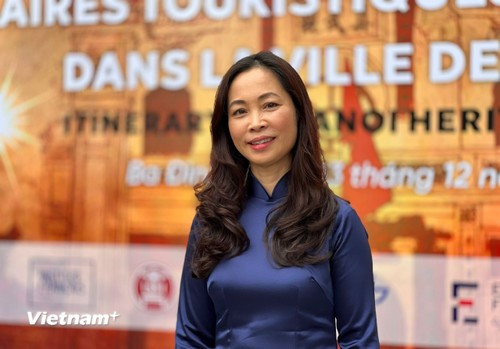
Dr. Nguyen Thi Hiep from Expertise France (Photo: VietnamPlus)

Hanoi (VNA) – Over the past year, French-Vietnamese research teams have worked tirelessly to document, analsze, and showcase Hanoi’s special heritage, resulting in the creation of four thematic heritage journeys.

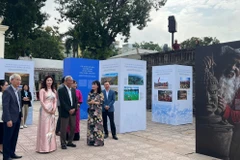
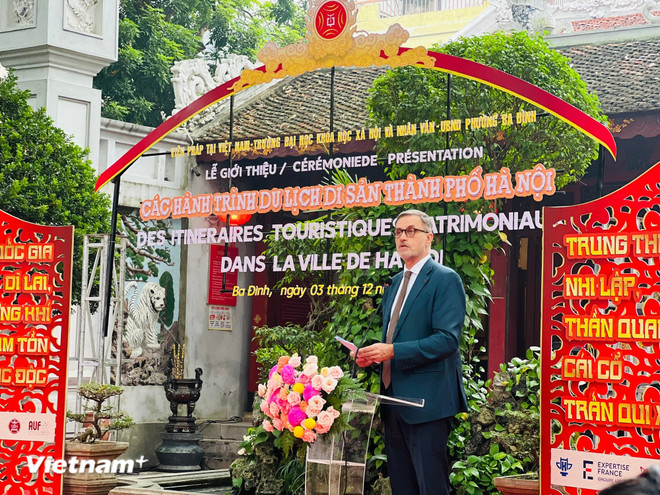
Speaking at a ceremony to launch four digital heritage itineraries in Hanoi on December 3, French Ambassador to Vietnam Olivier Brochet said that introducing these heritage journeys to the public lays a foundation for a new phase – building a city where heritage knowledge drives sustainable development, enhances cultural-tourism appeal, and serves as a training tool for young people.

France will continue to accompany Vietnam on this path with enthusiasm, attentiveness, and commitment as always, he affirmed.

Accordingly, the digital heritage itineraries use interactive maps and the H-Heritage app, and QR code scanning at multiple relic sites across Hanoi, offering travellers a rich cultural experience rooted in traditional beliefs and historic relics.

Ancient relics awaken

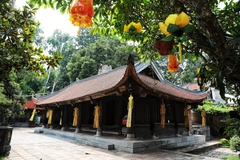
Few places reveal ancient relics quietly amid a modern urban life like in Hanoi, where the past and the present intertwine in streets, houses, and daily routines. Yet much of this heritage remains modest and hidden—temples, shrines, and communal houses tucked away in alleys, seldom systematically showcased.

To address this, the “Hanoi Heritage Tourism Itinerary” programme was launched to help residents and visitors recognise and engage with the city’s heritage through a new approach that combines academic research with modern digital technology.

As a science coordinator involved in the project, Dr. Nguyen Thi Hiep from Expertise France said the project adopts a combined approach of field surveys, archival analysis, training, and mapping technology application.

Accordingly, the team has surveyed over 100 heritage sites across Hanoi, reviving an extensive archive in French, Han-Nom, and Vietnamese. Each site is vividly documented in complete digital records, mapped electronically, and integrated into the H-Heritage app, allowing visitors to explore history right from their smartphones.

The heritage itineraries cater to all audiences—not only for experiential tourism but also as a tool for culture learning, education, and research resources for students and scientists. One platform integrates multiple functions, Hiep said.
ds.jpg
French Ambassador to Vietnam Olivier Brochet speaks at the event. (Photo: VietnamPlus)

Notably, a key achievement of the project is to develop a website introducing online heritage journeys and a mobile app with QR code access, enabling domestic and foreign visitors to explore Hanoi’s heritage comprehensively, quickly, and conveniently.

Experts consider this a significant step in bringing heritage knowledge closer to the public and tourists, transforming sightseeing, learning, and research into an interactive and flexible experience.

French Ambassador to Vietnam Olivier Brochet noted that a comprehensive study was conducted for each site along the four heritage itineraries. These included scientific descriptions, historical and contemporary images, verified historical references, and data from the archives and inventories of the French School of Asian Studies (EFEO). The materials were selected, processed, systematised, digitised, and integrated into the map, all connected in an interactive digital system accessible via QR codes and the H-Heritage app.
book.jpg
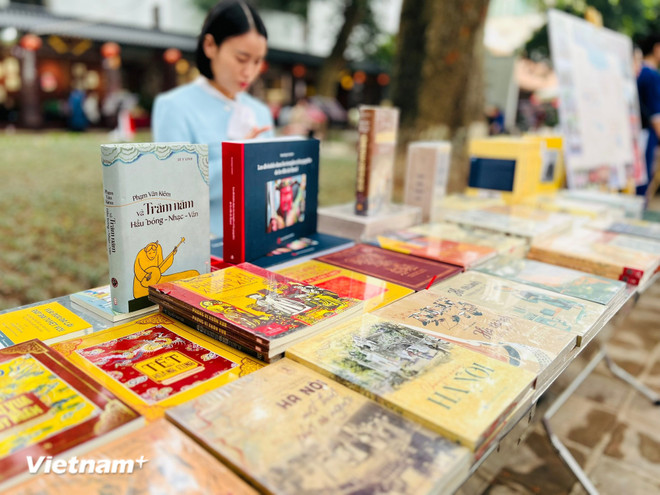
Some books introducing Hanoi’s unique heritage elements and a map showing the heritage itineraries on display at the event (Photo: VietnamPlus)

More than just experiences

This initiative is part of the FEF-R Patrimoine project, funded by the French Ministry for Europe and Foreign Affairs through the French Embassy and the French Institute in Vietnam (IFV). It was implemented in collaboration with the University of Social Sciences and Humanities – Vietnam National University, Hanoi (USSH – VNU), the EFEO, and the University Agency of the Francophonie (AUF).

Brochet emphasised that these itineraries serve as effective educational tools for schools and universities, cultural communication resources for guides, museums, and local authorities, as well as valuable methodological models for researchers. They offer a fresh perspective on Hanoi—a historic yet vibrant capital where tradition intertwines with modern challenges./.
VNA

See more

A ritual at Hue Nam Temple Festival (Photo: VNA)

Hue Nam Temple Festival: From imperial relic to distinctive cultural celebration in Hue

Historically known as Ngoc Tran Son Tu, the temple was renamed Hue Nam during the reign of King Dong Khanh in the late 19th century, symbolising royal gratitude to the Mother Goddess. It is also the only temple in Hue that harmoniously combines royal ceremonial elements with folk religious practices, creating a distinctive blend of court ritual and popular belief.

Participants in the 20th Cong hien (Devotion) Awards presentation ceremony in Hanoi on April 15 (Photo: VNA)

Devotion Awards mark two decades of honouring excellence in music, sports

Nguyen Thien Thuat, Editor-in-Chief of the The Thao & Van Hoa newspaper and Head of the organising board of the awards, said, noting that their achievements reflect the spirit of the Politburo’s Resolution No. 80, which emphasises preserving national cultural values while selectively absorbing the essence of world culture.

Artisans and students take part in cultural activities and exchanges in the Xoan singing performance space at Hung Lo ancient communal house in Phu Tho province (Photo: VNA)

Ancestral legends revived through contemporary performance

Beyond cultural value, well-organised festival programmes linked with tourism and media can contribute to the development of cultural industries and enhance Vietnam’s cultural soft power, positioning heritage-based events as distinctive national cultural brands in the international arena.

Khue Van Cac (Khue Van Pavilion) stands as a defining cultural symbol of Hanoi, closely associated with Vietnam’s long-standing tradition of valuing education and honouring knowledge. (Photo: VNA)

Greater efforts needed for heritage to shape Hanoi’s identity

As suggested by UNESCO experts, heritage should be approached as an integrated system encompassing space, people and everyday life. This perspective can inform urban planning, cultural tourism development and the creation of clear economic drivers.

Participants at the gathering (Photo: VNA)

Lao, Cambodian students welcome traditional New Year in Ho Chi Minh City

In his speech, Vice Chairman of the municipal People’s Committee Nguyen Manh Cuong said the municipal Party organisation, authorities and people always value the close ties and solidarity among Vietnam, Laos and Cambodia. He described the three nations’ longstanding ties, forged through shared hardships, as an invaluable spiritual asset and a bedrock for sustainable development.

Vietnamese kickboxers win 32 gold medals at the Kickboxing World Cup 2026. (Photo: Vietnam Kickboxing Federation)

Vietnam finish third at Kickboxing World Cup 2026

According to Vu Duc Thinh, President of the Vietnam Kickboxing Federation, the strong results reflected careful preparation by local training centres and the determination of Vietnamese fighters. The team’s participation, funded largely through socialised and local resources, also demonstrated growing support for the development of kickboxing in Vietnam.

Politburo member, Secretary of the Party Central Committee and Head of the Party Central Committee’s Commission for Information, Education and Mass Mobilisation Trinh Van Quyet speaks at the event (Photo: VNA)

National Radio Festival opens in Quang Ninh

The opening night was combined with an artistic programme titled “sounds of the new era,” drawing around 50,000 spectators. The programme was structured in three chapters: Origins of Sound, Heritage Sound, and Sound of the New Era.

Vietnamese puppetry faces pressure to adapt to modern lifestyles, particularly amid growing competition from diverse entertainment forms (Photo: VNA)

Vietnamese puppetry seeks renewal amid preservation challenges

People’s Artist Nguyen Hoang Tuan, Chairman of the Hanoi Theatre Association, noted that while northern Vietnam had 27 puppetry guilds in 1986, only 14 remain today. Many traditional plays and original scripts have been lost, hurting restoration and preservation efforts.