HCM City accelerates inter-regional metro planning, eyes modern megacity status

City authorities are urgently reviewing and aligning the urban railway development plan with the new administration model, focusing on station locations, depots, underground zoning and urban development following the transit-oriented development (TOD) model.

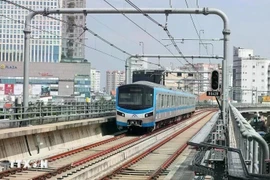
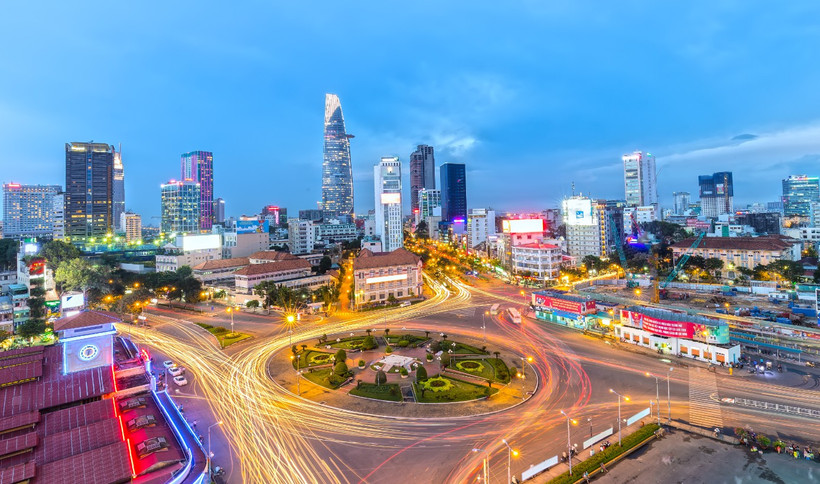
Ho Chi Minh City - the leading economic and cultural hub of Vietnam (Photo: VNA)

HCM City (VNA) – HCM City is stepping up efforts to develop a nearly 1,000km-long inter-regional metro network following its coming merger with Binh Duong and Ba Ria – Vung Tau provinces, paving the way for the creation of a modern megacity.

Building an inter-regional metro system

City authorities are urgently reviewing and aligning the urban railway development plan with the new administration model, focusing on station locations, depots, underground zoning and urban development following the transit-oriented development (TOD) model.

Prior to the merger plan, HCM City had approved 12 metro lines with a total length of about 510km, of which seven priority routes spanning 355km are expected to be completed by 2035. In parallel, two additional lines — Thu Thiem – Long Thanh and District 7 – Can Gio — are being stepped up through private investment. The total investment required is estimated at over 1.2 quadrillion VND (47.06 billion USD).

Meanwhile, Binh Duong planned 12 metro lines with a total length of 305km, Ba Ria – Vung Tau planned three lines totalling about 125km. Once merged, the enlarged HCM City metro system will extend nearly 1,000km — excluding that national rail routes being adjusted to allow multimodal transport integration.

Currently, Metro Line No. 1 (Ben Thanh – Suoi Tien) has been in operation for over six months, surpassing expectations with more than 10 million passenger trips. Building on this momentum, Metro Line No. 2 (Ben Thanh – Tham Luong) is expected to break ground by late 2025.

In Binh Duong, a line linking Binh Duong New City to Suoi Tien (connecting to HCM City’s Metro Line No. 1) is also being prioritised. Stretching over 29km, the line is set to cost more than 46.7 trillion VND and has attracted considerable investor interest.

To the southeast, the Thu Thiem – Long Thanh railway is envisioned as a backbone route connecting Tan Son Nhat and Long Thanh airports. Meanwhile, Ba Ria–Vung Tau is pushing forward with plans for Metro Line No. 3, which will run through Vung Tau – Ba Ria – Phu My to Long Thanh Airport in Dong Nai province.

Pushing ahead with special mechanisms

Dr Pham Viet Thuan, Director of the HCM City Institute of Natural Resources and Environment Economics, perceived that the merger of the three economic hubs will create conditions for strongly attracting investors to future metro development. He emphasised the importance of applying digital technologies across investment, operations, and data synchronisation to cut costs and boost efficiency.

The city is already preparing university land plots and potential large land banks in southern HCM City to build depots and stations. New support mechanisms must be implemented during the preparation phase for upcoming metro lines.

Ngo Viet Nam Son, President of NgoViet Architects & Planners, said that in order to develop a fully integrated inter-regional metro system across HCM City, Binh Duong and Ba Ria – Vung Tau, including connections to Long Thanh Airport, metro lines should be built under the TOD model so that each station can become a nucleus for urban development, driving up land value and attracting investment.

Son noted that to make TOD implementation effective, stronger policy support and flexible financial mechanisms are needed. When TOD is properly developed, metro lines will drive urban growth wherever they go, while also generating stable revenue for reinvestment.

Dr. Thuan added that means of transport should be categorised by speed. For trips within 30km (such as those linking with Binh Duong), metro lines with speeds around 80km/h are suitable. For longer routes like HCM City – Vung Tau, high-speed railways with speeds of at least 160km/h is necessary to reduce travel time and enable inter-regional commuting and living./.

VNA
See more

A bustling construction scene is recorded at four residential building sites under the “Quang Trung Campaign” in Lam Dong province's D’ran commune in the final days of 2025 (Photo: VNA)

PM urges completion of Quang Trung Campaign by January 15

Prime Minister Pham Minh Chinh has signed a dispatch calling on ministries, sectors and localities to make every effort to complete the “Quang Trung Campaign” before January 15, thereby helping people stabilise their lives and livelihoods ahead of the 14th National Party Congress and restore production and business activities before Tet (the Lunar New Year – the Year of the Horse).

An area of large-timber plantation forest in Van Canh commune under the management of the Van Canh Forest Protection Unit. (Photo: VNA)

Room for green economic development from forest carbon credits

As climate change intensifies and the global push toward net-zero emissions gathers pace, Vietnam is gradually shaping its carbon market, with forestry identified as a key pillar thanks to forests’ long-term capacity to absorb and store carbon dioxide. With extensive forest resources, Gia Lai province is emerging as a locality with strong potential to develop forest carbon credits, helping turn ecological assets into drivers of green economic growth.

Nghe An intensifies measures to address EC’s yellow card (Photo: VNA)

Nghe An steps up measures to address EC’s yellow card

Thanks to the coordinated implementation of these measures, Nghe An has completed all 19 key task groups required for efforts to have the European Commission’s “yellow card" on Vietnam's seafood industry lifted.

Tran Thi Chang, President of the Malaysia-Vietnam Friendship Association (Photo: VNA)

Vietnam’s Doi Moi success fuels pride among OVs in Malaysia

Tran Thi Chang, President of the Malaysia-Vietnam Friendship Association, said she is particularly struck by Vietnam’s ability to sustain rapid growth while safeguarding its cultural identity and traditional values. Numerous tangible and intangible heritages have earned UNESCO World Heritage status, and the distinct cultures of Vietnam’s 54 ethnic groups remain protected and upheld, contributing considerably to national progress.

Staff members receive applications from citizens and businesses at the Ho Chi Minh City Public Administration Service Centre. (Photo: VNA)

HCM City launches Public Administrative Service Centre

The People’s Committee of Ho Chi Minh City held a ceremony on December 31 to make debut its Public Administrative Service Centre, marking a significant step forward in advancing administrative reform and building a modern, efficient and people-oriented public administration.

The Vietnamese community in Singapore lay flowers at the bust of President Ho Chi Minh at the Asian Civilisations Museum to mark the 80th anniversary of the August Revolution and National Day (September 2). (Photo: VNA)

Broader consultation policy with overseas Vietnamese receives positive response

According to Ho Quynh Lan, leader of the Vietnam Business Association in Singapore and deputy head of the liaison board of the Vietnamese Community in the city-state, the Party and State’s decision to open broader channels for policy consultations demonstrates greater openness and democracy of the Vietnamese Government.

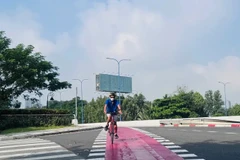
The dedicated bicycle lane along Mai Chi Tho street in An Khanh ward, Ho Chi Minh City (Photo: sggp.org.vn)

HCM City opens first bike lane along Mai Chi Tho street

Once operational, the dedicated bicycle lane is poised to function not only as transportation infrastructure but also to enhance environmental quality and foster a more civilised urban mobility landscape in Ho Chi Minh City

The Vietnamese community in Germany organises a fundraising event to support people affected by Storm Bualoi at home. (Photo: VNA)

OVs translate nation-building aspirations into tangible contributions

Ho Ngoc Thang, a former senior specialist at Germany’s Federal Office for Migration and Refugees, said that timely and appropriate guidelines have helped foster patriotism and great national unity, translating OVs’ desire to contribute to nation-building into practical initiatives.