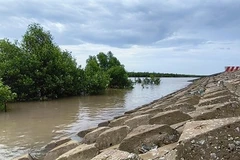
Young volunteers planting saplings in a mudflat of a coastal mangrove forest in HCM City’s Can Gio district. (Photo: VNA)
 The city has been preparing steps to guide local businesses to develop emissionreduction plans at the request of the Government.
The Law on Environmental Protection 2020 stipulated the development of thedomestic carbon market, with an official operation roadmap from 2028. This isthe latest legal basis for regulations on the organisation and development ofthe carbon market.
The building and operation of a domestic carbon market will help Vietnameffectively reduce carbon emissions, and increase compatibility withinternational carbon pricing mechanisms.
In addition, the country will have opportunities to link with the carbon marketin the Southeast Asian region and in the world.
The carbon market is a resource generation mechanism through the purchase andsale of carbon credits to promote the development and application oflow-emission technologies toward a carbon-neutral economy.
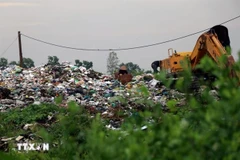
In HCM City, Korean firm KMDK has worked with the city to implement a projectof trading targets to reduce greenhouse gas emissions at Dong Thanh landfill inHoc Mon district since 2010.
Instead of conducting emission reduction projects in their own countries,developed countries can help developing countries reduce greenhouse gasemissions. The volume of emissions reduced from this cooperation is included inthe emission reduction target of that developed country.
In contrast, developed countries pay an amount to developing countries upon anagreement.
According to this plan, KMDK will implement a project to reduce emissions andpay the city about 3 million USD.
Due to the financial difficulties of KMDK, the project was not implemented.However, the investment in emission reduction at landfills in the city is stillconsidered to have great potential in emission reduction activities.
Phung Chi Sy, vice president of Vietnam Association for Conservation of Natureand Environment, said the field of land use, land use purpose change andforestry fields have the potential to reduce emissions by up to 9.3 milliontonnes of CO2.
In addition, afforestation projects, projects under the clean developmentmechanism, or Nationally Appropriate Mitigation Actions (NAMAs) also have thepotential to generate carbon credits for attracting investors.
Forest carbon credits, reduction of greenhouse gas emissions through the fightagainst deforestation and forest degradation, and sustainable management offorest resources are being seen as new resources for the country in general andthe city’s Can Gio district in particular.
The mangrove area in Can Gio Biosphere Reserve has a total area of 75,740hectares. It is divided into three parts, including a 41,139ha buffer zone,which has great potential if it participates in carbon credit exchange.
Bui Nguyen The Kiet from the Protective Forest Management Board of Can Gio district,said the Can Gio mangrove forest can absorb nearly 11 million tonnes of CO2 perhectare and provide about eight million tonnes of O2 per hectare.
It accumulates about three million tonnes of CO2 per hectare and has a CO2exchange value of about 77 million USD per hectare per year.
Vietnam made a strong commitment at the United Nations Climate Change Summit in2021 (COP26) that it will reduce its net emissions to zero by 2050.
The Vietnamese Government has issued a decree on reducing emissions and lightgreenhouse gas emissions, and protecting the ozone layer.
It has also issued a decision on the list of industries, sub-industries andestablishments that must check how much greenhouse gas they produce.
It issued these decrees to manifest its dogged determination to reducegreenhouse gases.
However, the country is facing huge technical challenges to operate in thecarbon market because there is not much time to implement the internationalcommitments.
Nguyen Hong Quan, head of the Research and Development Institute of CircularEconomy of Vietnam National University-HCM City (VNU-HCM), said the city needsto have a specific assessment of what fields can be deployed for carbon captureto promote the development of the carbon market.
The Can Gio forest, agricultural activities, and waste treatment are examples,he said.
After the overall study and assessment, priority areas must be identified tocall for cooperation in implementation.
Support mechanisms and policies also need to be based on the potential of eachproject group.
The city can ask the central government for a specific mechanism to develop acarbon market, he said.
With its potential, the city can not only sell but also buy carbon credits inother countries, he added.
Businesses need to grasp information and carefully prepare to join the marketthrough capacity building in greenhouse gas inventory activities.
Local state management agencies need to promote awareness-raising activities sothat establishments and enterprises develop technology for participation aswell as complete policies to support and encourage enterprises to participatein the domestic carbon market.
The country also needs to issue regulations on activities to connect andexchange domestic carbon credits with regional and global carbon markets.
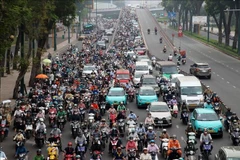
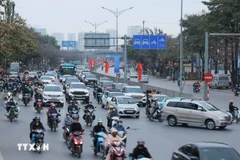
At the seminar on "Low-carbon development" recently organised by thecity’s Department of Natural Resources and Environment in collaboration withthe WB, the municipal People's Committee vice chairman Vo Van Hoan said thereare 140 large establishments in the city operating in the fields of energy,construction, industry and trade.
Therefore, the city needs to check how much greenhouse gases are emitted.
The low-carbon urban plan in the city includes activities, recommendations andaction proposals needed to achieve the city's development goal of low carbonemissions.
This can be considered a good signal for the city in the field of environmentalprotection this year./.
VNA