HCM City to trial shopping, other services at metro stations

By integrating shopping and services, HCM City hopes to offer metro users greater and quick access to goods while supporting the city's broader retail development strategy.

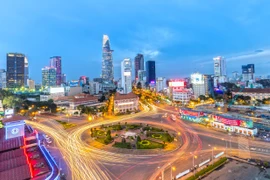
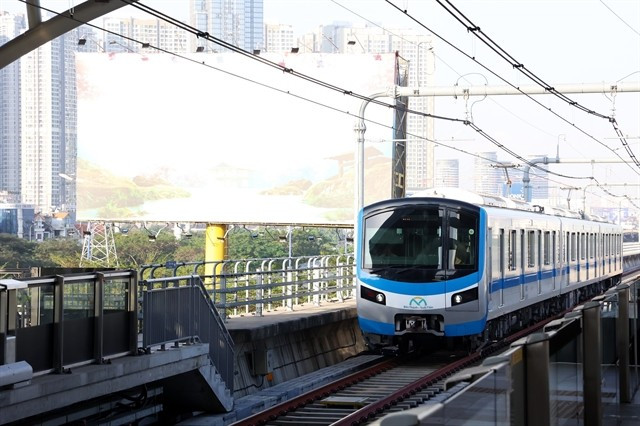
Metro line No. 1 in HCM City passes through 14 stations, none of which have retail or shopping services. (Photo: VNA)

HCM City (VNS/VNA) - The Ho Chi Minh City Department of Industry and Trade has proposed a trial model that will provide retail and essential services at stations along metro line No. 1 between Ben Thanh and Suoi Tien.

By integrating shopping and services, it hopes to offer metro users greater and quick access to goods while supporting the city's broader retail development strategy.

The initiative stems from a proposal made in May 2025 by retail operator Saigon Co.op to integrate retail points at select stations.

Authorities believe that utilising space around metro stations for commerce could generate significant economic returns.

It could also enhance the appeal of the metro by providing commuters with access to value-added services, including retail, payments and amusement.

Integrating commercial and service spaces directly into metro stations is seen as a key step towards forming new urban commercial hubs that stimulate economic activity.

Drawing on examples from countries such as Japan, the Republic of Korea, and Singapore, the department said urban railway stations there often act as high-density commercial zones.
Their successful integration of retail, services and transit facilities offers valuable insights into the benefits of the model, it said.

The Ben Thanh – Suoi Tien metro line, which became operational at the end of 2024, runs nearly 20 kilometres and represents a milestone in the development of the city’s public transport system.

Under the city’s roadmap, the network is expected to expand to 335 kilometres by 2035, opening vast new corridors for commercial and infrastructural development.

In this context, the department emphasised the importance of preparing a compatible commercial ecosystem alongside the expansion.

Modern retail models will need to be developed and aligned with transit infrastructure to fully capitalise on the investment in urban rail.

Such an ecosystem would not only support the daily needs of metro passengers but also serve the broader consumer base, creating new demand channels and stimulating spending.

It will serve to modernise the city's distribution systems, provide new retail opportunities and contribute to the city’s strategy for sustainable urban growth.

As domestic consumption accounts for more than 70% of Vietnam’s GDP, the initiative is also seen as a measure to help balance economic growth in a complex global economic environment.

The trial, if approved, will be implemented with consideration of space planning, passenger flow, safety regulations, and digital transaction infrastructure.

The city’s retail market saw revenues of nearly 1.4 quadrillion VND (55 billion USD) in 2024 after growing at over 10% from the previous year.

With consumer demand increasingly shifting towards convenience and integrated service models, the metro-based retail initiative is expected to be well received by both businesses and the public. /.

VNA
See more

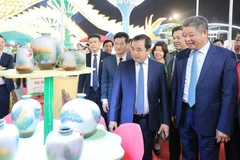
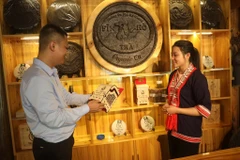
Officials visit a booth at the festival. (Photo: VNA)

Vietnam OCOP Festival 2025 opens in Hanoi

The festival functions as a space to bring together regional OCOP excellence, a forum connecting OCOP stakeholders with distributors, investors, experts and consumers, and a platform to spread pride in indigenous culture, local knowledge, and the aspiration for legitimate prosperity.

Prime Minister Pham Minh Chinh (third from right) and officials launch the Ministry of Construction’s new information technology systems at the conference on December 21. (Photo: VNA)

Modern, comprehensive infrastructure – a need for fast, sustainable development: PM

The Party and State continue to define infrastructure development as one of the three strategic breakthroughs, with priority given to building comprehensive and modern infrastructure, particularly transport facilities, technological infrastructure, and green – digital transition infrastructure, to help realise the national target of double-digit growth, the PM said.

Prime Minister Pham Minh Chinh addresses he third meeting of the National Steering Committee implementing the Politburo’s Resolution 68 in Hanoi on December 20. (Photo: VNA)

PM pushes trust, breakthroughs to accelerate private sector growth

Prime Minister Pham Minh Chinh noted that since the rollout of Resolution 68, alongside supporting resolutions from the National Assembly (NA) and Government, there has been a marked change in understanding the private sector’s critical position and role in Vietnam’s socialist-oriented market economy.

PM Pham Minh Chinh chairs the meeting (Photo: VNA)

Private sector thrives eight months after Resolution 68’s launch: PM

The private sector has shown marked progress eight months after the launch of Resolution 68, registering about 18,000 new enterprises monthly and pushing the nationwide total to nearly 1.1 million, Prime Minister Pham Minh Chinh told the third meeting of the National Steering Committee in Hanoi on December 20.

Phin Ho Tra – a national five-star OCOP product. (Illustrative photo: VNA)

Hanoi to host Vietnam OCOP Festival 2025

The festival is seen a practical activity celebrating the achievements made by the capital and the country in 2025, affirming OCOP’s role in rural economic development, contributing to realising Vietnam’s aspiration for strong economic growth in the context of deep integration.

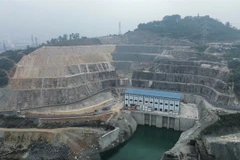
The expanded Hoa Binh Hydropower Plant (Photo baochinhphu.vn)

EVN launches major power projects

Among the flagship projects inaugurated was the expanded Hoa Binh Hydropower Plant with a total installed capacity of 480MW per year and average annual output of about 488 million kWh.

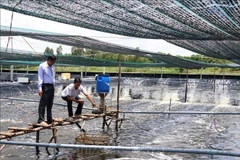
An ultra-intensive shrimp farming model linked with environmental protection in Ca Mau province. (Photo: VNA)

Fisheries take the lead in the Mekong Delta’s green transition

Across the Mekong Delta, leading aquaculture producers, processors and exporters, along with suppliers of inputs, are transitioning to circular, high-tech and clean production models that cut greenhouse gas emissions and comply with international certification standards.

A perspective view of the Red River Landscape Boulevard project in Hanoi (Photo: VNA)

Works starts on Hanoi’s Red River Landscape Boulevard Axis project

The project is among the 234 key works and projects being launched, inaugurated or technically opened simultaneously across 34 cities and provinces nationwide to mark the 14th National Party Congress. Its launch contributes to implementing the country’s strategic development orientations while concretising Hanoi’s development goals in the new period.