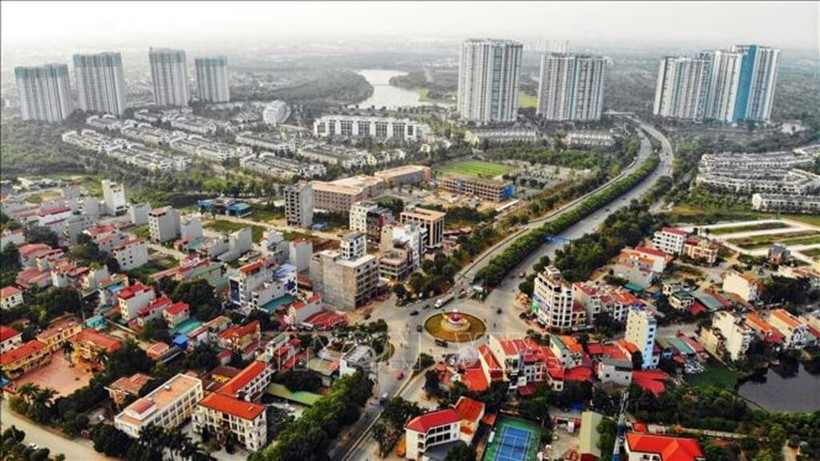
Hung Yen (VNA) – With a 2025 GRDP growth target of 10.5%, the northern province of Hung Yen is entering a phase of decisive and synchronised action, focusing on removing bottlenecks for businesses, boosting infrastructure investment, accelerating public capital disbursement, and creating an attractive investment environment.
Proactive governance inspires business confidence
Following recent administrative restructuring, Hung Yen is undergoing a strong transformation to become a new growth pole in the Red River Delta. With the local government gradually stabilising, the province has set an ambitious growth target for 2025, with GRDP up 10.5%, industry growing by 12.5%, and services by 10%, reflecting a bold vision for development.
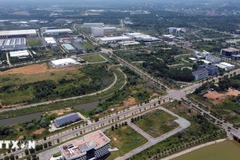
The provincial People’s Committee has unveiled a series of coordinated measures to address challenges for businesses in industrial parks (IPs), industrial clusters, economic zones, and major investment projects.
Nguyen Khac Than, Deputy Secretary of the provincial Party Committee and Chairman of the provincial People’s Committee, has instructed departments and sectors to focus on resolving obstacles related to land clearance, investment procedures, and access to raw materials. He stressed that no project should be delayed due to administrative hurdles. This is not just a political statement, but concrete action to strengthen investor confidence.
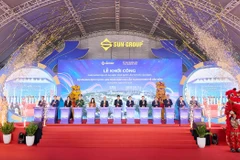
The timely involvement of provincial authorities has given a boost to the local business community. At Thang Long II Industrial Park, Taiwan-based MitraStar Technology Corporation (under the Zexel Group) has recently broken ground on its Vietnam plant project, with a registered investment of 34 million USD. The facility is expected to become a strategic production hub for the group in the country.
Dr. Zhu, Chairman of the Board at MitraStar, praised Hung Yen’s investment climate, saying the local solid infrastructure, abundant workforce, and above all, the practical and prompt support from local authorities, have reassured the company in accelerating its investment plans.
From the perspective of domestic firms, Long Hau Ceramics JSC (located at the Tien Hai IP) and Bao Minh Industrial Infrastructure Investment JSC (the investor of the Hai Long IP) also expressed hopes that local authorities will continue to accompany businesses in boosting production, operations, and investment attraction.
Bui Van Son, Chairman of Long Hau Ceramics, noted: “We are facing challenges in securing raw materials and market access, and need timely support on mechanisms, infrastructure, and market connectivity to maintain our production and exports.”
Do Quang Tuan, Deputy General Director of Bao Minh, added: “There is a huge investment demand right now. If we lack ready, clean land and synchronised technical infrastructure, we risk missing strategic investors for cooperation and growth.”
Accelerating disbursement, laying foundation for sustainable growth
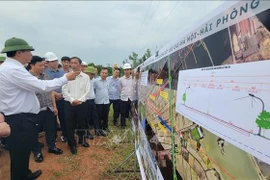
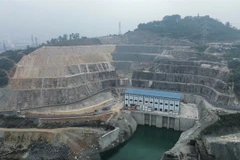
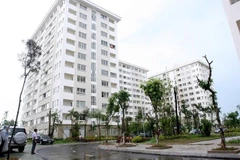
Alongside business support, Hung Yen is expediting public investment disbursement, viewing it as a catalyst for spreading production and business momentum across the province. The goal is to disburse 100% of planned capital in the second half of the year, with priority given to key transport projects, new urban areas, commercial housing, and official housing for public employees.
The provincial People’s Committee has tasked the Department of Finance with reviewing and proposing the reassignment of public project investors when necessary, to prevent stagnation and resource waste.
Beyond short-term measures, Hung Yen is implementing four strategic pillars: science and technology, innovation and digital transformation, international integration, institutional reform, and the private economic sector. This forms the province’s “new operating system” for breakthrough economic growth during the transition period./.
The northern province of Hung Yen has focused on creating a safe, effective and competitive investment environment to turn the locality into a “promising land” for enterprises, particularly foreign investors.
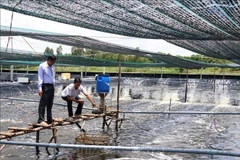
It pursues the strategic goal of developing modern industry and efficient agriculture towards rapid and sustainable growth on the basis of high economic growth, harmonious society and well protected environment and ecology.
Possessing several outstanding factors, the province is an enticing investment destination. It attracts investors thanks to a convenient geographical location in the centre of the fast-growing Red River Delta and adjacent to Hanoi, developed trade and transportation infrastructure with convenient linkage to the capital city’s Noi Bai international airport, to Hai Phong international port and to major economic, commercial and industrial centres of the country.
In addition, Hung Yen boasts a rich network of tangible and intangible cultural heritages as well as an abundant, highly skilled, and hard-working workforce.