Indonesia enacts new Criminal Code

Indonesia officially enacted its new National Criminal Code (KUHP) and Criminal Procedure Code (KUHAP) on January 2, marking a major milestone in the comprehensive reform of the criminal justice system of Southeast Asia’s most populous nation.

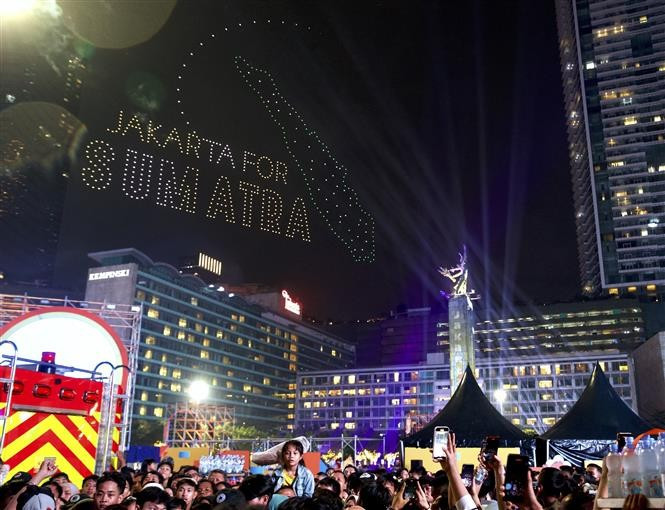
People celebrate the New Year 2026 in Jakarta. (Photo: Xinhua/VNA)

Jakarta (VNA) – Indonesia officially enacted its new National Criminal Code (KUHP) and Criminal Procedure Code (KUHAP) on January 2, marking a major milestone in the comprehensive reform of the criminal justice system of Southeast Asia’s most populous nation.

The two new laws replace legal provisions that had been in place for decades, many of which originated in the colonial era and were widely criticised by experts and the public as outdated, rigid, and insufficiently reflective of modern rule-of-law values.

Speaking at the announcement ceremony, Coordinating Minister for Legal Affairs, Human Rights, Immigration and Corrections Yusril Ihza Mahendra said the promulgation of the new codes has definitively closed the chapter on Indonesia’s colonial-influenced criminal law system. He described the move as opening a new phase in law enforcement with a more modern and humane approach.

According to Yusril, the new Criminal Code places strong emphasis on a “restorative justice” approach, aiming to strike a balance between punishment and social reintegration. In addition to prison sentences, the law allows alternative measures such as community service, rehabilitation and mediation, providing greater flexibility in handling offences, particularly less serious cases.

Alongside this, the new Criminal Procedure Code strengthens regulations governing investigation and adjudication, tightens oversight mechanisms for law enforcement agencies, and enhances protections for the rights and interests of victims and witnesses. A notable feature of the new code is its encouragement of digital technology applications in criminal proceedings, with the aim of improving transparency and efficiency across the justice system.

Indonesian authorities expect the new legal framework to lay a solid foundation for a justice system that is fairer, more effective and better suited to the realities of modern society, while strengthening public trust in the rule of law./.

VNA

See more

Inorganic chemistry unlocks green solutions in Indonesia: scientist

Inorganic chemistry unlocks green solutions in Indonesia: scientist

Professor of Chemistry at Pattimura University Hellna Tehubijuluw said over the past two decades, inorganic chemistry has undergone a fundamental transformation. The discipline is no longer confined to studying compound structures; it has evolved into a practical solution to environmental, energy, and materials challenges.

Khamphan Pheuinhavong, Chairman of the Central Committee’s Commission for Propaganda and Training of the Lao People’s Revolutionary Party, grants interview to the Vietnam News Agency. (Photo: VNA)

Laos posts significant achievements across sectors over past five years

Despite facing considerable challenges related to the economy, finance and currency, along with persistent social difficulties, Laos has successfully carried out the orientations and targets it set. Economic growth has been maintained, macroeconomic fundamentals have remained largely stable, inflation risks have been contained, and key economic indicators have gradually recovered and strengthened.

Thailand general election sees 5,000 candidates

Thailand general election sees 5,000 candidates

Deputy EC secretary-general Phasakorn Siriphakayaporn said that 3,526 candidates from 60 parties registered for 400 constituencies across Thailand, while 1,570 party-list candidates from 57 parties entered the race as of 4.30pm on December 31.

Jakarta grapples with mounting traffic pressure (Photo: thejakartapost.com)

Jakarta faces mounting traffic pressure

Data released by the Metro Jaya Police on December 31 showed that by the end of 2025, the total number of vehicles in Jakarta and its satellite cities of Depok, Tangerang and Bekasi reached 25.07 million, up 2.93% year-on-year. Of this figure, nearly 735,000 were newly registered vehicles, including more than 93,600 cars.

Election Commission officials count ballots at a polling station during Myanmar's general election in Yangon, Myanmar, on December 28, 2025. (Photo: Reuters)

Myanmar completes first phase of general election

Across Myanmar, more than 24.26 million people were eligible to vote in the 2025 general election. For the first phase, over 11.69 million voters were registered, and more than 6.09 million cast their ballots.

Indonesia's Minister of Energy and Mineral Resources Bahlil Lahadalia. (Photo: www.petromindo.com)

Indonesia targets diesel self-sufficiency in 2026

The Indonesian government is pressing ahead with its plan to end diesel imports in 2026, banking on the start-up of the Balikpapan Refinery Development Master Plan (RDMP) and the expansion of the biodiesel mandate to achieve fuel self-sufficiency.

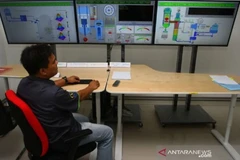
A worker inspects a waste-to-energy generator at the Putri Cempo power plant in Solo, Central Java. (Photo: ANTARA)

Indonesia promotes waste-to-energy conversion

Under the programme, the national strategic investment management agency (Danantara) will provide investment capital, while state-owned electricity utility Perusahaan Listrik Negara (PLN) will be responsible for purchasing and distributing the electricity generated.

Passengers line up for check-in procedures at Kuala Lumpur International Airport (Photo: VNA)

Malaysia expands international air routes to boost tourism

Malaysian Minister of Tourism, Arts and Culture Tiong King Sing said that the new services comprise 16 scheduled flights and five charter flights to be operated by 10 airlines, linking Malaysia with destinations across ASEAN, East Asia, Uzbekistan and Sri Lanka.