Hanoi (VNA) – Vietnam has made remarkable strides in industry and trade, particularly in exports and imports over the past 80 years, becoming the fourth-largest economy in Southeast Asia and one of the world’s top 30 exporting nations.
The nation’s historic achievements over the period have strengthened its position, laying the groundwork for fresh developments in the coming time.
Vietnam’s economy has witnessed breakthroughs, taking the country from devastation and poverty to independence, self-reliance, and dynamic development, while gradually positioning the “Made in Vietnam” brand on the global economic map.
Great strides in import - export, industrial production
The country has achieved remarkable progress in industry and trade, especially in export and import activities. From a severely struggling economy, the country has risen to become the economy with the fourth largest GDP in Southeast Asia and among the Top 30 largest exporting economies in the world.
Thanks to effective policies, Vietnam’s exports grew rapidly in the early period from 1991 to 2010, consistently achieving double-digit annual growth, with some years exceeding 15%. From 2011 to 2022, the country’s total export value expanded by 12.6% per year.
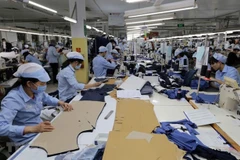
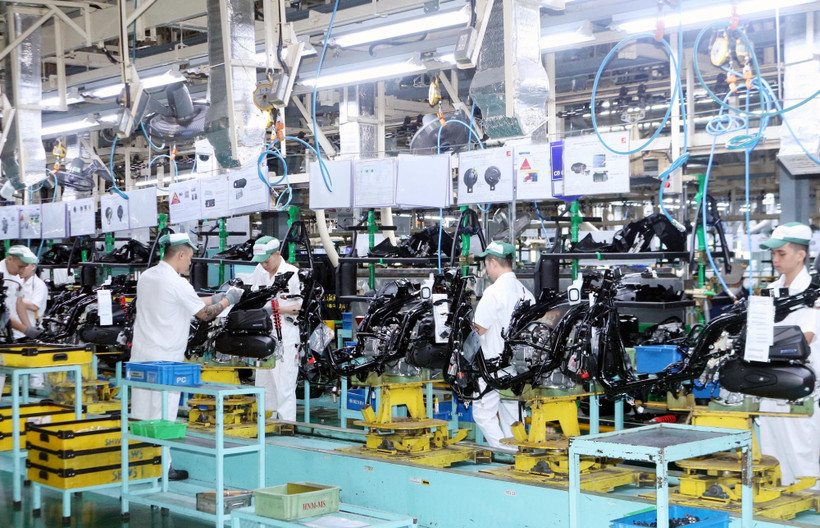
Workers work at Global Dynamic Mechanical Co., Ltd, in the Giang Dien Industrial Park, Dong Nai province. (Photo: VNA)
From 2016 to 2024, Vietnam maintained a trade surplus for nine consecutive years, with total import-export turnover approaching 800 billion USD in 2024 - the highest ever recorded.
Vietnamese goods are now shipped to nearly 200 countries and territories worldwide, including major and demanding markets such as the US, Japan, and the EU.
The country’s import-export turnover in 2025 is expected to exceed 900 billion USD, with a trade surplus for nine consecutive years, placing it among the world’s 20 countries with the largest trade scale.
Alongside the development of agriculture and forestry, the processing and production industries have played a key role, driving the economy with a growth rate of 5.8%.
From a small and underdeveloped industrial base, Vietnam has now developed several key industries, including electronics, mechanical engineering, textiles, footwear, food processing, and renewable energy. Processing and manufacturing now contribute nearly 25% of the GDP, serving as a main driver of economic growth.
The Index of Industrial Production (IIP) rose 8.4% in 2024 compared to the previous year - the highest since 2020 - exceeding the target by 7-8%. By the end of 2024, Vietnam had attracted a total of 502.8 billion USD in FDI, with 308.76 billion USD in the processing and manufacturing sector.
After 80 years of preserving independence and pursuing the “Doi moi” (renewal) process, Vietnam has emerged as a middle-income country, with a per capita income of around 4,700 USD in 2024, 63 times higher than that in 1986. Its average annual economic growth expands by 6.5%, placing it among the highest-growing countries in the region and the world.
According to data from the International Monetary Fund (IMF), Vietnam’s nominal GDP was 43 billion USD in 1986. By 2008, it had risen to 125 billion USD, nearly three times higher than in 1986.
In the next phase, Vietnam took only 15 years for its economy to grow from 100 billion USD to 400 billion USD. Specifically, the country’s GDP reached 408 billion USD in 2022 and 433.7 billion USD in 2023. Notably, with a GDP of 476.3 billion USD in 2024, Vietnam ranks fourth in Southeast Asia and 34th in the world in terms of economic size.
Vietnam’s investment and business environment has steadily strengthened, establishing the country as a premier destination for foreign investment. To date, it has attracted hundreds of billions of USD in FDI and signed 17 free trade agreements (FTAs) linking over 60 major economies worldwide. Vietnam has also emerged as a key manufacturing hub in regional and global supply chains for leading technology corporations, including Samsung, LG, Intel, Apple, GE, and Foxconn.
According to Brand Finance, in 2024, Vietnam’s national brand value was estimated at 507 billion USD, ranking 32nd globally, up one place from 2023. This reflects the government’s efforts in improving the investment and business environment, and boosting import- export activities. It also underscores the strong position of Vietnamese businesses in maintaining high growth in both profit and revenue, sustaining the domestic market, and expanding exports./.