Legislature proves strong support to Vietnam’s development, integration: Scholar

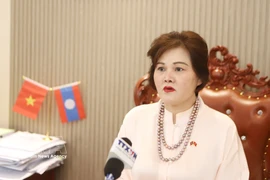
Dr Julia Roknifard, senior lecturer in international relations at Taylor’s University in Malaysia, shared her assessment of the role of Vietnam’s highest legislative body in promoting economic development and strengthening multilateral cooperation amid a rapidly changing global landscape in in an interview with Vietnam News Agency correspondents in Kuala Lumpur.

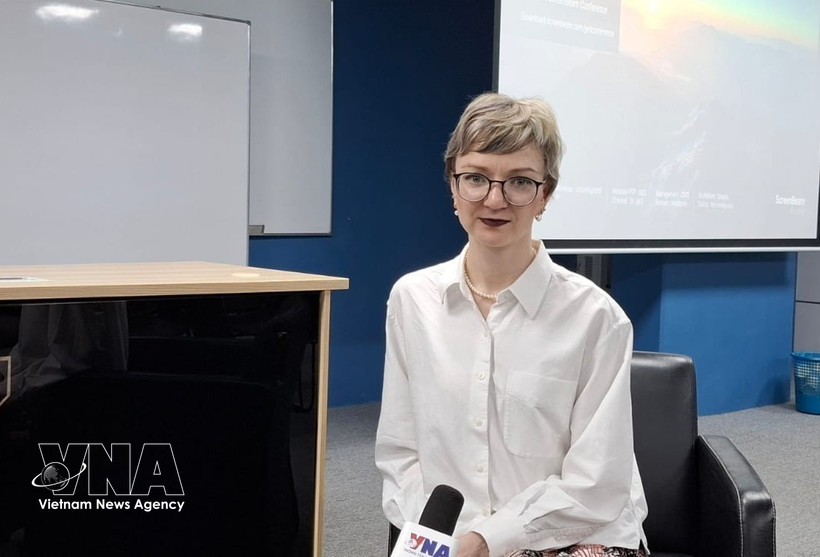
Dr Julia Roknifard, senior lecturer in international relations at Taylor’s University in Malaysia (Photo: VNA)

Kuala Lumpur (VNA) – As Vietnam prepares for elections of deputies to the 16th National Assembly and People’s Councils at all levels for the 2026–2031 tenure, the role and standing of the country’s legislature are drawing increasing attention from international observers.

In an interview with Vietnam News Agency correspondents in Kuala Lumpur, Dr Julia Roknifard, senior lecturer in international relations at Taylor’s University in Malaysia, shared her assessment of the role of Vietnam’s highest legislative body in promoting economic development and strengthening multilateral cooperation amid a rapidly changing global landscape.

According to Roknifard, Vietnam’s National Assembly serves as the highest state power agency under a system of unified state power, where all state bodies are subject to parliamentary oversight. This structure enables the country to implement development policies and plans in a coordinated and consistent manner, helping maintain socio-economic stability and providing a solid foundation for sustainable economic growth. Such stability, she noted, has enabled Vietnam to sustain one of the most impressive growth rates in ASEAN.

Beyond its oversight role, the National Assembly also contributes significantly to building the legal framework for economic development. Through the adoption of key laws on trade, infrastructure, digital transformation and industrial development, it has helped create a stable and predictable investment environment for both domestic and foreign investors, particularly amid geopolitical tensions, conflicts and rapid technological change affecting global supply chains.

By actively participating in regional and global forums such as the Inter-Parliamentary Union (IPU) and the ASEAN Inter-Parliamentary Assembly (AIPA), Vietnam’s legislature has helped strengthen the country’s voice on issues including trade, sustainable development, climate change and regional stability.

Roknifard said parliamentary diplomacy can serve as an important complement to traditional diplomacy, as it creates flexible channels of dialogue among lawmakers, helping build trust and promote cooperation among nations. She cited Vietnam–Malaysia parliamentary ties as a case in point, noting that cooperation between the two legislatures has intensified since the two countries upgraded their relations to a Comprehensive Strategic Partnership in November 2024.

As two dynamic economies in Southeast Asia, closer coordination between lawmakers helps ensure that policies continue to support business cooperation and regional economic integration, she said. The two sides have shared experiences in areas such as economic modernisation, trade facilitation and sustainable development, while parliamentary exchanges, committee cooperation and dialogue have helped translate political commitments into concrete legal frameworks and policies.

At recent regional parliamentary forums, including the 46th AIPA General Assembly held in Kuala Lumpur, the role of legislatures in advancing a more inclusive and sustainable ASEAN Community has been highlighted.

Regarding the upcoming elections, Roknifard said the institution’s position is likely to be further strengthened. Amid global and regional uncertainties, parliamentary mechanisms such as AIPA will continue to play an important role in linking legislative bodies, facilitating policy coordination and sharing development experiences.

She noted that parliamentary cooperation initiatives not only encourage ASEAN countries to work together on shared priorities such as inclusive growth, green transition and climate change response, but also help enhance transparency and accountability in policymaking and implementation.

With a stable institutional structure and rising international credibility, Vietnam’s National Assembly is expected to continue supporting domestic stability while serving as a reliable partner in regional and global cooperation mechanisms.

Roknifard noted that Vietnam’s strong economic growth and its increasingly active role in international forums, including the United Nations, reflect the country’s rising global standing and will provide a solid basis for the next National Assembly to support the country’s development and elevate its international position./.

VNA
See more

The special ASEAN foreign ministers’ meeting on the Middle East situation is held online on March 13. (Photo: Vietnamese Ministry of Foreign Affairs)

Vietnamese embassies in Middle East ready to assist ASEAN citizens: FM

Foreign Minister Le Hoai Trung stressed that ASEAN members should prioritise maintaining energy supplies for one another, particularly oil and gas, and make effective use of cooperation agreements with partners, including Gulf Cooperation Council (GCC) countries, to diversify energy sources.

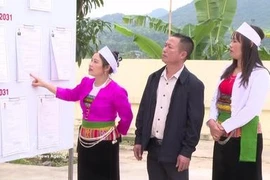
Muong Sai commune in Son La province is decorated to celebrate the election day. (Photo: VNA)

📝OP-ED: Facts shatter distorted allegations about general election

In reality, the capacity and effectiveness of Vietnam’s legislative body have been clearly demonstrated through major policy decisions that have contributed to maintaining political stability, promoting economic growth and enhancing the country’s standing in the international arena.

Vietnamese Ambassador Nguyen Thi Van Anh (L), Permanent Representative of the State President to the Permanent Council of La Francophonie, and Administrator of the International Organisation of La Francophonie (OIF) Caroline St-Hilaire at theri meeting in Paris on March 12. (Photo published by VNA)

OIF Administrator praises Vietnam’s role, contributions

The two sides discussed cooperation in French-language education in the Southeast Asian country, ways to encourage young people to choose French, and the development of French-speaking human resources, including language training for civil servants and for Vietnamese military and police personnel participating in United Nations peacekeeping operations.

Speakers at the dialogue. (Photo: VNA)

Vietnam hosts dialogue on improving access to justice for women, youth

The dialogue brought together Deputy Minister of Home Affairs Nguyen Thi Ha, head of the Vietnamese delegation, ambassadors and delegation leaders attending the session, as well as representatives from UN agencies, international organisations, non-governmental organisations and scholars.

Nguyen Thi Thuy Linh, a third-year student majoring in Chinese language at Beijing Language and Culture University, speaks in an interview with a Vietnam News Agency correspondent in Beijing. (Photo: VNA)

Vietnamese students in China anticipate election with great hope

Many Vietnamese students in China said that although they are studying abroad, they remain deeply connected to their homeland and aspire to contribute their knowledge and international experience to the country’s development. For them, the upcoming election represents not only a significant political event at home but also an opportunity for overseas Vietnamese to place their confidence in Vietnam’s next phase of growth

The appointment decision handover ceremony is held in Hanoi on March 12. (Photo: VNA)

PM appoints new leader for Vietnam’s top science academy

PM Pham Minh Chinh asked the VAST to continue to serve as the Party and State’s strategic advisory body on science – technology in key areas such as artificial intelligence, energy, marine economy, water security, and aerospace, alongside building a national sci-tech database.

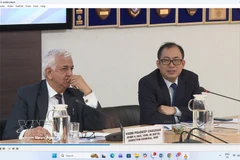
Do Thanh Hai (right), Deputy Director-General of the East Sea Institute under the Diplomatic Academy of Vietnam, speaks at the dialogue. (Photo: VNA)

Vietnam, India promote maritime security cooperation through blue economy development

Through four rounds of bilateral “Track 1” Maritime Security Dialogue, the two sides have outlined priority areas of cooperation, including marine scientific research, blue economy development, humanitarian assistance and disaster relief, naval and coast guard cooperation, maritime law enforcement, capacity building, and maritime connectivity.