Hanoi (VNA) - Vietnam’s Ministry of Agriculture and Environment has unveiled a landmark plan to promote low-emission crop production, marking a strategic move towards sustainable agriculture and climate change mitigation.
According to the “Low-Emission Crop Production Plan 2025–2035, with a vision to 2050,” the crop sector is expected to reduce at least 15% of total greenhouse gas emissions by 2035. The plan also aims to establish and promote a “Low-Emission” label for Vietnamese agricultural products.
Each province will implement at least one scalable low-emission production model and pilot a minimum of 15 farming practices capable of generating carbon credits in line with international standards.
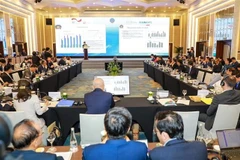
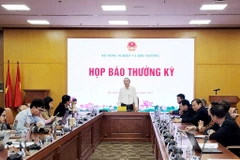
On October 22, the Ministry of Agriculture and Environment held a conference to launch the plan and seek feedback on an action plan for its implementation.
Speaking at the event, Deputy Minister Hoang Trung highlighted that the plan represents a strategic initiative, reflecting the ministry’s commitment to innovation and a green transition amid deeper international integration.
“The plan is not merely a technical task but a pledge by Vietnam to transparent and responsible agriculture. It will contribute significantly to meeting the Nationally Determined Contributions (NDC) and achieving net-zero emissions by 2050,” Trung said.
Citing recent national greenhouse gas inventories in agriculture, Trung noted that crop production accounts for nearly 80% of total emissions in the sector, with paddy rice being the largest contributor. Research on carbon absorption by perennial crops remains limited, leaving a gap in scientific guidance for sustainable cultivation practices.
“Restructuring production to reduce emissions while increasing efficiency and lowering costs is not only a necessity of the era but also an opportunity to enhance competitiveness and establish Vietnamese agricultural brands internationally,” he added.
Despite challenges in awareness, infrastructure, technology, and resources, the plan identifies six key tasks: crop restructuring, development and application of technical packages, expansion of low-emission cultivation models, establishment of MRV (Monitoring, Reporting, Verification) systems, capacity building and awareness raising, and market linkages for low-emission products.
Seven key solutions for implementation
To achieve these tasks, the ministry has outlined seven major solutions: enhancing state management and policies; advancing science and technology; organising production; building databases; mobilising financial and human resources; improving communication; and promoting international cooperation.
These measures will be implemented simultaneously and coherently from central to local levels and across public and private sectors. By 2035, crop production is expected to achieve at least a 15% reduction in greenhouse gas emissions compared with 2020 levels.
Each province will develop one to two low-emission models capable of scaling up, forming a comprehensive emissions database linked to the national registry, and establishing a “Low-Emission” label for Vietnamese agricultural products.
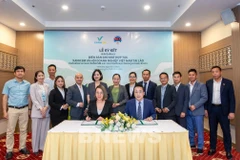
Deputy Minister Hoang Trung speaks at the event (Photo: MAE)
By 2050, the crop sector is expected to be green, ecological, and modern, leveraging advanced technologies, digital data, and circular production models, contributing decisively to Vietnam’s net-zero emissions goal.
Opportunities for sustainable growth
Trung highlighted that successful implementation of the plan could bring multiple benefits to agriculture. Advanced practices such as alternate wetting and drying irrigation, organic fertiliser use, recycling agricultural by-products, and efficient water and nutrient management could reduce more than 20 million tonnes of CO2 equivalent annually, significantly supporting national emission reduction goals.
Low-emission agricultural products are expected to attract greater international interest, facilitating access to high-value markets, building sustainable product segments, and creating opportunities in the carbon credit market. These initiatives could also mobilise green finance and sustainable investment from global partners.
The plan aims to establish a robust greenhouse gas management system for crop production through a national database and MRV framework, while promoting a shift in mindset from quantity-focused to smart, low-emission production.
However, he emphasised that success depends on each level, each sector and each locality recognising that emission reduction is not merely a technical measure but requires integrated production organisation toward a shared goal.
Trung expressed his hope that practical and feasible feedback would be provided on the draft action plan, noting that the conference outcomes would serve as an important basis for finalising and swiftly implementing the plan.
Huynh Tan Dat, Director of the Department of Crop Production and Plant Protection, said the crop sector aims to cut at least 15% of greenhouse gas emissions by 2035 and have all key crops using low-emission cultivation techniques by 2050.
The plan also includes creating a digital emissions database linked to the national monitoring system, promoting the “Low-Emission” label, training at least 3,000 technicians, extension workers, farmers, and enterprises, and producing at least five communication toolkits to raise awareness and encourage low-emission practices./.