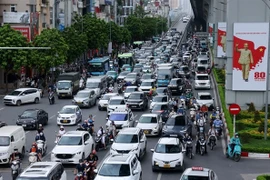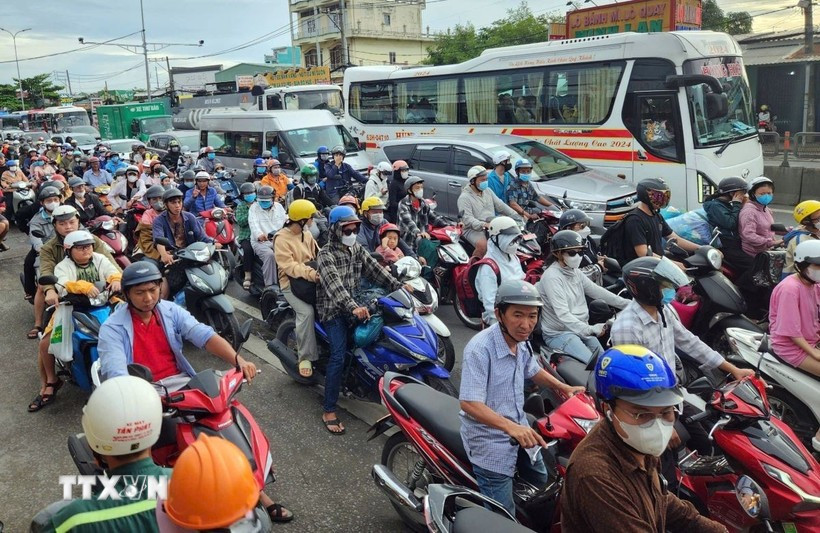
HCM City (VNA) - Ho Chi Minh City is preparing to pilot low-emission zones (LEZ) in the central area, Can Gio, and Con Dao, a step that has drawn significant public attention as it directly affects health and quality of life while laying the groundwork for a citywide emissions control roadmap.
For many residents, the greatest expectation from LEZs is cleaner air. Vehicle exhaust has long been a pressing environmental issue for the city. Under current plans, by 2030 HCM City will have around 11.4 million motorcycles and 1.3 million cars.
Traffic is now the dominant source of air pollution, accounting for 88% of NOx, 99% of CO, 79% of SO₂, and 88% of fine dust emissions. Without effective measures, transport-related pollution is expected to continue harming public health and cause annual economic losses of over 3 trillion VND (133.6 million USD), or roughly 0.25% of the city’s GRDP.
Environmental monitoring shows that the city’s annual average PM2.5 concentration stands at 31 µg/cbm, more than six times the limit recommended by the World Health Organisation. Vehicle emissions contribute about 40% of this fine dust.
Thu Huong, a resident of Binh Thanh ward, expressed hope that the LEZ plan will help ease the burden on local residents. She added that unless motorbike and car use is curbed, congestion will persist. Expanding investment in electric buses and public transport, she noted, would improve air quality, reduce congestion, and enhance quality of life.
Other residents also expect greener and more convenient transport options. Quoc Thang from Thu Duc ward said he would readily switch from motorbikes if electric buses were clean, fast, and affordable.
However, some stressed that the success of LEZs depends on public transport improvements. Nguyen Van Binh from Sai Gon ward remarked that people are unlikely to change unless alternatives meet their daily needs, underlining the importance of developing a modern public transport system to reduce reliance on personal vehicles.
Binh further noted that LEZ policies should go beyond restrictions or bans, and include financial support, job creation, and economic adjustments to secure public backing. He said only such measures would allow the transition to green transport to gain broad acceptance./.
See more
Solutions sought to restore Mekong Delta wetland ecosystems
Experts at the workshop described wetlands as the “ecological heart” of the Mekong Delta, playing a vital role in water storage and regulation, climate moderation, carbon sequestration, biodiversity conservation, and livelihoods for millions of people through aquaculture, agriculture, and ecotourism. These ecosystems also help reduce disaster risks and enhance climate resilience.
Rare marine species repeatedly found along Lam Dong coast
Several rare marine species have recently been found washed ashore along the coast of Lam Dong province, drawing public attention.
Cuc Phuong national park targets becoming natural “wildlife gene bank” by 2050
Under the Cuc Phuong Rewilding Action Plan 2026–2035, with a vision to 2050, the initiative aims to transform the park into a natural gene bank capable of supplying wildlife populations to other protected areas nationwide.
Observation systems key to stronger forecasting, sustainable development
In response to World Meteorological Day 2026's theme, Vietnam’s hydrometeorological sector has reaffirmed that weather and climate know no borders, underscoring the importance of maintaining and developing a robust national observation network as part of the global system.
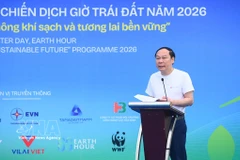
Vietnam calls for collective action on water, air, climate and sustainable future
Deputy Minister of Agriculture and Environment Le Cong Thanh underscored that water, climate, and energy are fundamental pillars of sustainable development. In Vietnam, water resources and weather patterns influence every aspect of life, from food and water security to livelihoods, ecosystem stability, and economic growth.
25 million Vietnamese benefit from forests as green development gains traction
In Vietnam, forests serve as a foundation for livelihoods, water resources, public health, and environmental stability, particularly for ethnic minority communities living in and near forest areas. They also act as a natural buffer against disasters, helping reduce risks linked to climate change.
Vietnam to launch nationwide campaign to promote energy saving for Earth Hour 2026
The campaign comes amid growing concerns over global energy security as ongoing tensions in the Middle East continue to disrupt supply chains. In this context, energy efficiency has been identified as a key solution to ease supply pressure, reduce costs, and enhance economic competitiveness.
Vietnam highlights forests’ role in sustainable growth on International Day of Forests
According to Director of the Forestry and Forest Protection Department Tran Quang Bao, forests hold a strategic position in Vietnam’s development. They provide livelihoods for millions of people, particularly ethnic minorities and communities living in mountainous and forested areas, while contributing to environmental protection and disaster prevention.
Ministry guides response to World Meteorological Day, World Water Day 2026
The Ministry of Agriculture and Environment urged ministries, agencies, local authorities, embassies, and international organisations to hold practical and effective activities aligned with the themes. Suggested activities include displaying eco-friendly banners, posters, and billboards in public spaces, streets, government offices, and other suitable venues to raise public awareness of the events’ importance.
Vietnam, Denmark cooperate to pilot circular food model
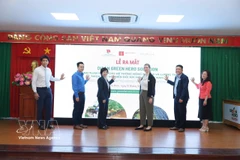
Under the “Green Hero Solution” project, organic food waste will be collected from partner organisations and businesses and processed into compost. The compost will then be used at two Food Bank community gardens, where fresh vegetables will be grown to support disadvantaged households.
Vietnam steps up partnership with UNDP, WHO in tackling air pollution
Highlighting Vietnam’s close partnership with the two UN agencies, Deputy PM Ha highly appreciated their important contributions to the country’s development over the years, particularly in policy consultation, institutional reform and promoting sustainable development initiatives.
Rare Himalayan sapria discovered in Phong Nha – Ke Bang forest
The discovery provides additional scientific data on the region’s flora and suggests that the limestone forest ecosystem in the national park remains well preserved.
Vietnam doubles down on green growth adapted to climate change
Green growth, circular economy, and low-carbon economy are identified as cross-cutting orientations designed to drive deep structural economic reform; boost productivity, quality, efficiency, and national competitiveness.
Vietnam rises in global LEED rankings as green buildings gain momentum
According to the latest announcement from the US Green Building Council (USGBC) and Green Business Certification Inc. (GBCI), Vietnam ranked eighth among countries and territories outside the US in LEED-certified floor area in 2025.
Environmental pollution conference in Gia Lai draws representatives from 22 countries
Around 90 scientific papers are being showcased in plenary, parallel, and poster sessions, covering topics like environmental pollution, toxicology, public health, risk assessment, remediation technologies, and environmental management policies.
PM urges stronger action on climate-adapted urban development
Prime Minister Pham Minh Chinh has issued Directive No. 04/CT-TTg to accelerate the implementation of the scheme on development of urban areas in Vietnam in response to climate change in the 2021-2030 period.
Forest carbon market constitutes new financial channel for sustainable forestry
The development of a forest carbon market is opening up significant opportunities for Vietnam’s forestry sector to mobilise new financial resources for forest protection and development, while creating sustainable livelihoods for local communities, particularly in ethnic minority areas.
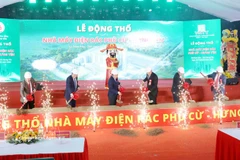
Hung Yen breaks ground on 4 trillion VND waste-to-energy plant
With a population of about 3.5 million, Hung Yen generates around 1,850 – 2,000 tonnes of household waste each day, along with about 1,000 tonnes of waste from production and business establishments, posing a major challenge for the locality.
Quang Tri records four rare bird species
The findings provided updated species data and a scientific basis for wildlife management and conservation efforts in the locality and the wider region.
Legal framework set up for domestic carbon exchange
The carbon credit exchange will operate under a centralised model subject to strict state supervision, with tradable assets including greenhouse gas emission quotas and eligible carbon credits.