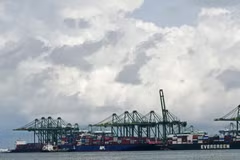
Kuala Lumpur (VNA) – The Malaysian Government will study the need for and strategies to establish a national petroleum reserve as part of efforts to strengthen the country's energy security and enhance its resilience against geopolitical uncertainties and global supply disruptions.
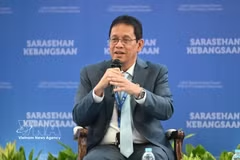
As reported by the country’s national news agnecy Bernama, Malaysian Prime Minister Anwar Ibrahim said the matter was decided in the National Energy Council meeting which he chaired on July 15, among other things to ensure that the country’s energy transition agenda continues to be implemented in an orderly and impactful manner based on the National Energy Transition Roadmap (NETR).
In a post on Facebook, the PM said that as of December last year, the country’s installed capacity of renewable energy had increased to 31% in line with the government’s efforts to reduce dependence on coal.
“This effort is also strengthened through the successful implementation of the Corporate Renewable Energy Supply Scheme (CRESS), which is now equipped with a Battery Energy Storage System (BESS),” said Anwar.
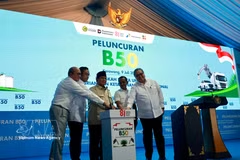
In the transportation sector, the leader said the implementation of B15 biodiesel continues to drive the country towards the use of more sustainable alternative fuels and will be strengthened through the development of the Petronas biofuel hub in Pengerang, Johor.
He said the public transport electrification project is also progressing according to plan, including the operation of 250 electric buses and the coverage of 800 kilometres of rail network nationwide, while Phase 1 of the development of a hydrogen hub for the autonomous rapid transit system in Sarawak is scheduled for completion by the end of this year.
According to PM, in a situation of geopolitical uncertainty and ongoing global supply chain disruptions, Malaysia needs to be prepared to ensure long-term energy security./.
Malaysia moves to enact landmark climate change law
Once passed, the bill will make Malaysia the second ASEAN country, after the Philippines, to enact a dedicated climate change law, and the 60th country in the world to have a standalone legal framework in this area.