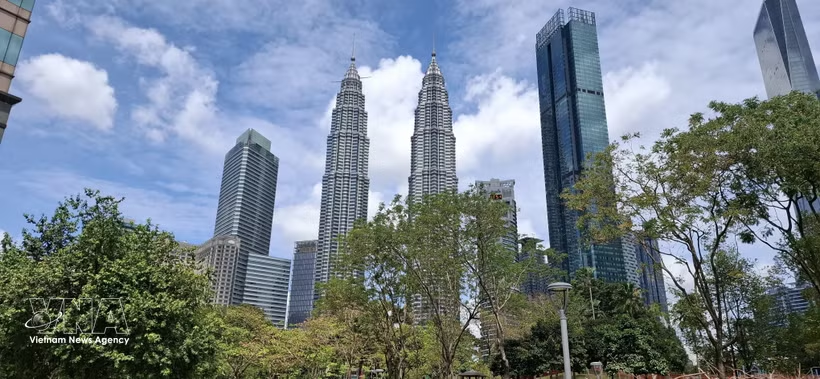
Kuala Lumpur (VNA) – Malaysia's economy is expected to remain on a a solid footing in the second half of 2026, supported by resilient domestic demand, strong electrical and electronics (E&E) exports and a stable inflation outlook, but investors may face four major headwinds that could weigh on the country's market recovery, according to a research report released by Hong Leong Investment Bank (HLIB) on July 13.
The report identified prolonged global supply chain disruptions, a stronger US dollar, rising political uncertainty ahead of a possible early general election, and the proposed expansion of the FTSE Bursa Malaysia KLCI as the key risks.
HLIB warned that global supply chains may take longer to normalise despite easing geopolitical tensions in the Middle East, citing lessons from the post-pandemic period when supply chain pressures remained elevated long after economies reopened.
The bank also said expectations that the US Federal Reserve will maintain a tight monetary policy stance could strengthen the US dollar, putting temporary pressure on the Malaysian ringgit and dampening sentiment in the domestic stock market.
Political uncertainty is another concern, with Malaysia's 16th General Election (GE16) potentially taking place as early as the fourth quarter of 2026. HLIB said the fragmented political landscape raises the possibility of another hung parliament, similar to the outcome of the GE15, which could increase the political risk premium in local equities.
The proposed expansion of the FTSE Bursa Malaysia KLCI from 30 to 50 constituent stocks is also expected to create short-term index dilution, reducing the weighting of existing constituents. The move would broaden market representation and benefit sectors such as automotive, gaming, real estate investment trusts (REITs), ports and technology, which are expected to gain inclusion in the benchmark index.
Despite these headwinds, HLIB raised its forecast for Malaysia's 2026 GDP growth to 4.7% from 4.5%, citing continued strength in E&E exports. The revised projection is slightly above the government's midpoint forecast of 4.5% while remaining within its official target range of 4.0–5.0%.
The bank also expects inflation to remain contained at 2.0% in 2026, up from 1.4% in 2025, despite energy price shocks linked to the conflict involving Iran, supported by Malaysia's fuel subsidy framework covering both petrol and diesel./.