Bangkok (VNA) - Paleontologists in Thailand have announced the discovery of a new long-necked dinosaur species, Uragasaurus kalasinensis, dating back approximately 150 million years.
It is the first-ever member of the Mamenchisauridae family to be formally named in Southeast Asia.
According to the latest announcement from the Phu Wiang Dinosaur Museum under Thailand's Department of Mineral Resources, the fossil of the newly identified dinosaur species was discovered at the Phu Noi fossil site in Kalasin province, embedded in rock layers of the Phu Kradung Formation dating to the Late Jurassic period, approximately 150 million years ago.
The creature is Thailand’s 15th officially recognised dinosaur species. The genus name Uragasaurus combines the Sanskrit word ‘Uraga’, meaning snake or “one that moves on its chest” with the Greek ‘saurus’, meaning lizard or reptile.
The name was chosen because the exceptionally long necks of mamenchisaurids strongly evoke the imagery of a snake or the mythical Naga serpent. The species name, kalasinensis, honours Kalasin province where the fossils were unearthed.
The Phu Noi fossil site is one of the richest vertebrate fossil repositories in Southeast Asia. Over 6,000 fossil specimens have been retrieved from the site which, 150 million years ago, was an ecosystem comprised of ancient rivers, floodplains and oxbow lakes. Phu Noi has previously yielded significant paleontological finds, including Thailand's 13th dinosaur species, Minimocursor phunoiensis./.
Scientists discover largest dinosaur species ever found in Thailand
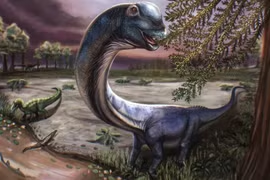
According to the researchers, Nagatitan Chaiyaphumensis belonged to the Titanosauridae family, a group of herbivorous dinosaurs characterised by their long necks and tails. The species is estimated to have measured between 27 and 30 metres in length and weighed more than 26 tonnes.