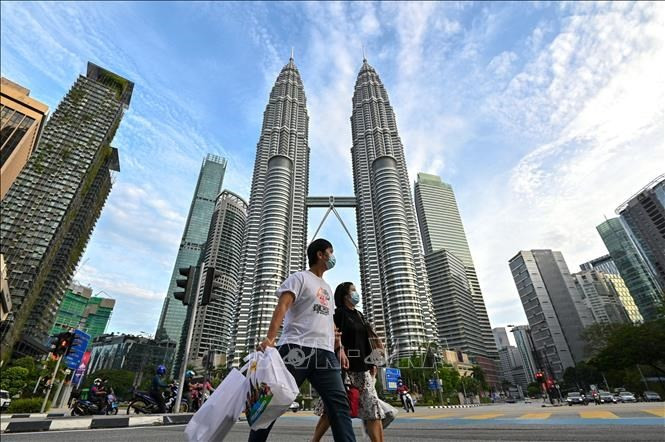
Kuala Lumpur (VNA) – Malaysia has shown notable resilience amid global trade tensions and policy uncertainty, with its economy growing at a healthy pace this year, supported by strong domestic consumption and investment, solid employment growth, and a global upcycle in the technology sector, according to Masahiro Nozaki, Mission Chief for Malaysia at the International Monetary Fund (IMF).
The official said the performance of the Malaysian economy partly reflects sound economic management, as the government has maintained prudent macroeconomic and fiscal policies. The Malaysia–US trade agreement signed in October 2025 has also helped alleviate uncertainty for businesses and consumers in the country.
However, he noted that the global landscape has changed, with uncertainty becoming the new normal. Against this backdrop, rebuilding Malaysia’s macroeconomic buffers remains crucial. Malaysia’s economic resilience is expected to continue in the short term, supported by strong domestic demand. IMF experts forecast growth to ease slightly from 4.6% in 2025 to 4.3% in 2026, mainly reflecting the impact of higher US tariffs on Malaysian exports.
IMF officials said risks to growth are skewed to the downside and stem largely from external factors. As a highly open economy, Malaysia could be affected by weaker external demand in the event of escalating trade protectionism, volatility in global financial markets, and the potential bursting of an artificial intelligence-related bubble.
Nevertheless, upside factors remain, including potential breakthroughs in global trade negotiations, stronger-than-expected tourism performance, and faster implementation of structural reforms./.