Man jailed 16 months in Singapore’s first Kpod conviction

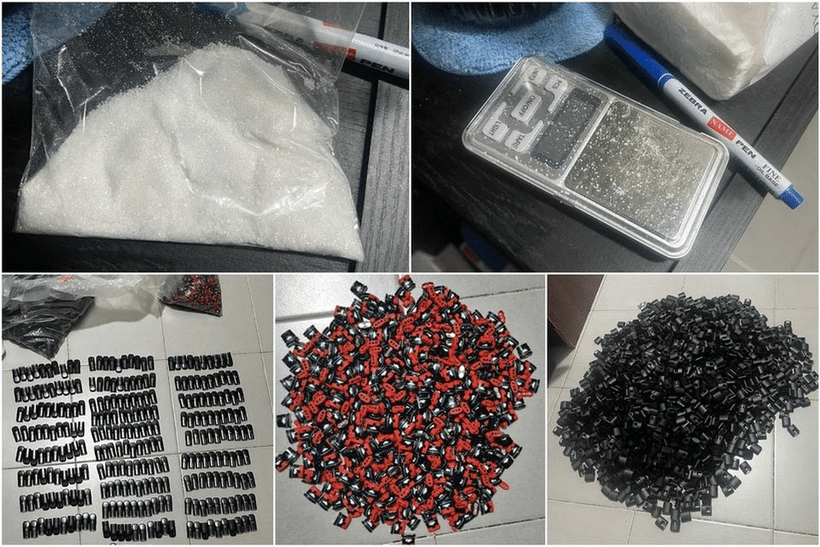
In December 2024, a 41-year-old Singaporean man named Mohammed Akil Abdul Rahim was caught red-handed at his flat with 26.4g of white powder that contained enough etomidate to produce more than 70 Kpods.

Mohammed Akil Abdul Rahim was caught in his flat with 26.4g of a white powder with enough etomidate for over 70 Kpods. (Photo: HSA)

Singapore (VNA) - A Singaporean man was sentenced to 16 months in prison and fined 400 SGD (about 311 USD) on August 26 after he produced the etomidate-laced Kpods, for sale to e-vaporiser users.

This is the first case involving such e-cigarettes to be brought to trial in Singapore.

According to the indictment, in December 2024, 41-year-old Mohammed Akil Abdul Rahim was caught red-handed at his flat with 26.4g of white powder that contained enough etomidate to produce more than 70 Kpods. He pleaded guilty on August 13 to multiple charges, most of them related to vaping-related products. He also admitted that he had made a false statement to the Immigration and Checkpoints Authority (ICA) of Singapore.

Deputy Principal District Judge Ong Chin Rhu said that deterrence is paramount in offences linked to etomidate and its abuse which has been detected in multiple unnatural deaths and a recent fatal traffic accident in Singapore. She stressed that Akil’s case had transnational elements and could involve a syndicate.

Earlier, on August 24, Health Minister Ong Ye Kung said etomidate, which is currently listed under the Poisons Act, will be classified as an illegal drug from September 1. The chemical will be classified under the Misuse of Drugs Act (MDA) as a Class C drug, meaning it is dangerous enough to require strict control. Abusers will face harsher penalties, such as a maximum sentence of 10 years’ jail and a 20,000 SGD fine for illegal possession and use.

Traffickers of Class C drugs can be jailed for up to 10 years and given five strokes of the cane. These penalties are much harsher than the maximum sentence of two years in prison and a 10,000 SGD fine under the Poisons Act for possession, use and trafficking./.


VNA

See more

Malaysia considers establishing strategic petroleum reserve

Malaysia considers establishing strategic petroleum reserve

Malaysia, which was previously a net exporter, has now become a net importer due to declining domestic production and rising consumption, with demand estimated at around 800,000 barrels per day compared to production of about 400,000 barrels per day.

Indonesia to halt diesel imports from July

Indonesia to halt diesel imports from July

The move is part of the Indonesian Government’s efforts to strengthen national energy independence by utilising palm oil as an alternative fuel, said Agriculture Minister Andi Amran Sulaiman.

Malaysia’s growing microplastics crisis is largely self-inflicted, driven by domestic waste, weak recycling practices and everyday plastic use, said experts. (Photo: New Straits Times)

Malaysia seeks solutions to microplastic crisis

Microplastics originating from domestic waste and wastewater are increasingly entering the food chain, posing serious threats to seafood safety and the livelihoods of coastal communities.

The new mass emergency alert system SG Alert, which will be used during emergencies such as major fires, chemical or terror incidents, seen on an Apple and Android device on Apr 17, 2026. (Photo: CNA)

Singapore launches new national emergency alert system

SG Alert in Singapore uses cell broadcast technology, enabling alerts to be delivered within seconds without requiring mobile data or collecting personal information. Unlike conventional SMS, which may be delayed during network congestion or depend on internet connectivity, the system ensures fast and reliable message delivery. Alerts can be sent islandwide or targeted to specific affected areas.

Malaysia establishes ‘war room’ to ensure water security

Malaysia establishes ‘war room’ to ensure water security

The establishment of the war room reflects the Malaysian government’s commitment to shift from a reactive approach to a more proactive, data-driven one in managing national water challenges, particularly amid increasingly unpredictable weather conditions caused by global climate change

Indonesia diversifies supply sources to ensure energy security

Indonesia diversifies supply sources to ensure energy security

Indonesia is facing significant supply pressure as crude oil consumption reaches approximately 1.6 million barrels per day, much lower than the domestic production at only around 600,000 barrels per day, forcing the country to rely heavily on imports.