Singapore plans economic strategy reform

The Singaporean government needs to enable people, workers and businesses to make full use of these tools, and enhance their competitive advantage. It “will walk this journey” with Singaporeans as it has done for the past six decades, said Prime Minister Lawrence Wong.

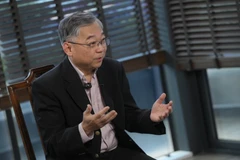
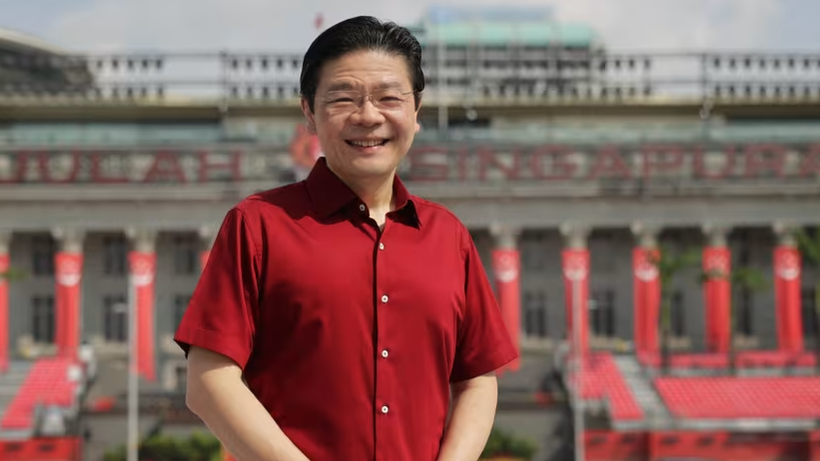
Singapore's Prime Minister Lawrence Wong. (Photo: Ministry of Digital Development and Information)

Singapore (VNA) - Singapore is refreshing its economic strategy to secure its future in a “very different world” marked by greater contestation, fragmentation and volatility, Prime Minister Lawrence Wong has said.

In his National Day Message that is broadcast every year on the eve of the nation's birthday (August 9), he said that to stay ahead, the country must remain "exceptional" in its cohesion, resolve and performance, as well as “move faster, adapt quicker and innovate smarter”.

This means embracing new technologies such as artificial intelligence and robotics, while applying them meaningfully across its economy.

Wong, who is also Finance Minister, said that the Singaporean government needs to enable people, workers and businesses to make full use of these tools, and enhance their competitive advantage. He pledged that the government “will walk this journey” with Singaporeans as it has done for the past six decades.

According to the PM, in addition to addressing immediate challenges, Singapore will also have to proactively anticipate what is on the horizon and preparing to ride the next wave of change. He noted that bigger powers are also “now more willing to use every tool at their disposal – economic, technological and geopolitical – to tilt the playing field in their favour”, making it harder for small states like Singapore to maintain their position.

He stressed that overcoming these challenges hinges on the “Singapore spirit,” which embodies deep solidarity and a shared sense of purpose./.
VNA

See more

Malaysia busts massive drug syndicate

Malaysia busts massive drug syndicate

An international drug syndicate was busted after Malaysian police seized over 18 tonnes of drugs worth nearly 375 million USD in one of the country’s biggest drug busts on record.

Indonesia will not import rice for either consumption or industrial use next year. (Photo: tempo.co)

Indonesia to stop rice imports next year

Indonesia's rice production in 2025 is projected to reach 34.77 million tonnes, up 13.54% year on year, driven by favourable weather and farmer support policies under President Prabowo Subianto’s administration.

Distinctive festivals across Indonesia attract international visitors. (Photo published by VNA)

Indonesia identifies 15 priority tourism markets for 2025–2026

According to data compiled by the Ministry of Tourism, the number of tourists from Malaysia reached 2.18 million in the January-October 2025 period, showing a growth of 15.91% compared to last year. Meanwhile, the number of visitors from Singapore totaled 1.19 million this year, growing by 7.66% from 2024.

The 8th Cooperative Plan Meeting between the Ministry of Commerce of Thailand and the Ministry of Industry and Commerce of Lao PDR, December 17, Bangkok, Thailand (Photo: nationalthailan.com)

Thailand, Laos aim to boost bilateral trade

Laos is Thailand’s 7th largest trading partner in ASEAN and 18th globally. From January to October 2025, two-way trade grew by 18.65% to 8.18 billion USD, with Thai exports increasing by 16.90% to 4.81 billion USD and imports rising by 21.23% to 3.60 billion USD.

File photo of Visa and Mastercard credit cards. (Photo: AP)

Unpaid credit card balances in Singapore hit record high in 10 years

Experts attributed the worrying trend to factors like people not spending within their means, consumer culture emphasising prestige items, and easier access to credit like “buy now, pay later” services. Analysts said this can be a hint of growing financial pressures faced by Singaporeans amid rising prices.

Malaysian Deputy Prime Minister Datuk Seri Fadillah Yusof (Photo: Bernama)

Malaysia accelerates clean energy transition

Delivering a speech at the Clean Energy Transition Asia (CETA) Summit 2025 in Kuala Lumpur, Fadillah, who is also the energy transition and water transformation minister, said that the Southeast Asian region now drives more than half of the global energy demand.