Ministry's push to establish workable renewable-power pricing

The stated policy objective is a pricing framework that supports investment decisions, allows buyers to budget reliably, and maintains system integrity.

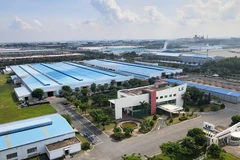
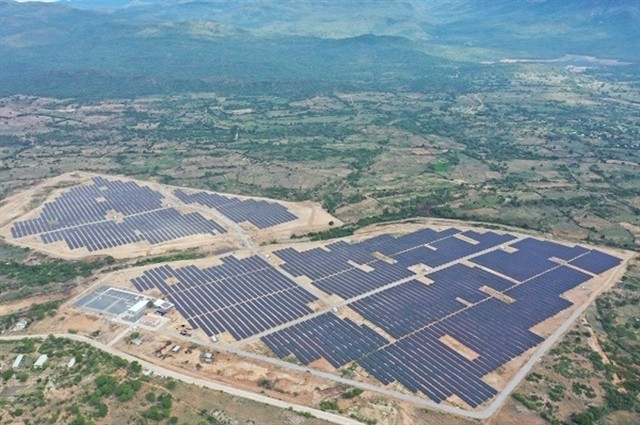
A solar farm in Ninh Thuan province (Photo: VGP)

Hanoi (VNS/VNA) - The Ministry of Industry and Trade (MoIT) is prioritising price formation and cost allocation for renewable electricity under Vietnam’s evolving direct power purchase agreement (DPPA) regime and offshore wind framework.

This has been seen as a reassurance to investors on the country's renewable sector's development.

In 2024, the Government issued Decree 80/2024/ND-CP on DPPAs between renewable generators and large consumers, and Decree 135/2024/ND-CP on self-produced, self-consumed rooftop solar.

In early 2025, to reflect changes in the Law on Electricity, adjustments to Power Development Plan VIII and the two-tier local administration model, these were replaced by Decree 57/2025/ND-CP (DPPA) and Decree 58/2025/ND-CP (renewable and new energy).

Initial implementation has produced early market signals: by June 2025, dozens of DPPA contracts were active; rooftop solar reached about 1,261 MWp with roughly 1.6 billion kWh generated (around 0.56% of total system output). At the same time, stakeholders asked MoIT to focus on pricing rules so projects can reach bankability and buyers can assess cost exposure.

Enterprises requested detailed guidance they can model. A Samsung representative asked MoIT to specify how DPPA charges and difference-settlement costs are determined and apportioned, enabling buyers to test financial viability before signing.

Firms such as T&T and Samsung also called for harmonised rules on battery energy storage systems across Decree 57, Power Development Plan VIII, and related legal texts, because storage materially affects dispatch profiles, settlement outcomes and, therefore, price risk.

Independent auditors highlighted the data foundation for pricing. Deloitte proposed publishing cost and generation datasets used in setting price bands and in operations oversight. Greater data transparency would help align investor models, lender diligence and system-operator calculations, and reduce disputes over invoices and settlements.

For Decree 58, which covers self-produced/self-consumed generation and offshore wind, pricing intersects with technical and contractual definitions. Petrovietnam recommended region-specific flexibility for survey areas and clearer drafting around minimum long-term output obligations and their conditions.

These provisions influence project sizing, capacity-factor assumptions and, ultimately, levelled prices and offtake terms. Stakeholders also asked MoIT to clarify tendering rules, execution timelines, and penalties for delay, since bid pricing embeds these risks.

Operational practices need to support the price rules. EVN reported unregistered rooftop installations, which complicate measurement, verification and settlement. It proposed explicit sanctions to improve compliance and data quality.

In industrial parks, authorities and businesses asked for guidance on internal power sales and on whether caps for exporting surplus rooftop electricity can be raised or seasonally adjusted, given the impact on revenue stacks and implied prices.

Process changes are being considered to reduce transaction costs that feed into final prices. An NSMO proposal would let parties negotiate and sign contracts first, then file with competent authorities for record and oversight, instead of seeking pre-negotiation confirmations.

The MoIT’s Electricity Authority will compile this feedback and report to ministry leadership for potential amendments via fast-track procedures under the amended 2025 Law on Promulgation of Legal Documents.

Deputy Minister Nguyen Hoang Long stated that pricing-related clarifications - methodologies, data disclosure, settlement rules and enforceable timelines - will be prioritised to improve feasibility, transparency and ease of implementation for localities, investors and large consumers.

The stated policy objective is a pricing framework that supports investment decisions, allows buyers to budget reliably, and maintains system integrity, enabling renewable projects to reach operation on schedule and contribute to secure electricity supply and national energy objectives./.

VNA
See more

Sun Group partners with Dragone to jointly establish a new standard for performing arts in Vietnam (Photo: Sun Group)

Phu Quoc set for a global spotlight with Sun Group–Dragone flagship show

The agreement signed on April 10 represents Dragone’s first formal entry into Vietnam through a strategic partnership, underscoring the country’s growing appeal to leading global creative companies. It also reinforces Sun Group’s role as a pioneer in bringing world-class performing arts experiences to Vietnamese audiences.

Prime Minister Le Minh Hung (third, left) and delegates press buttons to start the project (Photo: VNA)

Work starts on Hanoi–Quang Ninh high-speed railway

Prime Minister Le Minh Hung attended a groundbreaking ceremony for the Hanoi - Quang Ninh high-speed railway line, Vietnam's first inter-regional high-speed railway, held in Quang Ninh province on April 12.

VinFast EV sales jump 127% in March 2026. (Photo: Vinfast)

VinFast EV sales jump 127%, cementing market dominance

According to its report, all models in VinFast’s EV lineup recorded strong growth in March. Notably, on March 28 alone, the company completed 3,520 orders, the highest number ever recorded in a single day by an automotive brand in Vietnam.

Illustrative image (Photo: VNA)

Australia announces import conditions for Vietnamese pomelos

Australia’s formal publication provides an important legal basis, marking the completion of the review, assessment and agreement on technical requirements for fresh Vietnamese pomelos. This represents a significant step forward in market access, creating favourable conditions for relevant agencies, localities and businesses to prepare for export activities in the coming time.

Containers of fresh Vietnamese durian for export are subject to a full-chain traceability system. (Photo: VNA)

First “green lane” durian shipment exported to China

​Under the “green lane” process, quality control begins at the cultivation stage, including soil sampling and monitoring, and continues through harvesting and processing, with traceability labels attached to trees and applied to fruit at the time of picking. It also allows plant quarantine procedures and the issuance of certificates of origin (C/O) directly in the localities where the orchards are located.

Delegates at the Vietnam Expo 2026 (Photo: VNA)

Vietnam pushes for deeper auto supply chain ties with RoK

The RoK stood as Vietnam’s largest foreign investor with more than 95.2 billion USD in registered capital as of February 2026, or about 18% of all foreign cash flowing in, with thousands of active projects. In January-February alone, the RoK led the pack with nearly 2 billion USD in pledges, grabbing a whopping 32.7% of total registered capital and showing no signs of slowing down.

More than 600 tourism firms, 15 countries and territories, and 34 provinces and cities are promoting destinations and introducing tourism products at the fair (Photo: VNA)

Digital transformation key to elevating Vietnam’s tourism: official

Speaking at the opening of the Vietnam International Travel Mart (VITM) 2026 in Hanoi on April 10, Deputy Minister of Culture, Sports and Tourism Ho An Phong noted that despite challenges in 2025, Vietnam largely fulfilled its socio-economic development goals. Tourism remained a bright spot, recording 21.5 million foreign arrivals and 135.5 million domestic visitors, with total revenue exceeding 1 quadrillion VND (37.9 billion USD).

A drone sprays fertiliser over rice fields. (Photo: VNA)

Low-altitude economy emerges as new growth driver for Vietnam

The UAV technology is particularly effective in addressing challenges faced by ground infrastructure, especially in densely populated urban areas and remote regions. Smart aerial devices also enable real-time data collection, improving governance, decision-making and digital transformation across industries.

Passengers at Cat Bi Airport in Hai Phong city (Photo: VNA)

Aviation sector ensures fuel supply for April 30–May 1 peak

Aviation fuel suppliers are actively negotiating and diversifying supply sources both domestically and internationally, while strengthening coordination, storage and distribution capacity to meet immediate demand. These efforts aim to support airlines in optimising operations and maintaining stable flight schedules.