Hanoi (VNA) - Nearly three weeks into its nationwide debut, Vietnam’s new two-tier local governance model is reshaping public administration, with localities coordinating to ensure a smooth transition while boosting efficiency for citizens and businesses.
In the capital city of Hanoi, the model is already delivering measurable gains. Administrative structures across 126 wards and communes have been streamlined, cutting redundancies and clarifying roles. Local authorities are adopting a more hands-on approach, engaging directly with residents and showing greater flexibility in governance.
The changes are resonating with the public. Administrative tasks are now quicker and more user-friendly, reducing time and hassle. Digital tools have enabled faster settlement of grassroots issues.
Nguyen Van Tinh, a resident of Kim Lien ward, previously part of Dong Da district, lauded the shift. “Before, I was stuck submitting paper documents and waiting in person,” he said. “Now, I file online, track progress, and get results through the internet or a one-stop office."
According to Chairman of the Vinh Tuy ward People's Committee Vu Van Hoat, the model has tightened oversight and policy execution. Decisions are now more unified, with less fragmentation across layers.
The municipal Department of Information and Communications noted that the model enhances data management and analysis, ultimately enabling more informed policy decisions. The integration of data between ward and city-level platforms also boosts transparency and reduces errors.
Down in the Mekong Delta, the model is seen as fundamentally sound, with operations steadily improving and stabilising.

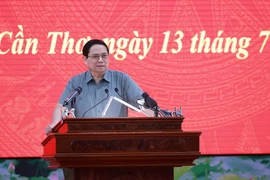
Prime Minister Pham Minh Chinh, during a recent visit to the Ninh Kieu ward’s public administrative service centre in Can Tho city, urged a service-first approach. He pushed for stronger data integration, broader digital literacy outreach, especially for the elderly or those less familiar with technology, and flexible hours for civil servants to accommodate residents’ schedules.
Despite progress, challenges persist. In the northern province of Bac Ninh, the newly formed Bac Giang ward, created by merging seven former wards, serves a population of nearly 123,000. Since July 1, its administrative centre has been swamped, processing 500-700 daily visits.
To ease the pressure, authorities have expanded infrastructure, upgraded equipment, and brought in extra staff, including youth union volunteers to assist with online procedures and digital ID registration.
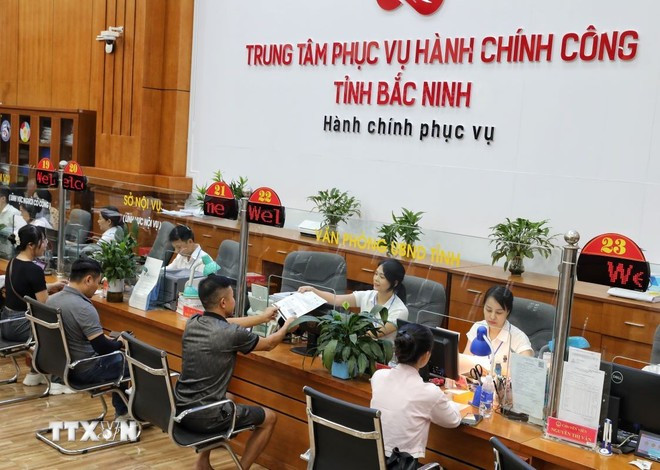
Luong Van Huy, Deputy Director of the ward's service centre, said systems are functional but hampered by occasional network lags and incomplete digital services. “We’re managing by accepting paper applications and assisting with online uploads. But we need urgent software upgrades and faster connectivity”, he stressed.
Chairman of the provincial People’s Committee Vuong Quoc Tuan reaffirmed Bac Ninh’s focus on bolstering administrative centres and holding officials accountable for service quality. He called for dedicated IT staff, regular infrastructure reviews, and uninterrupted service delivery.
Acknowledging these challenges, PM Chinh recently issued a dispatch outlining fixes for administrative and digital transformation hurdles. It flags four key issues, including weak technical infrastructure, glitchy or poorly integrated IT systems, inadequate legal frameworks and staffing, and limited public outreach.
Ministries, agencies and chairpersons of the people’s committees of cities and provinces must complete key upgrades by August 2025. Priorities include 24/7 IT system uptime, software fixes, new digital seals, synced civil registries, streamlined workflows, better commune-level staffing, expanded broadband coverage, stable electricity supply, digital literacy campaigns, and AI-powered service tools.
On July 18, the Government issued a resolution to address regulatory hurdles in zoning and urban planning tied to the restructuring, doubling down on the reform push.
The Party Central Committee’s 12th plenum just wrapped up, reporting that the model’s rollout across 34 cities and provinces, covering 3,321 communes and wards, went off without a hitch. Administrative processes are smoother, service delivery is faster, and public feedback shows strong support and optimism
Next up, the Party Central Committee plans to refine inter-agency workflows, update assignment protocols, ramp up training, particularly at the commune level, and increase regular oversight and evaluation.
Vietnam’s local governance reform is entering a new phase marked by greater structure, coordination, and focus on results. The two-tier model represents a bold step toward modernising public administration, cutting intermediaries, reducing overlaps, and bringing the State closer to its people.
Beyond administrative reform, the overhaul sets a strong socio-political foundation for Vietnam’s next chapter, building a unified, people-centred system poised to drive progress./.