Vietnam’s two-tier local government model to bring long-term benefits: Chinese scholar

The effective execution of Vietnam’s reforms could not only consolidate its current economic growth trajectory but also serve as a potential governance model for other low- and middle-income countries, and play an important role in the collective development of developing countries, said a Chinese scholar.

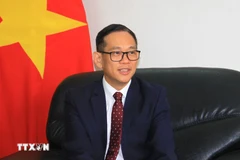
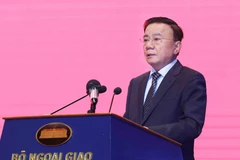
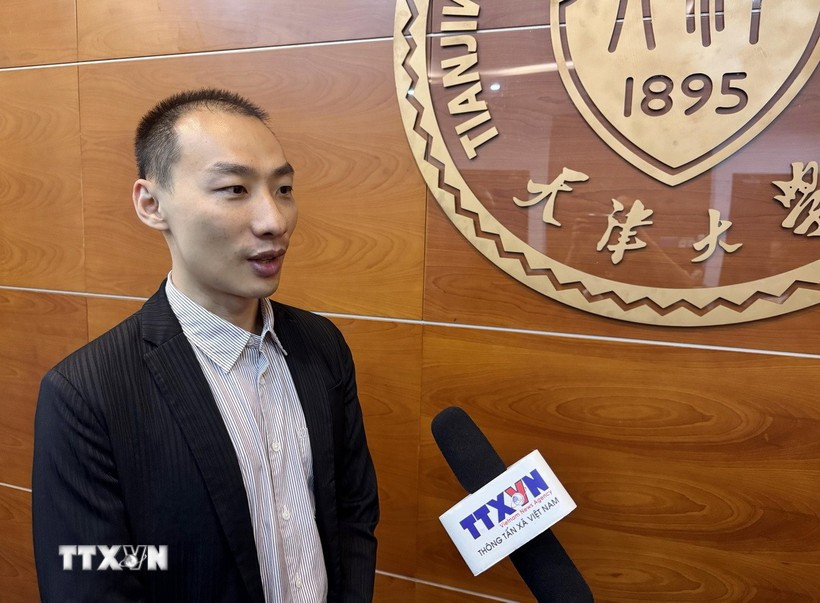
Associate Professor Li Junkai from the Institute for Global South Studies under Tianjin University (Photo: VNA)

Beijing (VNA) – Vietnam’s bold move to merge 63 centrally governed provinces and cities into 34 units and adopt a two-tier local government system will bring about medium-term benefits, according to Associate Professor Li Junkai from the Institute for Global South Studies under Tianjin University.

In an interview with the Vietnam News Agency (VNA) correspondents in Beijing, Li described the reform as a structural overhaul motivated by constitutional amendments.

By eliminating district-level administrations and consolidating provinces, the reform aims to modernise governance and reduce administrative costs. It reallocates financial and human resources to stronger provincial-level governments. Public services previously handled at the district level will now be delivered directly to wards and communes, facilitated by digital government platforms for seamless integration. Li compared Vietnam’s approach to regional reforms with France and China. He held that Vietnam’s complete elimination of district-level governments represents a more thorough restructuring. This reflects strong political determination and a broad national consensus on political reforms.

Assessing the future impact of these changes, he noted that the newly merged provinces and cities will possess greater capabilities and more complete functions. Centralised financial and investment decision-making will enable increased allocation of resources to infrastructure, social welfare, and the digital economy—areas often constrained by redundant administrative structures.

The merger of provinces in northern and central Vietnam will result in unified planning for seaports, railways, and industrial zones. It will also strengthen connections with southwestern China and neighbouring countries in the Indochina Peninsula. From a public service perspective, if the "One Province, One Cloud" digital platform functions effectively, it will facilitate inter-provincial data sharing like for citizen ID, health insurance, and land records, thereby simplifying administrative procedures for citizens.

The Chinese scholar observed that if Vietnam sustains adequate policy support, the country could realise economic efficiencies similar to those of France and China.

Li highlighted Vietnam’s growing momentum in export-oriented manufacturing, the digital economy, and green energy. He argued that if the administrative simplification is effectively implemented, it could reduce institutional transaction costs, create clearer provincial-level investment channels, and foster a more favourable policy environment. This, in turn, could attract investment from both domestic and international partners, particularly those from the Global South, in areas such as renewable energy, smart agriculture, and digital port infrastructure.

He also cautioned that successful reform will require the government to listen to public opinions, balance development opportunities between major cities and local communities, integrate local identity into regional development strategies as France has done, and bridge the urban–rural gap through digital governance tools, as seen in China.

The effective execution of Vietnam’s reforms could not only consolidate its current economic growth trajectory but also serve as a potential governance model for other low- and middle-income countries, and play an important role in the collective development of developing countries, he said./.

VNA
See more

Ambassador Mai Phan Dung, Permanent Representative of Vietnam to the UN, the WTO, and other international organisations in Geneva (Photo: VNA)

Vietnam continues to ensure all human rights for everyone: ambassador

During the 2023–2025 term, the participation of Vietnam’s Permanent Mission in Geneva at the UN Human Rights Council was guided by a consistent approach: constructive engagement, coherence, and keeping the council focused on practical solutions that improve people’s lives.

Vietnamese Ambassador to Venezuela Vu Trung My (left) and Cuban Ambassador Jorge Luis Mayo Fernandez at their meeting in Caracas on December 31 (Photo: VNA)

Cuban diplomat praises CPV’s leadership role in Vietnam’s development

Amid a volatile world with crises, disruptions to global economic links, and increasingly fierce strategic competition among powerful countries, the CPV’s coming congress is an important milestone where Vietnam will shape its development orientation, enhance the will, and select the path of action for the new period, said Ambassador Jorge Luis Mayo Fernandez.

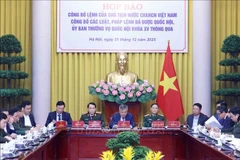
An overview of the press conference (Photo: VNA)

Fourteen new laws, one ordinance made public

The Presidential Office held a press conference on December 31 to announce the State President’s order promulgating 14 laws and one ordinance adopted by the 15th-tenure National Assembly and its Standing Committee.

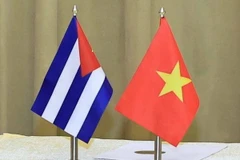
The flags of Vietnam and Cuba (Photo: VNA)

Vietnamese leaders send congratulations on Cuba’s 67th National Day

Also on this occasion, Prime Minister Pham Minh Chinh cabled a congratulatory message to Cuban Prime Minister Manuel Marrero Cruz, while National Assembly Chairman Tran Thanh Man extended congratulations to Esteban Lazo Hernández, President of the National Assembly of People’s Power of Cuba.

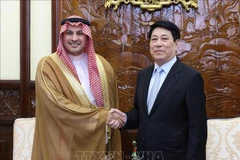
State President Luong Cuong (R) receives Saudi Arabian Ambassador Mohammed Ismaeil A. Dahlwy in Hanoi on December 31. (Photo: VNA)

State President meets outgoing Saudi Arabian, Philippine ambassadors

Receiving Saudi Arabian Ambassador Mohammed Ismaeil A. Dahlwy, the President affirmed that Saudi Arabia is an important partner of Vietnam in the Middle East. He noted that the two countries share many similarities in development goals as well as values of peace, cooperation and development.

Lawmakers pass the Law on Teachers on June 16, 2025. (Photo: VNA)

Major laws to take effect on January 1, 2026

A series of major laws passed in 2025 will take effect on January 1, 2026, spanning employment, education, data protection, taxation, state budget, digital technology, energy, and transport.

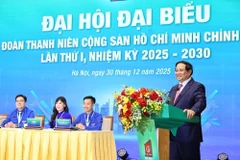
Prime Minister Pham Minh Chinh delivers a keynote address at the first Congress of the Ho Chi Minh Communist Youth Union of the Government for the 2025–2030 term on December 30, 2025. (Photo: VNA)

PM urges enabling environment for youth development

Prime Minister Pham Minh Chinh requested Party committees, authorities, agencies and units at all levels to nurture and create favourable conditions for young union members to develop comprehensively, entrust them with responsibilities, provide opportunities for contribution and maturity, and effectively implement the Vietnam Youth Development Strategy for the 2021–2030 period.