Over 75,000 digital technology enterprises operating stably in Vietnam

Vietnam ranked 44th out of 133 economies in the Global Innovation Index 2024, up two places from the previous year, and retained its leading position among lower middle-income countries.

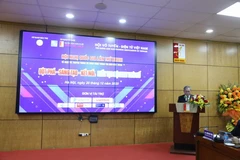
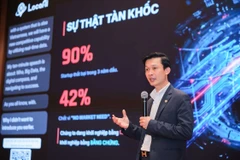
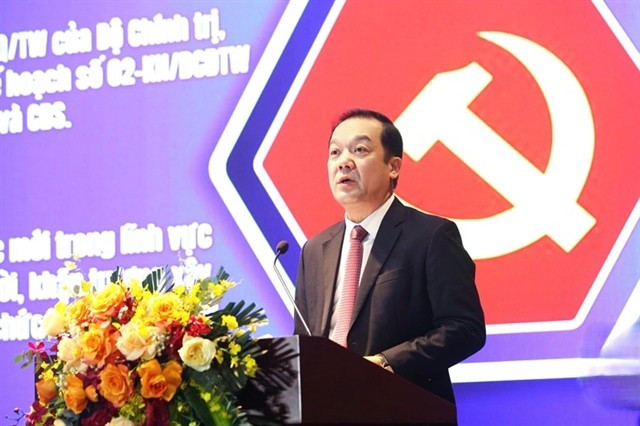
Deputy Minister of Science and Technology Pham Duc Long delivers his speech at the event. (Photo: Courtesy of the Ministry of Science and Technology)

Hanoi (VNS/VNA) - Vietnam is currently home to more than 75,000 stable digital technology enterprises, the Ministry of Science and Technology’s mid-year report for 2025 revealed.

The country also boasts 940 science and technology firms and approximately 4,000 innovative start-ups.

These figures were released during the ministry’s six-month review conference on science, technology, innovation and digital transformation, which was held on Monday morning in Hanoi.

The report highlights several significant achievements across the sector.

Vietnam ranked 44th out of 133 economies in the Global Innovation Index 2024, up two places from the previous year, and retained its leading position among lower middle-income countries.

The ministry has also launched the Vietnam Technology Exchange, bringing the total number of active technology trading floors nationwide to 24.

Vietnam’s innovation ecosystem continues to expand, currently comprising 208 investment funds, 84 incubators and 40 business accelerators.

At present, 42 national-level science and technology programmes are being implemented, connecting research with production and practical application.

In the realm of digital transformation, the national data integration and sharing platform has processed 630 million transactions, fulfilling 73% of the year’s plan.

Meanwhile, the rate of fully online administrative dossiers has reached nearly 40%, enhancing the delivery of public services.

The postal and telecommunications sector has recorded robust growth, with revenue increasing by 12.8%.

Vietnam leads the region in network speed, and its IPv6 adoption rate of 65% places it in the global top 10.

The digital economy now accounts for 18.7% of national GDP, up 10% year-on-year, with the core digital economy contributing 8.6%.

Speaking at the conference, Deputy Minister of Science and Technology Pham Duc Long said that institutional development is a critical foundation for advancing science, technology, innovation and national digital transformation.

In the current context, the legal framework for science, technology, innovation and digital transformation remains fragmented across sectors and between the central and local levels.

Therefore, the ministry must assume the role of ‘chief architect’, conducting a comprehensive review to update outdated content and fill in the gaps needed to create a coherent, inclusive ecosystem, he said.

In the first half of 2025, the ministry submitted five draft laws to the National Assembly.

For the remainder of the year, it will continue refining the institutional ecosystem with four additional bills: amendments to the Law on Intellectual Property, the Law on High Technologies, the Law on Technology Transfer and the proposed Digital Transformation Law.

Key priorities for the second half of 2025 also include reviewing and implementing tasks under existing national science and technology programmes, as well as rolling out the restructuring plan for national-level programmes for the 2026–30 period.

The ministry will also develop comprehensive statistical indicators to assess the performance of scientific research and technological development, serving as a basis to evaluate the efficiency of State budget spending in the sector./.

VNA

See more

Illustrative photo: AFP

AI Law takes effect, anchors national governance framework

Taken together, the new AI Law and its implementation roadmap not only complete Vietnam’s legal architecture for AI, but also lay a structured foundation for risk management, innovation and ecosystem development, aiming to ensure coherent and effective enforcement in the years ahead.

Viettel Networks and Ericsson sign their cooperation agreement on the sidelines of the Mobile World Congress 2026. (MWC 2026)

Viettel Networks, Ericsson partner to advance autonomous telecom networks

Under a newly signed cooperation agreement, Ericsson will provide network automation platforms and artificial intelligence (AI) technologies while working with Viettel to conduct real-world trials. The collaboration marks a new step forward, combining Viettel’s large-scale network operation expertise with Ericsson’s strengths in automation solutions and advanced technologies.

Prime Minister Pham Minh Chinh speaks with students at Hanoi University of Science and Technology (Photo: VNA)

Resolution 57: Developing high-quality sci-tech human resources key to master strategic technologies

After one year of implementing Resolution No. 57-NQ/TW of the Politburo, alongside notable achievements, the Central Steering Committee for science and technology development, innovation, and digital transformation has identified persistent shortcomings and bottlenecks requiring urgent attention - most notably a shortage of high-quality human resources in strategic technology fields.

The Saigon Hi-Tech Park (Photo: VNA)

Vietnam advances toward mastering UAV technology

Products are already making their way into the US market, but this is not merely a story of applying new technology in practice, but a gradual process of mastering core details and affirming international capabilities in the UAV industry, one of Vietnam’s strategic high-tech sectors.

Tran Quang Hung, Chairman of the Board of Directors of HIC, presents the company’s operating model at the launch event. (Photo: hanoimoi.vn)

Hanoi’s innovation centre to drive digital transformation, creative industries

HIC is envisioned as a central “brain” connecting data, resources, policies, technology and culture to address urban development challenges, operate the national innovation ecosystem, promote a sustainable digital economy and digital society, improve the quality of life for local residents, and foster creative industries, particularly cultural industries linked to Hanoi’s identity.

Participants pose for a group photo at the International Conference on Advanced Microscopy for Life Sciences and Materials held in Gia Lai on February 25. (Photo: ICISE)

International conference spotlights advanced microscopy in life sciences, materials

The microscopy user community in Vietnam remains fragmented, lacking a common platform for sharing technical expertise, research experience and collaboration opportunities. This limited connectivity has, to some extent, curtailed the full potential of microscopy technologies in advancing scientific progress and industrial applications at home and abroad.

With just a smartphone, travellers can search for and book a variety of travel services for their journey. (Photo: VNA)

Digital transformation – a lever for building a smart tourism ecosystem

In recent years, digital transformation has become a common feature in socio-economic development strategies. For tourism – a multi-sector, experience-driven industry closely tied to information – digitalisation is no longer a trend but an inevitable requirement to enhance competitiveness and ensure sustainable development.