"Digital passport" for Vietnamese goods to reach global markets

Traceability and verification are an essential trend in the digital economy. Vietnam can fully leverage this to build a transparent, efficient, and globally competitive digital economy.

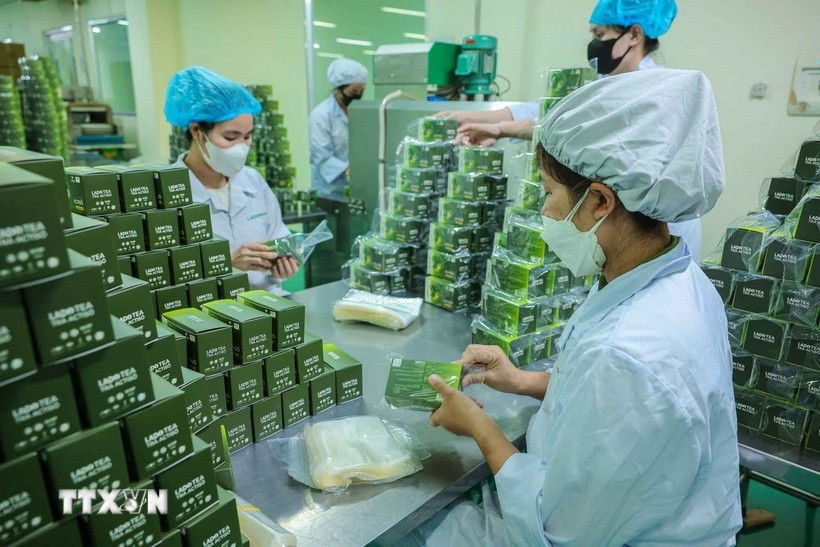
Production of herbal-based products at Lam Dong Pharmaceutical JSC. (Photo: VNA)

Hanoi (VNA) – Goods traceability is not only a filter to prevent counterfeits and substandard products but also acts as a "digital passport" for Vietnamese goods to reach international markets.

A filter against counterfeits

In the first half of 2025, 50,736 violations were detected and handled nationwide. Among these, more than 36,600 cases involved commercial fraud and tax evasion, and nearly 3,300 others were related to counterfeit goods and intellectual property violations, according to the latest report by the National Steering Committee for Anti-smuggling, Trade Fraud and Counterfeit Goods (National Steering Committee 389).

During the peak month of anti-smuggling and counterfeit goods (May 15 – June 15), authorities tackled 10,437 cases, an 80.51% surge compared to the previous month.

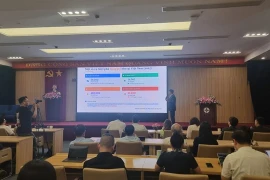
At a seminar titled "Verification and Traceability – A Driver for Sustainable Development of Vietnam's Digital Economy", Pham Minh Tien, Deputy Director of the National Data Centre under the Ministry of Public Security, emphasised that counterfeits have become a pressing issue, infiltrating even supermarkets and hospitals. This poses a major challenge to regulatory authorities and causes concern among consumers.

Therefore, ensuring the authenticity, transparency, and traceability of goods is not only essential for state management but also a prerequisite for strengthening consumer confidence and supporting international integration.

One major obstacle, according to Tien, is the lack of a unified identification code system nationwide. Data is fragmented across various ministries and sectors, traceability remains superficial, and the supply chain, from raw materials to production and consumption, is not fully tracked. Moreover, there is limited oversight of goods on e-commerce platforms, and consumers lack effective tools to verify authenticity.

Authorities also cite reasons such as manual and passive handling, lack of strict control, non-compulsory participation by businesses in traceability systems, poor integration between traceability and quality control, and the absence of a centralised database for goods evaluation and management.

A gateway to the world

Traceability and verification are an essential trend in the digital economy. Vietnam can fully leverage this to build a transparent, efficient, and globally competitive digital economy.

Bui Ba Chinh, Acting Director of the National Numbering and Barcodes Centre under the Ministry of Science and Technology, noted that countries like the US, Canada, and EU member states have implemented full-chain traceability and product identification systems, from production to export. Vietnam can do the same by transparently declaring and monitoring products with public oversight.

Marion Chaminade, Agricultural Counsellor at the French Embassy, shared examples from France and the EU where traceability is mandatory for every component of a product or service, from farm to table, to ensure transparency. She highlighted the adoption of advanced technologies, including blockchain, as effective tools to reduce fraud and strengthen consumer trust.

Nguyen Huy, representing the National Data Association, observed that while many large Vietnamese companies already have authentication systems for their products, these are often not based on national or international standards and are typically limited to internal networks. Moreover, such systems often lack validation from state agencies.

In the context of Vietnam’s digital transformation, the application of technology in traceability is not optional, it must be part of a comprehensive national policy. According to Huy, this requires coordinated management from central to local levels, universal implementation across enterprises, and international interoperability./.

VNA

See more

Illustrative image (Photo: VNA)

Vietnam’s property prices to remain stable next year

In 2026, the outlook is expected to improve further, and analysts do not foresee a return of widespread price surges. Dr Can Van Luc, Chief Economist at BIDV, said the market is moving from a phase of “technical recovery” to “structural stabilisation”.

A view of the Hoa Lac Hi-tech Park in Hanoi (Photo: VNA)

Hanoi seeks to boost investment, business in hi-tech parks, IZs

In 2025, Hanoi’s high-tech parks and IZs posted strong performance, with estimated revenue of 12.14 billion USD, contributing about 19.12% to the city’s GRDP, while budget contributions reached 450 million USD and export turnover amounted to 7.42 billion USD.

Sun PhuQuoc Airways launches its first flights on November 1, 2025. (Photo: Sun Group)

The aviation ecosystem game: Can Sun Group Win?

These are among the most notable assessments made by the Centre for Aviation (CAPA) – the world’s leading aviation data and analytics platform – when evaluating the development prospects of Phu Quoc in the coming years.

A nuclear reactor at the DaLat Nuclear Research Institute (Photo: VNA)

New decree sets roadmap for nuclear infrastructure and workforce development

The decree also covers simulation systems and databases for radiation safety, nuclear safety and nuclear security; specialised computational software for safety assessment; monitoring and command-and-control systems for responding to radiation and nuclear incidents; as well as design documentation, technical manuals, prototype products and other related facilities and equipment.

Hanoi's market surveillance team 2 inspects a shop in Hong Ha ward on July 14. (Photo: VNA)

Growing e-commerce market sees tougher fight against counterfeits

The local e-commerce market has surpassed 30 billion USD this year, recording growth of 25% and accounting for two-thirds of the value of the digital economy. However, this rapid growth has also brought about serious consequences, particularly the widespread proliferation of counterfeit and imitation goods and trade fraud.

The interest rate policy has been adjusted in line with market movements to ensure system liquidity and reduce capital costs. (Photo: VNA)

Banking sector anchors macroeconomic stability, setting stage for new growth cycle

Throughout 2025, the State Bank of Vietnam (SBV) has reaffirmed its role as the central regulatory authority in managing monetary policy, stabilising the financial market, and maintaining macroeconomic balance. Closely monitoring international and domestic economic trends, the SBV steered the monetary policy proactively while closely coordinating with the fiscal policy to achieve the dual objective of controlling inflation and supporting growth.

Professor Reena Marwah from the University of Delhi, and Secretary-General of the Association of Asia Scholars. (Photo: VNA)

Vietnam – A rising star in Asia: Indian professor

Vietnam’s projected GDP growth of around 8% in 2025 shows that its economy is on an impressive growth trajectory, driven by multiple reinforcing engines, said Professor Reena Marwah from the University of Delhi, and Secretary-General of the Association of Asia Scholars (AAS).

Harvesting jackfruit (Photo: VNA)

China to allow import of Vietnamese fresh jackfruits from June 1, 2026

To ensure smooth customs clearance, all orchards and packing facilities participating in exports must be registered and approved by competent authorities of both countries. The list of approved entities granted export codes will be published and regularly updated on the GACC website.