Hanoi (VNS/VNA) - In a world where consumers increasingly demand transparency, quality and origin of goods, traceability is no longer an unfamiliar or optional concept. It has become a vital requirement.
Scandals involving counterfeit goods, unsafe food and substandard pharmaceuticals not only cause economic losses but also erode public trust. On a global scale, verification and traceability are among the top criteria that businesses must maintain to ensure credibility, enhance competitiveness and meet stringent international trade standards.
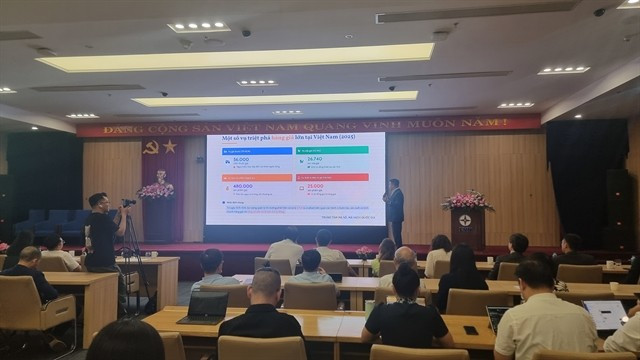
In this context, the conference 'Verification and Traceability – A Driver for Vietnam’s Sustainable Digital Economy' was held in Hanoi on July 8, bringing together representatives from government ministries, technology experts, international organisations and domestic enterprises.
The event was jointly organised by the National Data Association and the Ministry of Public Security, aiming to seek solutions to promote the application of technology in product verification and traceability. The goal is to enhance transparency, combat commercial fraud and protect consumers in the digital economy.
In his opening remarks, Pham Minh Tien, Deputy Director of the National Data Centre under the Ministry of Public Security, said: “Ensuring the authenticity, transparency and traceability of goods and services is not only essential for domestic governance but also a mandatory standard for international integration and market expansion.”
Speakers at the event unanimously agreed that traceability is no longer a choice, but an inevitable demand in the digital transformation journey. From food and pharmaceuticals to industrial products, identification, verification and traceability are becoming the three key pillars of a transparent, sustainable and responsible economy.
Bui Ba Chinh, Acting Director of the National Barcode Centre under the Ministry of Science and Technology, pointed out the current lack of consistency in Vietnam’s product verification and traceability systems.
He noted that although the country had issued dozens of national standards related to traceability, implementation remained fragmented, lacking mandatory enforcement mechanisms and an integrated data system that connects ministries, sectors and localities.
Chinh stressed that “traceability is a powerful tool to combat commercial fraud, but it is only effective when standardised under national regulations and interoperable with international systems. We need a unified national platform, efficiently operated, which links data from raw material production to final products, thereby creating a transparent value chain that supports exports and protects consumers.”
He also highlighted the potential of technologies such as QR codes, barcodes and blockchain in building a ‘digital passport’ for goods - a comprehensive database that records the entire journey of a product. "This is not only a transparency requirement but also a strategic tool to affirm the quality of Vietnamese products on the global stage," he said.
From a business perspective, Hoang Tuan Anh, Chief Technology Officer at ECO Pharmaceutical JSC, said that traceability would serve as a "guarantee of trust" for consumers, particularly in the pharmaceutical sector. The adoption of real-time tracking technologies would enable enterprises to control product quality and comply effectively with international standards.
On institutional and technological aspects, Nguyen Huy, Head of Technology at the National Data Association, noted that Vietnam’s current traceability ecosystem remained fragmented, lacked standardisation, and was yet to be fully endorsed by the State.
Huy added: “As the nation undergoes digital transformation, integrating technology into traceability must be mandatory and implemented as a comprehensive policy, top-down, with consistent governance from central to local levels, and applicable to all enterprises. Only then can we truly identify, verify and trace products.”
He further emphasised the critical role of data: “In traceability, data is the most urgent and crucial component. Only through full application and seamless connection of data can we build a modern and sustainable digital economy.”
In addition to expert presentations, the conference also witnessed the signing of a cooperation agreement between PILA Group and ECO Pharmaceutical JSC to deploy an advanced verification and traceability platform in the pharmaceutical sector.
This partnership marks a concrete step in applying digital identity technology (DID), multi-layer QR codes and blockchain throughout the drug supply chain, helping to combat counterfeit goods and enhance the reputation of Vietnam’s pharmaceutical industry.
The conference has reaffirmed that verification and traceability are not merely technical issues, but foundational pillars for building social trust and national competitiveness. As transparency becomes the norm, traceability will serve as the gateway for Vietnam to advance towards a truly sustainable digital economy./.
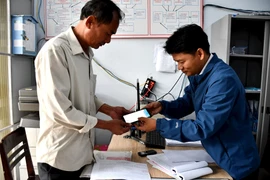
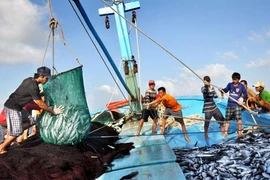
Quang Nam uses electronic catch documentation, traceability software for long offshore vessels
However, the monitoring rate of seafood catches at ports remains low. In 2024, only just over 23% of caught seafood was monitored through ports, due to inadequate infrastructure for unloading and handling them.