PM orders boosting housing supply, cutting prices, stabilising property market

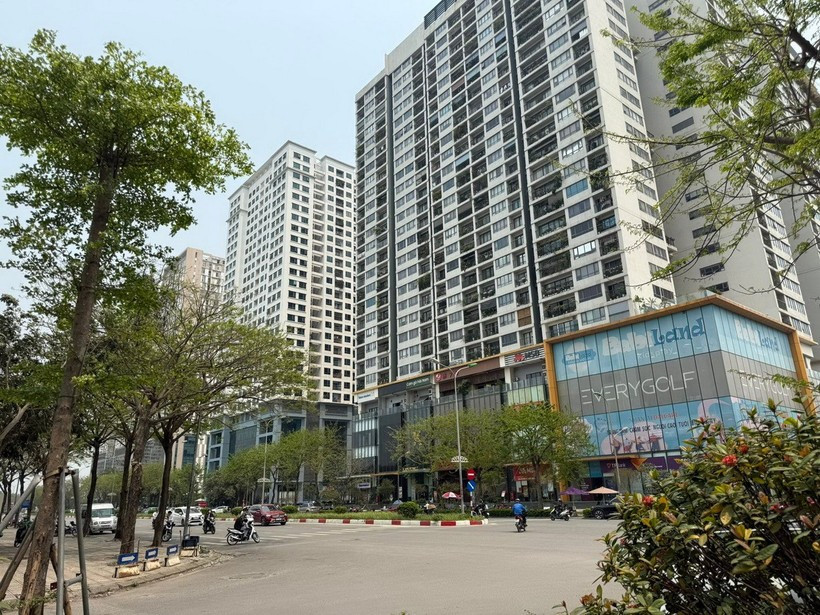
Housing and real estate prices in several localities have surged continuously, beyond the affordability of most people. The problem is partly attributed to market information shortages, price gouging, limited supply of affordable commercial housing, and an insufficient number of social housing projects.

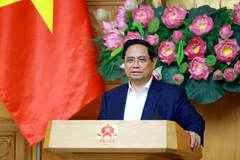
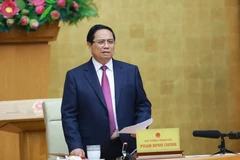
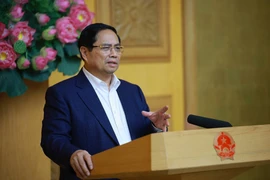
Prime Minister Pham Minh Chinh instructs heads of relevant ministries, agencies, and localities to improve institutions, policies, and laws related to housing, real estate, land, planning, investment, construction, credit, and taxation to ensure consistency. (Photo: VNA)

Hanoi (VNA) – Prime Minister Pham Minh Chinh issued an official dispatch on October 7, directing ministers, heads of ministry-level and Government agencies, and chairpersons of provincial and municipal People’s Committees to resolutely implement measures to increase housing and real estate supply, reduce prices, and stabilise the market.

The dispatch noted that despite strong and timely measures having been taken, housing and real estate prices in several localities have surged continuously, beyond the affordability of most people. The problem is partly attributed to market information shortages, price gouging, limited supply of affordable commercial housing, and an insufficient number of social housing projects.

To promptly promote investment projects and increase housing supply while tightening market supervision and addressing speculation and price manipulation, the Prime Minister instructed heads of relevant ministries, agencies, and localities to improve institutions, policies, and laws related to housing, real estate, land, planning, investment, construction, credit, and taxation to ensure consistency. Administrative procedures should be further minimised, and power decentralisation enhanced.

He also emphasised the need to review and adjust land use fee regulations to ensure fairness and prevent them from pushing housing and land prices beyond people’s affordability.

The dispatch demands the prompt formulation of breakthrough and favourable mechanisms to attract resources for a stable, healthy, and transparent real estate market, particularly in affordable housing segments suited to average income levels, thereby improving people’s material and spiritual well-being.

Social housing projects must be accelerated to meet or exceed the Government’s target of 100,000 units in 2025, while the management of real estate trading and transfer activities tightened.

The Minister of Construction was assigned to lead the review and perfection of legal documents on housing, real estate business, urban and rural planning, and construction to promptly address emerging difficulties and bottlenecks. The minister is also tasked with reporting the results of the five working groups inspecting and resolving issues related to real estate and housing projects nationwide, especially social housing ones, and guiding localities in determining the number of completed social housing units in line with the Law on Real Estate Business.

Strengthening land price control

The MoC, in coordination with the Ministry of Agriculture and Environment, the Ministry of Finance, and relevant agencies, was directed to finalise the pilot plan for a State-run real estate and land-use rights trading centre and submit it to the Government and Prime Minister within October 2025.

The Government leader also requested the Minister of Finance to report on the real estate tax policy by October 15, and to work with the MoC and relevant bodies to promote digital transformation, ensuring seamless online procedures for real estate transactions, notarisation, taxation, and land transaction registration.

Meanwhile, the Minister of Agriculture and Environment was assigned to complete legal documents on land—particularly those related to planning, land use plans, land allocation and leasing, and land pricing—to remove bottlenecks and strengthen the State's control over land valuation and land use fee collection, ensuring alignment with land regulations and, especially, citizens’ real income levels.

In addition, the Prime Minister asked the Governor of the State Bank of Vietnam to adopt a flexible and effective monetary policy; enhance inspection and supervision of credit flows into priority sectors, particularly loans for developers and buyers of social housing, worker housing, and affordable commercial housing projects. He underscored the need for the central bank to strictly manage and thoroughly appraise credit for high-priced real estate projects or those showing signs of price manipulation./.

VNA
See more

Vice Chairman of the Hanoi People’s Committee hands over investment policy approval for Moscow House project in Hanoi to the Moscow authorities. (Photo published by VNA)

Hanoi, Russian localities step up cooperation in urban railways, technology

Secretary of the Hanoi Party Committee Tran Duc Thang and the delegation held talks with Moscow authorities to review implementation of the 2025-2027 cooperation programme and discuss key priorities for the new period, including urban transport, science and technology, digital transformation, trade and investment, and cultural exchanges.

Vietnamese Ambassador to Mexico Nguyen Van Hai (fourth from right) and others attend the seventh Veracruz International Energy Congress. (Photo: VNA)

Vietnam, Mexico strengthen energy, port cooperation

A number of Mexican state Veracruz businesses expressed their wish to organise a delegation to Vietnam to gain first-hand insights into the market, seek partners and explore investment and business opportunities, initially focusing on trade, energy, agriculture and tourism.

At the working session (Photo: VNA)

Can Tho, Guangxi seek collaboration in logistics, supply chains

Chinese investors now back 35 projects in Can Tho with registered capital of nearly 1.2 billion USD. In the first seven months of 2026, Can Tho’s exports to China hit 77.5 million USD, while imports stood at 64.7 million USD. Key exports included rice, seafood, farm produce, processed agricultural products and apparel while main imports comprised agricultural chemicals, veterinary medicines, fertilisers, chemicals, fabrics and other materials and inputs.

Vietnamese Minister of Finance Ngo Van Tuan grants an interview to the Vietnam News Agency (VNA). (Photo: VNA)

Vietnam, Russia move to boost financial cooperation

On bilateral economic, trade and investment ties, Tuan said two-way trade hit 3.24 billion USD in the first seven months of 2026, up 12% from a year earlier. Vietnam’s exports to Russia totaled 1.33 billion USD, while imports amounted to 1.91 billion USD.

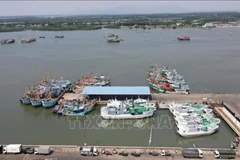
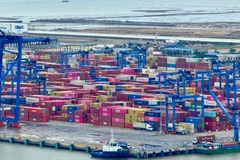
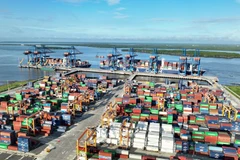
Cai Mep - Thi Vai Port complex in Ho Chi Minh City (Photo: VNA)

Ho Chi Minh City seeks to make seaports new growth driver

To maximise its seaport advantages, Ho Chi Minh City is developing smart and green ports while promoting clean energy, lower emissions and sustainable supply chains. It aims to establish an integrated ecosystem linking seaports with industrial parks, logistics centres, free trade zones, multimodal transport networks and an international financial centre.

Farmers visit the off-season durian orchard of Cao Chi Dai in Vinh Hanh commune, An Giang province (Photo: VNA)

Vietnam promotes finance for green agriculture

Over the past five years, Vietnam has developed and gradually implemented a green finance system to support low-emission and environmentally friendly production, including agriculture. Based on the State Bank of Vietnam's Directive No. 03/CT-NHNN dated March 24, 2015, banks including BIDV, VCB, HDBank and Agribank have introduced green credit packages for waste treatment, high-tech agriculture, digital transformation, regional linkages and emission reduction across production chains.

An overview of the meeting between representatives from Polish businesses and the Agency for Domestic Market Surveillance and Development. (Photo: Agency for Domestic Market Surveillance and Development)

Polish businesses seek suppliers, partners in Vietnam

MAJAMI, a confectionery manufacturer and trader under Sweet House, is seeking distributors for Polish confectionery products in the Vietnamese market. Meanwhile, GABONA, a distributor and wholesaler of professional cosmetics, hair care and make-up products and beauty accessories, is looking for Vietnamese manufacturers of vegan and natural cosmetics.