Policies issued to attract experts in science, technology, innovation, digital transformation

The Government has issued Decree No. 249/2025/ND-CP, setting out mechanisms and policies to attract experts in the fields of science, technology, innovation and digital transformation.

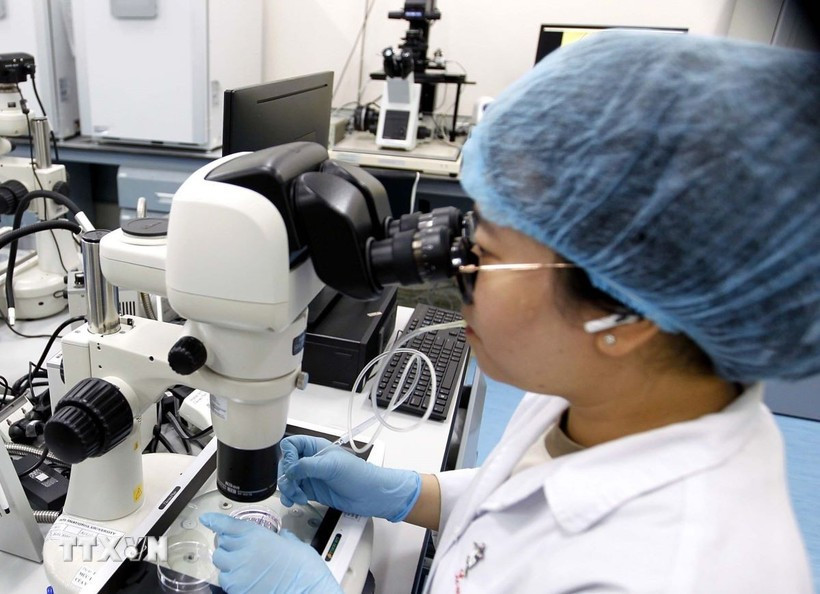
Experts may also qualify by being the author or co-author of an invention protected by intellectual property rights and applied in practice. (Photo: VNA)

Hanoi (VNA) – The Government has issued Decree No. 249/2025/ND-CP, setting out mechanisms and policies to attract experts in the fields of science, technology, innovation and digital transformation.

Taking effect on September 19, 2025, the decree defines criteria, selection procedures, rights and obligations, responsibilities, evaluation and policies applicable to this group of experts.

Those eligible include overseas Vietnamese and foreign nationals who meet the prescribed criteria; agencies, organisations and units of the Party, State, the Vietnam Fatherland Front, political and social organisations at both central and local levels, the armed forces, and enterprises tasked with leading science, technology, innovation and digital transformation programmes and projects; as well as other relevant bodies and individuals.

The criteria for experts include having led or participated in scientific and technological tasks, with priority given to strategic technology sectors identified by competent authorities, and having made tangible contributions to national, regional or international development. Experts may also qualify by being the author or co-author of an invention protected by intellectual property rights and applied in practice, or by holding a doctorate from one of the world’s top 200 universities, as ranked by recognised international league tables, combined with at least five years of teaching or research experience at reputable overseas institutions in relevant disciplines.

Experts are required to comply with Vietnamese law and relevant international regulations, and to safeguard information and data related to the programmes, tasks and projects assigned to them. They will bear personal responsibility for any breaches of contractual obligations that result in financial losses, asset mismanagement, product damage or the disclosure of state secrets.

The document also specifies that the State will provide financial support equivalent to one-month salary, as stipulated in the labour contract, to help experts cover initial accommodation, travel and essential living expenses. They will also be eligible for housing and transport allowances, or be provided with standard apartments and means of transport during their term of service.

In addition, the State will cover expenses for overseas research trips and scientific exchanges when experts are nominated by the lead agency, organisation or unit in charge of science, technology, innovation and digital transformation programmes or projects.

The decree also provides that foreign experts may apply for reduced conditions when seeking Vietnamese citizenship, in accordance with national law./.

VNA

See more

FPT University students during class. (Photo: VNA)

AI reshaping Vietnam’s semiconductor ecosystem

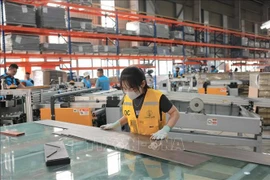
To meet rising semiconductor industry demand, the Government has launched the Semiconductor Workforce Development Programme, which aims to train more than 50,000 semiconductor engineers and graduates by 2030 and develop key laboratories, research hubs and enterprise-linked training models.

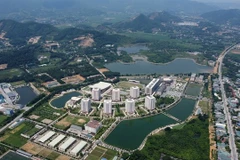
A corner of the exhibition at the Vetnam Space Museum in Hoa Lac Hi-tech Park in Hanoi (Photo: VNA)

Major prospects for Vietnam’s space technology

Vietnam could adopt a mission-based service procurement model, prioritising projects with clear social and economic benefits, while investing strategically in domestic capabilities, standardising data, elevating remote sensing data to national data status, and gradually localising space products.

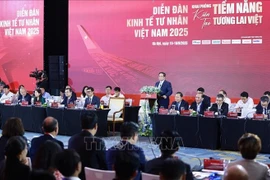
Prime Minister Pham Minh Chinh chairs the fifth meeting of the Government’s Steering Committee for science, technology, innovation, digital transformation and Project 06 in Hanoi on November 15, 2025. Photo: VNA

PM pushes for reforms in sci-tech, innovation, digital transformation

Prime Minister Pham Minh Chinh asked participants to propose priority tasks and breakthrough measures ahead, including removing obstacles, accelerating capital disbursement, simplifying procedures, promoting data reuse to cut paperwork, and offering maximum support to citizens and enterprises.

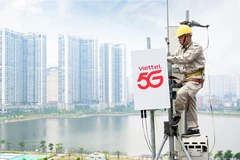
Illustrative image (Photo: VNA)

Da Nang remains Vietnam’s fastest 5G city

The city has held the top spot since the start of this year. Its 5G performance is almost 1.5 times higher than runner-up Hai Phong (429.53 Mbps) and even the capital Hanoi (415.73 Mbps).

Participants in the Vietnam–India Innovation Gateway Bootcamp (Photo: VNA)

Vietnam, India boost innovation cooperation

Bui Trung Thuong, Trade Counsellor at the Vietnamese Embassy in India, highlighted the shift in Vietnam–India relations from traditional cooperation to partnerships based on innovation, technology, and digital transformation.

Illustrative photo (Photo: VNA)

Vietnam emerges as new hotspot for AI data centre investment

A wave of investment in artificial intelligence (AI) data centres is sweeping across Vietnam, with both domestic and international corporations announcing multi-billion-USD projects that are set to transform the country into a rising hub in the regional AI infrastructure map.

An overview of the international seminar, themed “Building resilience against online frauds and scams in Southeast Asia: Spotlight on Vietnam". (Photo: VNA)

Experts propose anti-scam solutions suited to Vietnam’s conditions

Vietnam’s digital transformation has achieved remarkable progress. However, similar to other countries in the region, online scams and fraud cases are on the rise. Last year, authorities recorded 10,000 online fraud cases, with estimated losses of nearly 759 million USD.

Minister of Science and Technology Nguyen Manh Hung speaks at the Vietnam Open Technology Forum 2025 in Hanoi on November 3. (Photo: VNA)

Vietnam looks to develop, master digital technology through open standards

Vietnam has chosen to pursue this direction — developing open technologies, open-source software, and open data — to enable individuals and enterprises to co-create new values. With this approach, it will become a technology-driven nation that both benefits from and contributes to global knowledge.