Project launched to offer free CKD tests to high-risk groups in Vietnam

The project aimed to enable early detection and reduce the risk of dangerous complications, targeting patients with chronic diabetes, cardiovascular conditions and metabolic disorders.

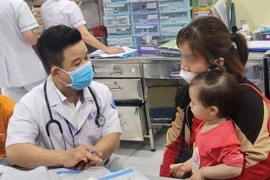
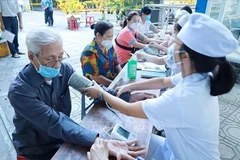
Boehringer Ingelheim Vietnam in collaboration with FPT Long Chau Pharmacy and Vaccination Centre on June 4 launched a project offering free early chronic kidney disease screening for high-risk groups in Vietnam. (Photo: VNS)

HCM City (VNS/VNA) – Boehringer Ingelheim Vietnam in collaboration with FPT Long Chau Pharmacy and Vaccination Centre has officially launched a project offering free early chronic kidney disease screening for high-risk groups nationwide.

The project aimed to enable early detection and reduce the risk of dangerous complications, targeting patients with chronic diabetes, cardiovascular conditions and metabolic disorders.

According to medical experts, chronic kidney disease (CKD) is an alarming public health issue in Vietnam, affecting over 8.7 million people, equivalent to 12.8% of the population.

However, early detection rates remain very low, with only 4.5% to 15.5% of patients diagnosed at stage 3.

Around 800,000 people are already in the end stage, requiring dialysis or kidney transplantation, with a mortality rate nearing 50% within five years of treatment. This poses a significant economic and social burden.

This year, the two partners plan to carry out 30 programmes in various regions nationwide. They expect to provide thousands of people with simple, quick and completely free proteinuria tests.

A notable highlight of the programme is the collaboration between the two sides and local medical centres to deploy rapid urine protein testing - a modern tool that helps detect proteinuria, an early warning sign of potential kidney disease.

Individuals who test positive will receive counselling and be guided to undergo more in-depth examinations to comprehensively assess kidney function, creating opportunities for early treatment and prevention of serious complications.

Previously, Long Chau and Boehringer Ingelheim signed a comprehensive strategic cooperation agreement and jointly organised free screening programmes for type 2 diabetes, heart failure and chronic kidney disease at selected Long Chau pharmacies and local health stations.

The General Director of Boehringer Ingelheim Vietnam, Oliver Koehncke, said this campaign marks the 10th anniversary of Empagliflozin being integrated into global treatment protocols—it remains the first and only SGLT2 inhibitor in Vietnam indicated to reduce cardiovascular mortality in patients with type 2 diabetes and cardiovascular disease, while also slowing the progression of chronic kidney disease.

"This initiative reflects our shared belief that healthcare must be accessible, proactive, and prevention-focused—not just treatment-oriented,” he said.

Boehringer Ingelheim is committed to advancing research and developing breakthrough solutions in the Cardio-Renal-Metabolic space, continuing its mission to improve lives across generations in Vietnam.

The deputy general director of FPT Retail and managing director of FPT Long Chau Pharmacy and Vaccination Centre, Nguyen Do Quyen, said at their site kidney disease consistently ranks among the top ten most prescribed conditions, highlighting its prevalence and the growing demand for early intervention and prevention.

“Through this programme, the community will have timely access to diagnosis and early prevention strategies.”

With over 2,000 stores nationwide and 18,000 professionally trained pharmacists, FPT Long Chau committed to being a bridge that elevates the standard of health care for the Vietnamese people.

The two sides will continue to collaborate on building and implementing community health education programmes, particularly for high-risk patient groups.

Boehringer Ingelheim Vietnam also commits to supporting FPT Long Chau in providing ongoing training – both in-person and online – on cardiovascular, kidney, and metabolic diseases for healthcare professionals and pharmacists working in the pharmacy chain, following the principles of: right diagnosis, right medication, right dosage and right method. /.

VNA

See more

From 2026, all residents in Ho Chi Minh City will receive periodic health check-ups or screening at least once a year under a roadmap. Illustrative image. (Photo: VNA)

Ho Chi Minh City to offer annual health check-ups for residents

In the initial phase in 2026, priority will be given to children under 24 months old, students, out-of-school minors, contracted employees, probationary workers, apprentices, public officials, members of the armed forces, social protection beneficiaries and people aged 60 and above.

Patients register at the reception desk upon arrival for medical examination. (Photo: VNA)

Ho Chi Minh City targets free basic hospital fees for residents by 2030

Under the programme, the southern largest economic hub has set several key health targets to be achieved by 2030. The average height of children and adolescents under 18 is expected to increase by at least 1.5cm, while the average life expectancy of residents is projected to reach around 77 years, including at least 68 years of healthy living.

Vietnamese Ambassador to Laos Nguyen Minh Tam extends greetings to leaders and staff of the Hanoi – Vientiane General Hospital on the occasion of the 71st anniversary of the Vietnamese Doctors’ Day on February 27. (Photo: VNA)

Vietnamese doctors in Laos help foster bilateral solidarity

Commending the Hanoi – Vientiane General Hospital’s 13-year development, Ambassador Nguyen Minh Tam noted that prioritising conscience and virtue has helped it build a strong reputation among Lao citizens, the Vietnamese community and international friends in Laos.

Organ transplantation at the University Medical Centre Ho Chi Minh City (Photo: the University Medical Centre Ho Chi Minh City)

Professional excellence, dedication define Vietnam’s healthcare system

When patients pull through from the brink of death, when their vital signs stabilise and transplanted hearts begin beating strongly in new bodies, the joy shared by the entire medical team is overwhelming. And when the country welcomes the New Year, saving lives takes on an even more profound significance — offering patients and their families a new spring of hope.

At Phu Rieng communal medical station in Dong Nai province (Photo: VNA)

Vietnam fosters maternal and child healthcare, advances toward 2035 goals

The under-five mortality rate in Vietnam in 2025 was estimated at below 16 per 1,000 live births, more than three times lower than the 1990 level. The infant mortality rate (under one year) declined fourfold to below 11 per 1,000, while the neonatal mortality rate dropped fivefold, from 44 per 1,000 in 1990 to 8.8 per 1,000 in 2025.

Medicine support programmes provide significant benefits to patients throughout their course of treatment. (Photo: VNA)

Over 6,000 patients receive free medicines

The schemes focus primarily on cancer, rare diseases and severe chronic conditions, areas where treatment costs are high and often require expensive biological and originator drugs.

A lung transplant surgery at the National Lung Hospital (Photo: VNA)

Vietnam reaches new height in organ transplantation

From demanding cross-country transplants to highly specialised procedures nearing regional and international standards, the sector has created new chances of survival for thousands of patients. However, persistent bottlenecks in organ donation and the legal framework highlight the urgent need to further perfect the national donation–transplantation system. In the era of advanced medicine, progress is measured not only by surgical mastery, but also by the ability to turn loss into hope and sustain life.

The DAV asks pharmacy producers and distributors to increase medicine supply capacity during Tet to meet increasing demand (Photo: VNA)

Measures rolled out to ensure adequate medicine supply during Tet

Accordingly, provincial and municipal health departments are required to direct hospitals, centres for disease control and health care facilities to urgently develop plans and carry out medicine procurement to ensure sufficient supply, absolutely avoiding shortages. Medicines must meet quality standards and be sold at reasonable prices, with no sudden price increases allowed.

Military doctors conduct ultrasound examinations for residents in Dong Dang town, Cao Loc district, Lang Son province. (Photo: VNA)

Resolution 72 opens path to a modern, sustainable healthcare system

To build a resilient healthcare system capable of meeting the challenges of ageing, emerging diseases and rising expectations for quality care, Vietnam must continue to strengthen primary and preventive care, invest in human resources, accelerate digitalisation and big data development, and refine healthcare financing mechanisms.