Protecting .vn domain names from risk of illegal appropriation

To prevent the risks of appropriation, redirection or forgery, the Vietnam Internet Network Information Centre (VNNIC) under the Ministry of Science and Technology recommended that individuals and organisations activate Registry Lock.

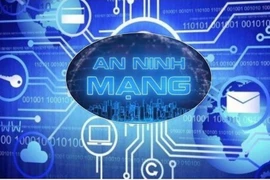
Activating Registry Lock is necessary in the context of domain names becoming increasingly popular attack targets. (Photo ictvietnam.vn)

Hanoi (VNS/VNA) - In the context of increasingly sophisticated cyber security crimes, domain names – strategic digital assets – are becoming the target of attacks by hackers.

To prevent the risks of appropriation, redirection or forgery, the Vietnam Internet Network Information Centre (VNNIC) under the Ministry of Science and Technology recommended that individuals and organisations activate Registry Lock.

The centre is deploying this tool specifically for the national domain name .vn.

Registry Lock is a service that 'hard locks' domain names – similar to locking a safe and can only be opened with the owner's key.

This is the strongest security layer currently in the .vn domain ecosystem, equivalent to the high security standards of many developed countries such as Germany (.de), France (.fr), Japan (.jp).

A domain name is not only a website address but also a brand face, a data access point and the main communication channel with users.

Losing control of a domain name can lead to serious consequences, such as redirected websites, stolen email systems and interrupted online services.

A domain name spoofing incident can lead to serious loss of data, customers and brand reputation.

However, the rate of using this tool is still low. According to statistics from the VNNIC, there are currently more than 4,000 .vn domain names using Registry Lock, out of a total of nearly 660,000 domain names in operation.

Without Registry Lock, hackers only need to 'steal the key' (administrative account) to be able to enter the 'house'. Using Registry Lock, even if thieves have the key, they still cannot open the door.

Any changes are only made when requested by the domain owner, strictly authenticated through a special professional communication process.

When activated, Registry Lock prevents any unauthorised changes related to the domain name resolution system (DNS) server, domain name owner information, domain name transfer, registrar transfer, domain name deletion.

Activating Registry Lock is necessary in the context of domain names becoming increasingly popular attack targets.

Registry Lock helps prevent the risk of losing control due to administrative account leaks, operational negligence or third-party vulnerabilities – the causes that easily lead to unauthorised domain name changes.

In addition, Registry Lock also comprehensively protects the organisation's digital ecosystem because most important services such as website, email, payment system or public service portal operate on the domain name platform.

Ensuring that no one can illegally intervene helps maintain the stability and integrity of the entire system.

In particular, Registry Lock plays an important role in preserving brand reputation.

The VNNIC recommended that entities using .vn domain names, especially large enterprises, banks, insurance companies, state agencies, press and businesses owning high-value domain names, proactively apply the highest security layers./.

VNA

See more

Police offiers mornitor the traffic through AI camera (Photo: VNA)

Applying the Internet of Things in smart transport

The project aims to build a unified, safe and efficient IoT platform to support the management, operation and exploitation of smart transport systems under the Ministry of Construction, with data shared across ministries and localities.

Through long-term commitment, Viettel has brought millions of Burundians into the mobile era and become the first operator to roll out 5G in the country, Viettel Burundi CEO Phan Truong Son noted. (Illustrative photo: VNA)

Viettel secures three prestigious international awards

Viettel has won honours in the “People & Culture” and “Best Operator in a Growth Market” categories at the 2025 World Communication Awards (WCA), alongside the “Best Digital Transformation Project” at the 2025 Global Telecoms Awards (Glotel).

A view of the Can Gio sea-encroaching urban area project (Photo: VNA)

Green-tech push for Can Gio

Vietnam has the capacity, ambition and technological foundation to join the group of leading sustainable coastal urban nations in the coming decade, experts said at a dialogue on "advancing to the sea with ESG++ megacities: breakthroughs through green technology", held on December 9 in Hanoi by the Vietnam Institute for Real Estate Studies (VIRES).

Minister of Science and Technology Nguyen Manh Hung speaks at the meeting (Photo: VNA)

Vietnam turns intellectual property into bankable assets in new law

About AI-generated content, the law draws a clear line: purely autonomous AI creations are not eligible for copyright or patent protection. Those who provide substantial creative input, such as ideas, curation, editing, or selection, qualify as authors or inventors.

Lieutenant General Nguyen Minh Chinh, NCA Vice Chairman, speaks at the launch ceremony of the southern branch of the National Cybersecurity Association. (Photo: VNA)

National Cybersecurity Association opens branch in HCM City

The southern branch aims to become a coordinating body for cybersecurity tasks, workforce development, awareness-raising and the strengthening of digital defence capabilities across the region, contributing to the safe and sustainable growth of Vietnam’s digital economy.

Viettel exceeds target of 20,000 new 5G stations by more than three weeks. (Illustrative photo: VNA)

Viettel exceeds target of 20,000 new 5G stations by more than three weeks

Viettel plans to continue scaling up its network from now until the end of 2025, with an additional 23,500 stations scheduled for installation, nearly quadruple the number rolled out in 2024. Once completed, Viettel will operate Vietnam’s largest 5G network, with 30,000 stations covering 90% of outdoor areas and 70% of indoor spaces nationwide, from major cities to rural regions.

In Vietnam, demand for infrastructure supporting AI, cloud computing, and digital services is rising at an unprecedented level. (Illustrative photo: VNA)

Vietnam emerges as new hub for data centres

Data centres have surged to become the second most preferred alternative asset class in the region. Vietnam is no exception to this trend as the demand for infrastructure supporting AI, cloud computing, and digital services has risen at an unprecedented level.

Professor Kurt Kremer, from the Max Planck Institute for Polymer Research in Germany, speaks at the event. (Photo: VNA)

Vietnam has advantages to develop versatile humanoid robots: experts

At the symposium, international and Vietnamese experts also discussed the latest trends in robotics, from socially interactive humanoids and collaborative service robots to medical and rehabilitation systems, and examined major challenges surrounding AI safety and ethics to ensure that robotics evolves in a responsible, human-centred and sustainable manner.

The organisers present members of the judging panel of the UAV Cup PV GAS 2025. (Photo: VNA)

UAV Cup PV GAS 2025 promotes Vietnam’s home-grown UAV technology

Jointly organised by Hanoi University of Science and Technology’s Institute of Space and Underwater Technology (ISUT) and Petrovietnam Gas JSC (PV GAS), the competition aims to foster innovation among young people, enhance capabilities in UAV research, design and application, and seek practical technological solutions for smart agriculture, environmental monitoring, logistics, and emergency rescue.

Assoc. Prof. Luu Anh Tuan, Executive Director of the Centre for Artificial Intelligence Research at VinUni University, speaks at the seminar. (Photo: VNA)

Vietnam advances people-centred AI development

The event brought together scientists, policymakers, and inventors to discuss responsible AI development with a focus on human-centred values. Participants explored practical applications of ethical frameworks, ensuring transparency and human oversight in AI, and promoting international cooperation to strengthen global AI governance.