Quang Nam positioned as medicinal plant hub

The central province of Quang Nam is set to become a hub for the medicinal plant industry, with Ngoc Linh ginseng designated as the core crop, under the Prime Minister's decision issued earlier this year.

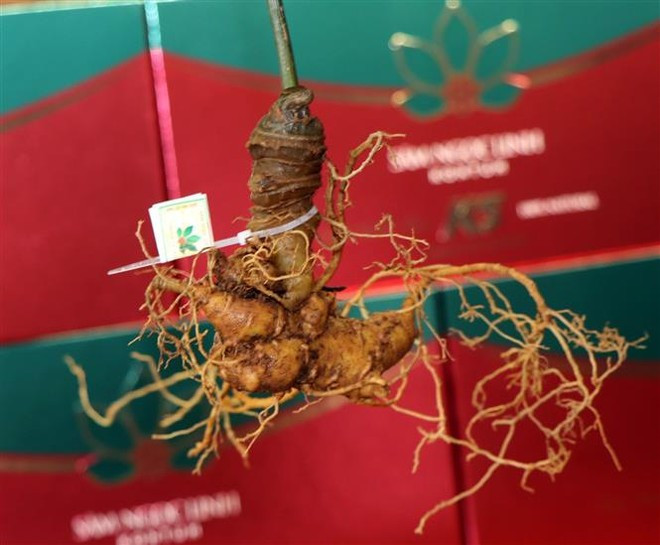
Ngoc Linh ginseng is found within a narrow ecological zone around the peak of Ngoc Linh Mountain. (Photo: VNA)

Hanoi (VNA) – The central province of Quang Nam is set to become a hub for the medicinal plant industry, with Ngoc Linh ginseng designated as the core crop, under the Prime Minister's decision issued earlier this year.

The move aims to create a large-scaled, modern, and closed-loop centre encompassing research, cultivation, deep processing, and commercialisation of medicinal plants.

Unlocking potential for stronger development

Vietnam boasts a rich diversity of medicinal plants, with over 5,000 species known for their therapeutic properties. However, the country's herbal medicine sector has yet to fully tap into this potential. Most activities remain focused on raw material exploitation with low added value, limiting the industry’s competitiveness in the global market.

According to the Ministry of Health, the central coastal and Central Highlands regions are home to numerous valuable medicinal plants with high economic and medical potential. Notably, Ngoc Linh ginseng, known as a “national treasure”, is considered one of the rarest and most precious ginseng varieties in the world, endemic to Ngoc Linh Mountain spanning Quang Nam and Kon Tum provinces.

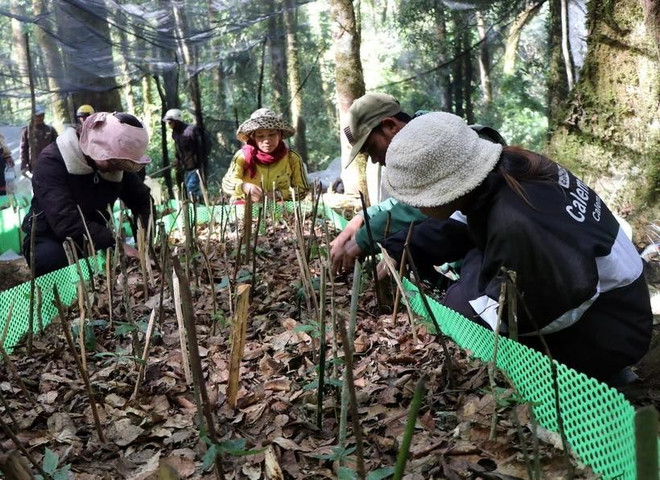
Ngoc Linh ginseng is currently found within a narrow ecological zone around the peak of Ngoc Linh Mountain. It grows under the canopy of primary forests across Nam Tra My district (Quang Nam), and Dak Glei and Tu Mo Rong districts (Kon Tum). In Quang Nam, the ginseng has already been successfully transplanted to seven out of 10 communes in Nam Tra My district.
ngoc-linh2.jpg
Ngoc Linh ginseng, known as a “national treasure”, is considered one of the rarest and most precious ginseng varieties in the world, endemic to Ngoc Linh Mountain spanning Quang Nam and Kon Tum provinces. (Photo: VNA)

Nam Tra My district has completed procedures for leasing forest environment for Ngoc Linh ginseng cultivation, covering a total area of over 800 ha.

Meanwhile, in Kon Tum, nearly 3,000 ha of land has been dedicated to Ngoc Linh ginseng cultivation. This province is developing a hi-tech centre for propagating, conserving, and developing medicinal plants in Tu Mo Rong district, covering an area of about 60 ha.

Vice Chairman of the Quang Nam provincial People's Committee Ho Quang Buu said that in recent years, several businesses have invested in producing various products from Ngoc Linh ginseng such as candies, tea, and nutritional supplements.

Notably, alongside encouraging local residents to expand the ginseng cultivation area, Nam Tra My authorities have paid attention to promoting trade and expanding the market for this valuable plant. In addition to monthly markets and an annual ginseng festival, the district has adopted policies to support and attract companies and business households to engage in deep processing of Ngoc Linh ginseng products. Thanks to these efforts, most of the district’s 25 provincial-level OCOP (One Commune, One Product) items rated three or four stars are made from Ngoc Linh ginseng.

Establishing production and business chain

Quang Nam has drawn up plans to establish a medicinal plant industry centre as part of efforts to realise the Government’s vision.

The PM-approved plan aims to comprehensively develop material zones and systems for processing, production, and trading while promoting scientific research so as to gradually transform Quang Nam into the country's leading hub for the medicinal plant industry. It also seeks to unlock the potential of Ngoc Linh ginseng as a national product, as well as other local medicinal plants, thereby helping turn Vietnam’s medicinal plant industry into a high-value one.

Buu said Quang Nam will coordinate with provinces and cities in the central coastal and Central Highlands regions to devise and implement measures for developing a chain of production, processing, and trading of medicinal plants and related products.

Priority will be given to expanding cultivation areas, with Ngoc Linh ginseng as the key crop along with others that Quang Nam and Kon Tum are strong at such as ba kich (Morinda officinalis How), dang sam (Codonopsis pilosula), and sa nhan tim (Wurfbainia longiligularis).

Quang Nam will also step up research and apply modern technologies to enhance the cultivation and processing of Ngoc Linh ginseng and diversify related products, thus capitalising on the unique value of this national treasure, building a strong brand, and promoting local tourism.

Besides, domestic and international trade promotion activities will be boosted while businesses assisted in marketing herbal products and developing tourism services linked with medicinal plant cultivation, according to the official./.


VNA

See more

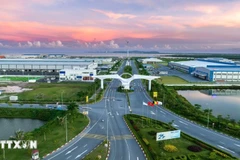
Hai Phong targets 4.3 billion USD in FDI in 2026 (Photo: VNA)

Hai Phong city targets 4.3 billion USD in FDI in 2026

Hai Phong’s investment appeal is underpinned by a rapidly expanding development space, including the Southern Coastal Economic Zone covering more than 20,000 hectares, a planned free trade zone, deep-water ports at Lach Huyen, and 12 industrial parks newly established in 2025.

The relocation of check-in counters aims to better meet the travel needs of residents and visitors. (Photo: VNA)

Vietjet shifts domestic check-in at Tan Son Nhat from January 13

During the recent New Year 2026 holiday peak, Vietjet added 380 flights, equivalent to nearly 78,000 additional seats, on many key domestic routes linking Hanoi and Ho Chi Minh City with destinations such as Vinh, Thanh Hoa, Hai Phong, Da Nang, Phu Quoc, Nha Trang and Da Lat.

Commercial banks are providing approximately 88% of total green credit outstanding in Vietnam. (Photo: nhandan.vn)

Capital sources expanded for sustainable growth

According to the State Bank of Vietnam (SBV), by the end of November 2025, outstanding green credit was estimated at around 750 trillion VND (28.55 billion USD), with an average growth rate exceeding that of overall credit in the economy.

Customers select goods at a supermarket. (Photo: VNA)

Retail market expands sharply, sustainability challenges persist

According to a report on recently released by the Ministry of Industry and Trade’s Agency for Domestic Market Surveillance and Development, the size of the market reached more than 7 quadrillion VND (about 266 billion USD) in 2025, up around 10% compared with 2024.

Oil rigs at the Bach Ho oil field. (Photo: VNA)

Resolution 79: State economy to lead growth

Resolution 79 is described as a “clear action declaration” by the Politburo, saying the state economy is not only responsible for maintaining macroeconomic stability, but must also become the force leading a new growth model that is green and sustainable.

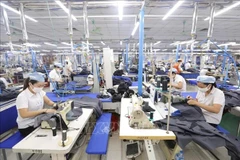
Workers at Garment 10 Corporation produce apparel for export. (Photo: Nhan Dan)

Leveraging export advantages within RCEP region

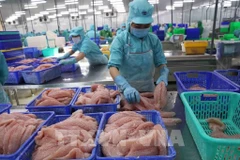
In 2025, seafood exports to China alone exceeded 2.2 billion USD, up about 33% compared to 2024. Shipments to Japan fetched nearly 1.7 billion USD, a year-on-year increase of 14.6%, while those to the Republic of Korea and Australia grew by 9.6% and 3.2%, respectively.

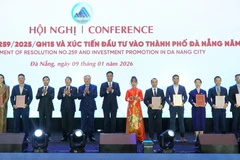
Certificates of membership in the Vietnam International Financial Centre in Da Nang are awarded at the conference on January 9. (Photo: VNA)

Da Nang continues targeted investment promotion approaches

According to Chairman of the Da Nang People’s Committee Pham Duc An, the city prioritises building sustainable economic ecosystems and focuses on key breakthrough sectors with strong spillover effects, including high technology and digital transformation, logistics, urban infrastructure, finance, processing and manufacturing industries, high-tech agriculture, and the pharmaceutical and medicinal herb industry.

In 2025, Hyundai sales reached 53,229 vehicles across the Vietnamese market. (Illustrative photo: Yonhap/VNA)

Hyundai sales in Vietnam rise almost 23% in December

In 2025, sales reached 53,229 vehicles across the market, a result considered a testament to the efforts by TC Group, Hyundai Thanh Cong, and the entire Hyundai dealership network nationwide amidst a volatile market.

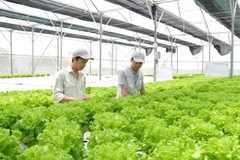
Hydroponic vegetable cultivation model at the High-Tech Agricultural Park (Photo daibieunhandan.vn)

HCM City accelerates shift toward ecological urban agriculture

​The city’s agricultural sector is undergoing a strong transformation, restructuring toward higher value-added and sustainable development. In recent years, the sector has maintained steady growth, with agricultural, forestry and fisheries output rising by an estimated 2.5% annually.