Quang Ninh develops OCOP products with focus on quality

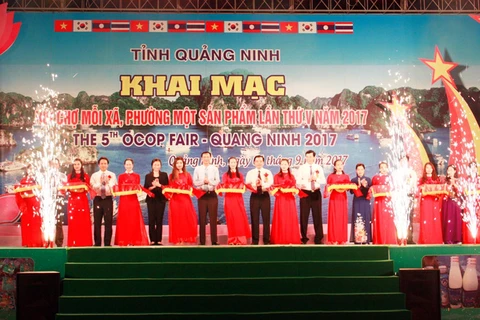
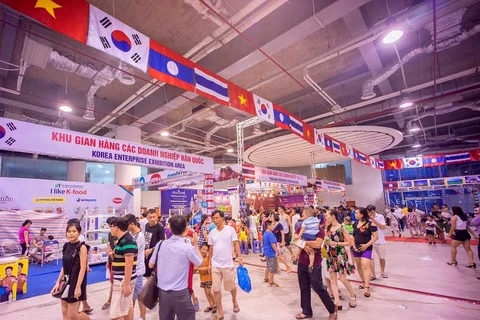
The northeastern province of Quang Ninh is developing its own brands through the One Commune One Product (OCOP) programme.
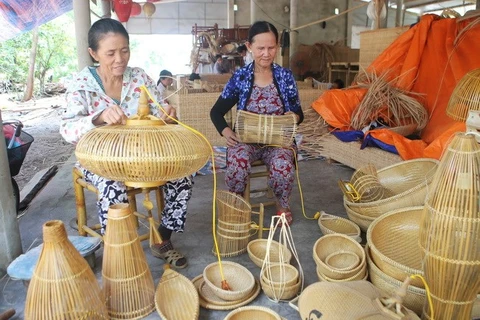
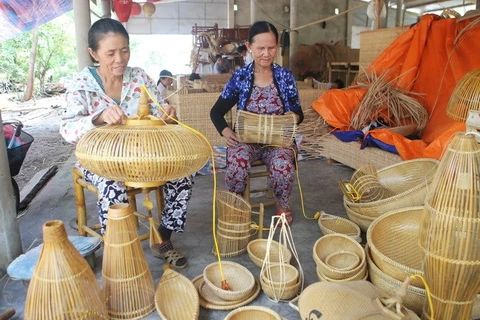
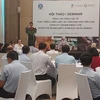
Quang Ninh develops OCOP products with focus on quality ảnh 1Illustrative image (Source: VNA)

Hanoi (VNA) –
The northeastern provinceof Quang Ninh is developing its own brands through the One Commune One Product(OCOP) programme.

The programme was initiated by the Ministry ofAgriculture and Rural Development in 2008, following the model of Japan’s OneVillage One Product (OVOP) and Thailand’s One Town One Product (OTOP) drives.

Quang Ninh was the first locality in Vietnam toimplement the programme in 2013. Sincethen, 180 businesses, cooperatives, and working groups have been established orregistered to join the programme, with a total of 210 products and groups ofproducts and services granted the OCOP trademark, including 99 meeting 3-5 starstandards.

Vice Chairman of the provincial People’sCommittee Dang Huy Hau said Quang Ninh wants to, through the programme,leverage on its advantages in natural resources, culture and rural labour forthe creation of high-quality products to increase incomes and generate jobs forlocal residents as well as achieve sustainable development.

The OCOP programme is designated to help developcomplete production and value chains from production, harvesting, processingand consumption for local specialties and products, he said.

Particularly, the OCOP brand is registered asintellectual property and printed on all products, according to Hau.

Chairman of Quang Ninh Alliance of CooperativesNguyen Van Nghi said the province has encouraged the participation ofcooperatives in the OCOP programme, as well as the transformation ofcooperatives in line with the 2012 Law on Cooperatives to receive newpreferential treatment and improve their operational efficiency.

In addition, 29cooperatives have been established through the OCOP.

Nghi said the law has created a legal frameworkfor cooperatives to develop sustainably and diversify production models, thuscontributing to poverty reduction.

Meanwhile, Nguyen Ngoc Bao, Chairman of VietnamCooperatives Alliance, recognized the effective implementation of the OCOP inQuang Ninh with the establishment of new cooperatives. 

Particularly, there is connectivity amongbusinesses, he said.

However, some cooperatives are operating at asmall scale, hence their products are less competitive, he added.

Vu Duc Phu, Director of Phu Hai Production andIndustrial Services Cooperative, advised cooperatives to work together in buildinga value chain, which is useful for creating high-quality products and securing theirfoothold in the market.

Quang Ninh plans to develop 130 existing OCOPproducts and 120 new ones in the near future, he said.

OCOP is an economic development programme inrural areas focusing on increasing internal power and values, contributing tothe implementation of the National Target Programme on New Rural Developmentfor 2016-2020. 

Groups of goods and services defined in theprogramme include food (fresh and processed farm produce); beverages (alcoholicand non-alcoholic drinking); medicinal herbs (products made from herbal plants);fabric and textiles (products made from cotton and yarn); souvenirs - furniture- decorations (products made from wood, fiber, rattan, metal and ceramics); andrural tourism services and sales (services for sightseeing, tourism, study,research). 

The overall objective of the programme is todevelop forms of production organisation and business (with the priority willbe given to developing cooperatives and small and medium-sized enterprises(SMEs), towards producing traditional products and developing  serviceswith high competitiveness in the domestic and international markets, thuspromoting rural economy and the national agriculture industrialisation andmoderlisation. 

According to the Ministry of Agriculture andRural Development, nearly 6,010 enterprises, cooperatives, working groups andbusiness households are producing 4,823 products in six commodity groups. 

Specifically, there are 2,584 products in food,1,041 in beverages, 231 in herbals, 186 in fabric and garment, 580 in souvenirs– interior décor, 201 in rural tourism services. However, only 1,086 productsregister for quality standards and 695 products register for intellectualproperty protection. 

As of late April, 60 out of 63 cities andprovinces nationwide built the frame OCOP programme at the provincial level, 30of which already completed the programme design and 28 others are collectingfeedback before approval.-VNA

VNA

See more

Key export sectors such as textiles – garments, footwear and furniture, along with many signature products of Da Nang, have strong potential to expand their markets through online export channels. (Photo: VNA)

Da Nang seeks to boost online exports

To help businesses go global, Da Nang is shifting from supporting individual online activities to developing an integrated ecosystem covering products, branding, platforms, payments, logistics, legal issues and market information. This is also part of the city’s e-commerce development orientation for 2026-2030, which identifies e-commerce as an important component of the digital economy.

Deputy Minister of Foreign Affairs Le Thi Thu Hang receives Rolf Mutzenich, a member of the Foreign Affairs Committee of the German Bundestag, in Hanoi on August 18. (Photo: baoquocte.vn)

Vietnam welcomes German firms’ expansion

Vietnam welcomes and stands ready to create favourable conditions for German businesses to expand their investment and operations in the country, particularly in infrastructure, smart seaports, renewable energy, high-speed railways, science and technology, and high-quality human resource training.

Khanh Hoa province has the largest sheep population in Vietnam, with around 100,000 individuals. (Photo: VNA)

Khanh Hoa province explores Halal ecosystem development

Khanh Hoa aims to estabish itself as a Halal-friendly destination while supporting businesses in expanding export markets, attracting strategic partners and investors, and drawing projects from countries with strong Halal logistics, tourism, manufacturing, processing and agriculture sectors.

The proportion of Vietnamese goods remains high at supermarkets. (Photo: VNA)

Vietnamese brands win over domestic consumers to go global

Amid increasingly fierce global competition, the goal is no longer simply to increase domestic consumption of Vietnamese goods, but to develop strong Vietnamese brands capable of winning consumers through quality, innovation and added value, thereby creating a stepping stone for expansion into international markets.

Illustrative image (Photo: VNA)

Automated VAT refunds to be rolled out from December

As of August 11, VAT refunds rose 32% from a year earlier, reaching 64.4% of the full-year estimate. Tax authorities issued 11,627 refund decisions totaling 111.726 trillion VND (4.26 billion USD), up 9% by volume. The payouts improved cash flow for companies and supported production, trade and exports.

ST25 rice is the centrepiece of the Vietnam Goods Week at Selgros. (Photo: VNA)

ST25 rice officially enters Selgros wholesale supermarket chain in Germany

The placement of ST25 rice on Selgros shelves not only creates an additional opportunity for German consumers to access Vietnamese rice products, but also contributes to efforts to increase the added value of Vietnamese agricultural products by shifting the focus from volume to quality, branding and value.

Trains on the elevated section of the Cau Giay – Nhon route in Hanoi provide convenient transportation for local residents. (Photo: VNA)

Multimodal connectivity to drive Vietnam’s transport infrastructure

Under the proposed approach, roads would serve mainly as connectors and for first- and last-mile transport; railways would handle large volumes over long distances; maritime transport would serve import and export cargo; inland waterways would carry large volumes at low cost; and air transport would focus on fast delivery and high-value goods.

Amata Industrial Park in Dong Nai city (Photo: VNA)

Green shift powers investment in southeast Vietnam

The Amata Industrial Park in Dong Nai City, established 32 years ago and covering more than 500ha, is home to over 160 domestic and foreign businesses. Selected in 2020 as one of three national pilot sites for conversion into an eco-industrial park, Amata has raised its compliance with the international eco-industrial park framework from 41% to 86% in 2024, and is working towards becoming Dong Nai's first certified eco-industrial park.

At a port in Ho Chi Minh City (Photo: VNA)

Multi-channel capital mobilisation needed to achieve double-digit growth

The Ministry of Finance estimates development investment for 2026-2030 at a minimum of 38.5 quadrillion VND (1.48 trillion USD), or about 40% of GDP. The state budget is expected to provide only about 20%, or more than 7.7 quadrillion VND, leaving over 80%, or more than 30 quadrillion VND, to be raised from the broader economy. That makes expanding capital mobilisation channels beyond bank credit essential.