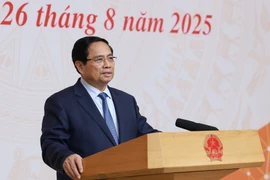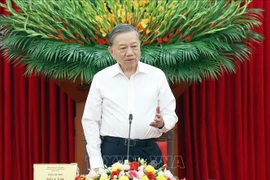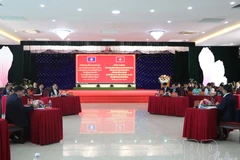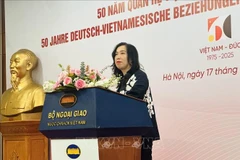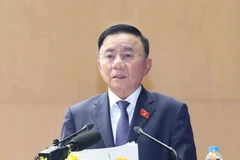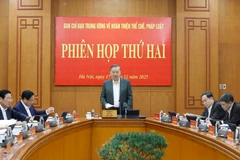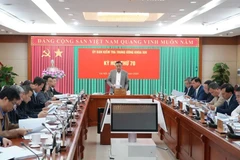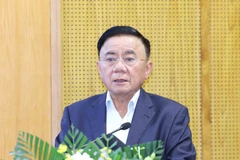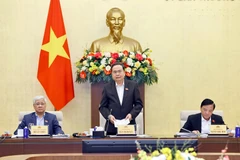
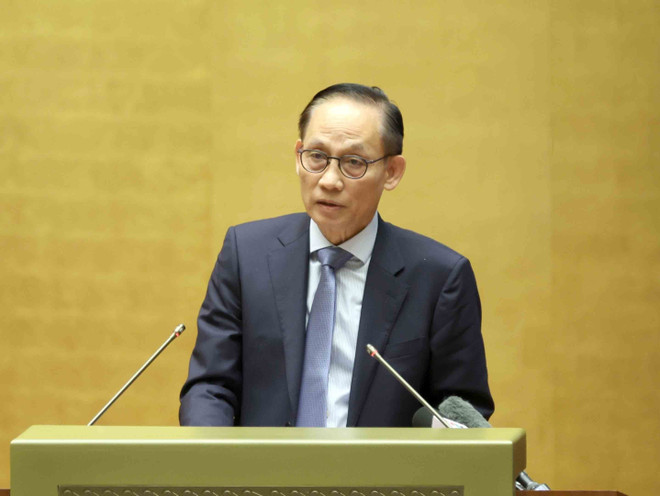
Hanoi (VNA) – The Politburo’s Resolution No. 59-NQ/TW on international integration in the new context marks an important milestone in Vietnam’s integration journey, reaffirming that global engagement is a strategic engine driving the nation into a new era, stated Acting Minister of Foreign Affairs Le Hoai Trung while addressing a national conference on September 16 to implement key Politburo’s resolution, including Resolution 59.
Trung said that the resolution, adopted on January 24, 2025, sets out five guiding principles, affirming that international integration must proceed in close coordination with national defence and diplomacy, aiming to protect the Fatherland early and from afar.
It recognises international integration as a nationwide effort, under the absolute and comprehensive leadership of the Party and unified management by the State, with citizens and businesses as the key drivers and beneficiaries.
The resolution underscores the importance of strong domestic capacity as the foundation for integration, complemented by the strategic mobilisation of external resources. It characterises integration as both cooperation and struggle, requiring Vietnam to shift from a passive actor to an active and responsible contributor to common affairs of the international community, said Trung.
Integration must also be deep, comprehensive, and strategically coherent, ensuring alignment across sectors within a unified national strategy, he added.
He highlighted that Resolution 59 sets ambitious targets. Broadly, it aims to preserve peace and stability, support national development and early-stage defence, and build an independent, self-reliant, resilient economy capable of sustained and rapid growth. It calls for enhancing national strength and raising Vietnam’s international stature, with the overarching goal of becoming a high-income developed country by the mid-21st century.
He noted that after nearly 40 years of Doi Moi (Renewal), Vietnam has achieved wide-ranging successes through international integration. These advances have bolstered national strength, safeguarded independence and sovereignty, maintained a peaceful and stable environment, and elevated Vietnam’s global standing. The country has progressed from economic integration to comprehensive engagement across politics, defence, culture, education, and science, becoming an active contributor to global efforts to address shared challenges.
Vietnam now maintains diplomatic relations with 194 countries and has developed 38 partnership frameworks, including comprehensive, strategic, and comprehensive strategic partnerships with all five permanent members of the UN Security Council. Vietnam is an active member of over 70 regional and international organisations. The Communist Party of Vietnam maintains ties with 259 political parties in 119 countries, he said.
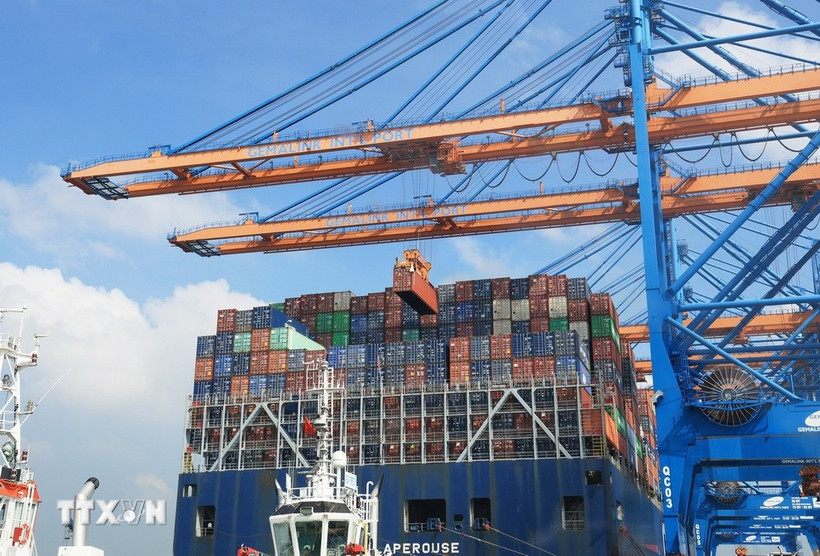
International integration has also fuelled domestic development. From a modest and underdeveloped economy in the 1980s, Vietnam has emerged as one of the world’s 32 largest economies, with its GDP expanding nearly 100 times since 1986 and per capita income rising from under 100 USD to nearly 5,000 USD. Vietnam now engages in trade with 230 countries and territories, covering nearly 90% of global GDP, and is part of 20 free trade agreements, 17 of which are currently in force. It ranks among the world’s top 20 trading nations, top 20 FDI recipients, and top 10 in global remittance inflows.
By 2030, Vietnam aims to rank among the top 40 globally in the Global Innovation Index, with at least 40% of businesses actively engaged in innovation. The country also seeks to become a leading cultural and tourism destination, placing in the top 30 for tourism competitiveness. Vietnam aims to meet the United Nations Sustainable Development Goals and elevate its education and healthcare systems to advanced regional standards.
In the realm of defence and security, integration has contributed not only to national protection but also to regional and global stability. Resolution 59 explicitly identifies defence and security integration as a foundational pillar in international cooperation, especially with key partners.
According to the Acting FM, to implement these objectives, the Government has issued Resolution No. 153/NQ-CP on May 31, launching its action programme for realising Resolution 59. The plan calls for high determination, focused effort, and clear accountability among ministries, agencies and local authorities.
It clarifies seven strategic task areas, and outlines 117 specific tasks for ministries, sectors and provinces, he said.
Concrete targets for 2030 include advancing Vietnam’s national brand ranking to at least 33rd globally, increasing the share of enterprises participating in global value chains to over 21%, expanding diplomatic relations beyond 194 countries, maintaining active participation in over 70 international organisations, ranking 40th or higher in the Global Innovation Index, and placing 55th or higher in the UN Sustainable Development Goals Index./.