Science-technology must drive political apparatus efficiency, fuel economic growth: PM

PM Pham Minh Chinh stressed that citizens and businesses must be placed at the centre of the process, asking competent sides to arrange sufficient resources and ensure institutional perfection, which he described as “breakthrough of breakthroughs”, to lead the way for science-technology development.

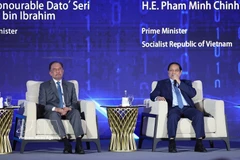
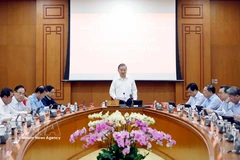
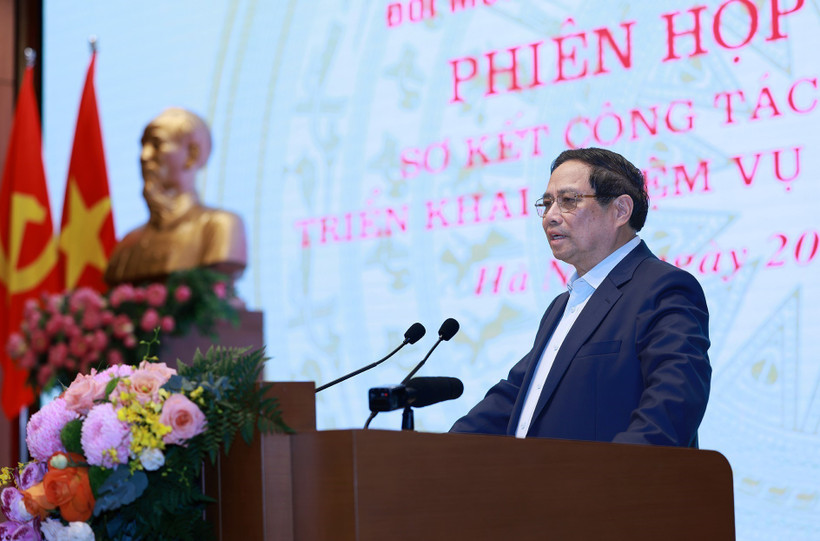
Prime Minister Pham Minh Chinh presides over the third meeting of the Government’s steering committee for science – technology development, innovation, digital transformation, and Project 06 in Hanoi on July 20. (Photo: VNA)

Hanoi (VNA) – Prime Minister Pham Minh Chinh has called for acceleration of science – technology development, innovation, and digital transformation to serve the efficient operation of the political system and deliver on the economic growth target of 8.3–8.5% for the whole year.

He made the call while presiding over the third meeting of the Government’s steering committee for science – technology development, innovation, digital transformation, and a project on developing resident data, e-ID and e-authentication applications (Project 06) in Hanoi on July 20.

While the Government leader, also head of the committee, praised the efforts by ministries, sectors, localities, businesses, and people over the recent past, he acknowledged the results still fall short of requirements and practical demand. He urged stronger actions and bold determination to bring into full play the Politburo, National Assembly, and Government’s related resolutions, shifting the state governance from a management-based model to one centred on citizens and businesses.

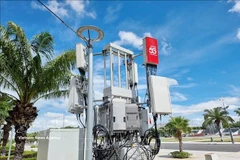
Evaluating recent achievements, PM Chinh said that science – technology, innovation, digital transformation, and digital economy development have shown progress, with the 5G service deployed nationwide, mobile internet speeds in the global top 20, and the national data centre project drastically implemented. Besides, tax management and electronic invoicing have been rolled out effectively, with 109,800 enterprises and business households registering for use with 2.1 billion electronic invoices.

The digital economy has developed considerably, recording an estimated 78.1 billion USD in digital product exports, a year-on-year increase of 20.5%. A 500 trillion VND (19.1 billion USD) credit package has been set aside for science – technology, innovation, digital transformation and strategic infrastructure. E-commerce has grown rapidly, by about 22–25%.

Digital government has been promoted, he said, adding online public services have been increasingly improved, gradually shifting from passive to proactive service delivery for citizens and businesses. Meanwhile, Project 06 has been stepped up and generated tangible benefits for the public, contributing social management and socio-economic development.

To seize the “golden opportunity” presented by science – technology development, innovation, and digital transformation to restructure the economy, enhance labour productivity, and improve national competitiveness, PM Chinh said they must be integrated with the ongoing apparatus restructuring.
vna-potal-thu-tuong-chu-tri-phien-hop-lan-thu-3-cua-ban-chi-dao-phat-trien-khoa-hoc-cong-nghe-va-de-an-06-8159194.jpg
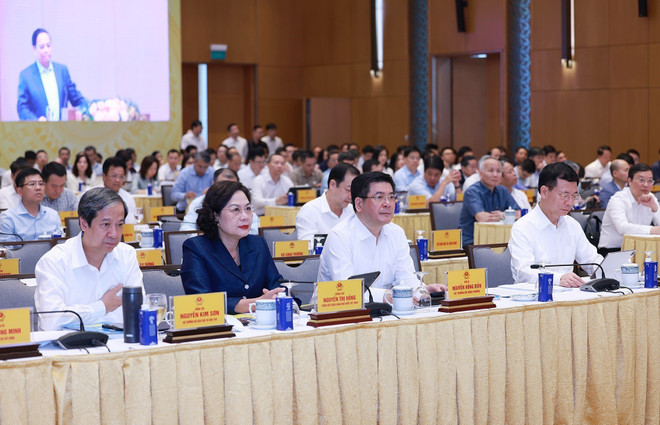
Participants at the event (Photo: VNA)

He stressed that citizens and businesses must be placed at the centre of the process, asking competent sides to arrange sufficient resources and ensure institutional perfection, which he described as “breakthrough of breakthroughs”, to lead the way for science-technology development.

PM Chinh directed the establishment of an inter-sectoral working group to support Vietnamese enterprises in searching, negotiating, and acquiring foreign technology companies with important intellectual property and technologies to promote core technology ownership. He also set the goal of attracting at least 100 top experts through special preferential policies.

He ordered relevant ministries and sectors to develop 116 national and sectorial databases, draft smart city building plans for six centrally-run cities, propose measures for the digital economy reaching 20% of GDP by the end of 2025, ensure nationwide 5G coverage, and boost satellite Internet deployment.

Project 06 remains foundational to the efficient operation of the digital government, he said, stating 40 of 61 services must be available on the VNeID national platform as soon as possible. PM Chinh directed ministries, sectors and localities to simplify administrative procedures, ensuring at least 30% reduction in processing time, 30% in compliance costs, 30% in business conditions, and all processed regardless of provincial boundaries in 2025.

Administrative procedures must be carried out in a seamless, efficient, and uninterrupted manner during the re-arrangement of administrative units, he underscored, adding that information and network security must be safeguarded.

He also called for feasible project proposals with clear and tangible outcomes while urging digital training for officials and citizens./.
VNA

See more

Professor Vu Minh Khuong, of the Lee Kuan Yew School of Public Policy (right), talks to a Vietnam News Agency correspondent in Singapore. (Photo: VNA)

Resolution 57 - catalyst for scientific and technological breakthroughs

The resolution also seeks to create stronger mechanisms to mobilise social and private resources and support an innovation ecosystem; link digital transformation in the public sector with the modernisation of national governance; and prioritise the development of elite human resources and internationally-standard research infrastructure.

Workers produce electronic components (Photo: VNA)

Science, technology drive Vietnam’s rising global profile: expert

Assoc. Prof. Le Duc Anh from Tokyo University held that for fast and sustainable development, Vietnam should prioritise science – technology and innovation as the main driver of productivity, focusing on sectors with high spillover effects such as semiconductors, AI, data, new energy and materials, biomedical technology, automation – robotics, and cybersecurity.

An overview of the workshop. (Photo: nafosted.gov.vn)

National portal expected to transform innovation into reality

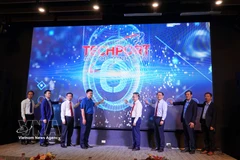
The portal, which can be accessed at sangkien.gov.vn, was built to address the urgent need to mobilise collective intelligence and unlock the creativity of the entire population, in accordance with the directives of the steering committee for the implementation of the Politburo’s Resolution No. 57-NQ/TW on creating breakthroughs in science, technology, innovation and national digital transformation.

Sucker-mouthed minnow (Supradiscus varidiscus). (Photo: researchgate.net)

Vietnamese fish, bee named among 70 species newly identified in 2025

One of the most notable “hidden” finds is a small sucker-mouthed minnow endemic to Vietnam’s highlands, discovered in the Lo River. Scientifically named Supradiscus varidiscus, the specimen was collected and shelved some 25 years ago but has only now been studied and formally described.

The Ministry of Science and Technology launches a centralised one-stop-shop unit on December 19. (Photo: VNA)

Vietnam pushes sci-tech, innovation as growth drivers under Resolution 57

The Ministry of Science and Technology (MoST) bears the responsibility of “paving the way”, guided by a consistent spirit of transitioning from a management-oriented mindset to a facilitative one, from “input-based management” to “output-based evaluation”, and from fragmented investment to a focused approach centred on strategic technologies.

Prime Minister Pham Minh Chinh visits a display of science and technology development, innovation and digital transformation. (Photo: VNA)

Gov't leader requests greater efforts to step up development of sci-tech, innovation

Emphasising three strategic digital breakthroughs - digital institutions, digital infrastructure and digital human resources - PM Chinh called for close integration of science and technology development, innovation, administrative reforms, digital transformation and Project 06 with efforts to streamline the organisational apparatus and modernise leadership, management and working styles.

Doctors from Cho Ray Hospital (Ho Chi Minh City) and Vinh Long General Hospital (Vinh Long province) test the operation of a linear accelerator radiotherapy system for cancer treatment (Photo: VNA)

Vietnam sets orientations for applying nuclear energy across sectors

The plan aims to ensure the effective implementation of Decision No. 245/QD-TTg dated February 5, 2025, which approved the national master plan, while concretising objectives, orientations, solutions and resources for applying radiation and radioisotopes across sectors. It also assigns responsibilities to ministries, sectors and localities, and sets roadmaps and priorities for key programmes and projects.