Stock market upgrade expected by September

The Ministry of Finance (MoF) is actively implementing a comprehensive plan to enhance market capabilities and meet the stringent criteria set by international rating agencies such as FTSE Russell and MSCI.

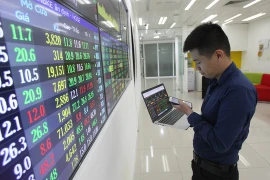
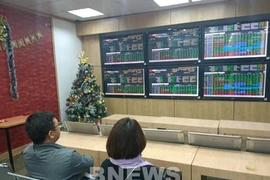
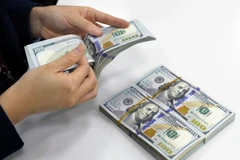
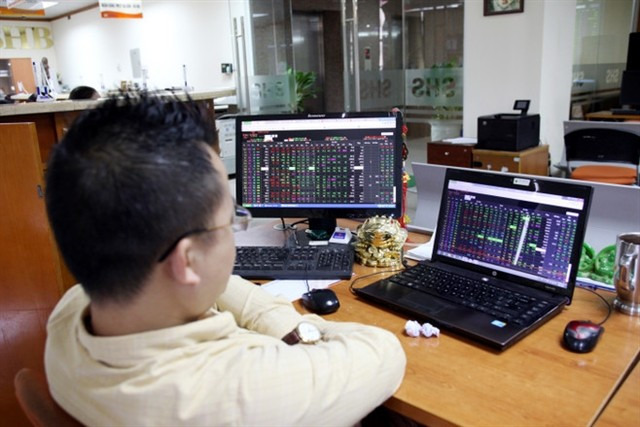
Illustrative photo (Photo: VNA0

Hanoi (VNS/VNA) – Vietnam’s stock market is on the brink of a significant transformation, with expectations mounting for an upgrade to emerging market status by September.

This ambitious goal was emphasised at the regular government press conference on May 6 by Deputy Finance Minister Tran Quoc Phuong, who noted that the Government is committed to achieving this milestone through a series of strategic initiatives.

The Ministry of Finance (MoF) is actively implementing a comprehensive plan to enhance market capabilities and meet the stringent criteria set by international rating agencies such as FTSE Russell and MSCI.

While Vietnam has largely satisfied the necessary technical criteria, challenges remain in gaining the confidence of foreign investors and ensuring a transparent and accessible investment environment.

"However, this is merely a necessary condition. The sufficient condition hinges on the remaining processes and foreign investors' assessments of investment activities within the Vietnamese stock market," Phuong said.

To address these challenges, the ministry has outlined six major strategic actions aimed at bolstering investor trust and facilitating the upgrade process.

Key among these initiatives is the effective deployment of the KRX system, a new technology platform designed to improve trading efficiency and risk management for foreign investors. This system introduces advanced features for transaction processing and payment, streamlining the investment process.

Additionally, recent regulatory changes, including Circular 68/2024/TT-BTC, have removed significant barriers by allowing foreign institutional investors to place buy orders without requiring full upfront funds. This reform is anticipated to enhance investment fluidity and attract more foreign capital.

The MoF is also reviewing and amending Decree 155 to clarify the timelines for public companies to report their foreign ownership limits, thereby increasing transparency for market participants. Simplifying the procedures for opening indirect investment accounts is another focus, with the Ministry collaborating with the State Bank of Vietnam (SBV) to facilitate foreign capital inflows.

Furthermore, the introduction of omnibus trading accounts for foreign funds is set to simplify transaction processes, allowing fund managers to execute trades on behalf of multiple portfolios simultaneously. This innovation aims to enhance operational efficiency for foreign institutional investors.

In addition to regulatory reforms, the ministry is focused on increasing the supply of financial products and improving the listing process for companies after their IPOs. Developing new investment indices will also provide more benchmarks for fund managers, further enriching the investment landscape.

To ensure ongoing dialogue between regulators and market participants, a policy dialogue group will be established, comprising representatives from the State Securities Commission, investment funds, and securities firms.

This group will facilitate timely discussions on market needs and regulatory responses, a step many experts believe is crucial to making policy more responsive.

Despite the progress made, Vietnam's path to achieving emerging market status is fraught with challenges. FTSE Russell's recent report classified Vietnam as a frontier market, citing concerns about payment systems and market accessibility.

However, the introduction of non-pre-funding models for foreign investors has been recognised as a positive development, indicating that improvements are underway.

The Government's determination to elevate Vietnam’s stock market is evident, with clear political demonstrated in various regulatory meetings. As the September deadline approaches, the financial community is hopeful that these efforts will culminate in a successful upgrade, positioning Vietnam as a premier investment destination in the region./.

VNA
See more

Hai Phong targets 4.3 billion USD in FDI in 2026 (Photo: VNA)

Hai Phong city targets 4.3 billion USD in FDI in 2026

Hai Phong’s investment appeal is underpinned by a rapidly expanding development space, including the Southern Coastal Economic Zone covering more than 20,000 hectares, a planned free trade zone, deep-water ports at Lach Huyen, and 12 industrial parks newly established in 2025.

The relocation of check-in counters aims to better meet the travel needs of residents and visitors. (Photo: VNA)

Vietjet shifts domestic check-in at Tan Son Nhat from January 13

During the recent New Year 2026 holiday peak, Vietjet added 380 flights, equivalent to nearly 78,000 additional seats, on many key domestic routes linking Hanoi and Ho Chi Minh City with destinations such as Vinh, Thanh Hoa, Hai Phong, Da Nang, Phu Quoc, Nha Trang and Da Lat.

Commercial banks are providing approximately 88% of total green credit outstanding in Vietnam. (Photo: nhandan.vn)

Capital sources expanded for sustainable growth

According to the State Bank of Vietnam (SBV), by the end of November 2025, outstanding green credit was estimated at around 750 trillion VND (28.55 billion USD), with an average growth rate exceeding that of overall credit in the economy.

Customers select goods at a supermarket. (Photo: VNA)

Retail market expands sharply, sustainability challenges persist

According to a report on recently released by the Ministry of Industry and Trade’s Agency for Domestic Market Surveillance and Development, the size of the market reached more than 7 quadrillion VND (about 266 billion USD) in 2025, up around 10% compared with 2024.

Oil rigs at the Bach Ho oil field. (Photo: VNA)

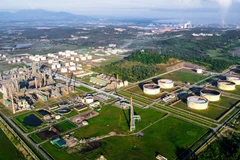
Resolution 79: State economy to lead growth

Resolution 79 is described as a “clear action declaration” by the Politburo, saying the state economy is not only responsible for maintaining macroeconomic stability, but must also become the force leading a new growth model that is green and sustainable.

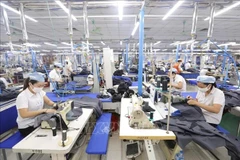
Workers at Garment 10 Corporation produce apparel for export. (Photo: Nhan Dan)

Vietnam leverages export advantages within RCEP region

In 2025, seafood exports to China alone exceeded 2.2 billion USD, up about 33% compared to 2024. Shipments to Japan fetched nearly 1.7 billion USD, a year-on-year increase of 14.6%, while those to the Republic of Korea and Australia grew by 9.6% and 3.2%, respectively.

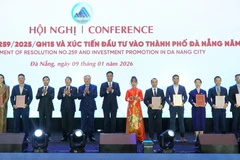
Certificates of membership in the Vietnam International Financial Centre in Da Nang are awarded at the conference on January 9. (Photo: VNA)

Da Nang continues targeted investment promotion approaches

According to Chairman of the Da Nang People’s Committee Pham Duc An, the city prioritises building sustainable economic ecosystems and focuses on key breakthrough sectors with strong spillover effects, including high technology and digital transformation, logistics, urban infrastructure, finance, processing and manufacturing industries, high-tech agriculture, and the pharmaceutical and medicinal herb industry.

In 2025, Hyundai sales reached 53,229 vehicles across the Vietnamese market. (Illustrative photo: Yonhap/VNA)

Hyundai sales in Vietnam rise almost 23% in December

In 2025, sales reached 53,229 vehicles across the market, a result considered a testament to the efforts by TC Group, Hyundai Thanh Cong, and the entire Hyundai dealership network nationwide amidst a volatile market.

Hydroponic vegetable cultivation model at the High-Tech Agricultural Park (Photo daibieunhandan.vn)

HCM City accelerates shift toward ecological urban agriculture

​The city’s agricultural sector is undergoing a strong transformation, restructuring toward higher value-added and sustainable development. In recent years, the sector has maintained steady growth, with agricultural, forestry and fisheries output rising by an estimated 2.5% annually.