Ho Chi Minh City (VNA) – Amid mounting urbanisation pressures and rising growth demands, Ho Chi Minh City is accelerating investment in large-scale strategic infrastructure projects across transport, urban development and digital systems, aiming to remove long-standing bottlenecks while creating spillover benefits for economic growth, employment and urban living standards.
Accelerating strategic infrastructure projects
Rapid population growth and urban expansion have exposed limitations in Ho Chi Minh City’s infrastructure, particularly traffic congestion at key gateways and in central areas. In response, the city is steeping up investment in major projects to improve connectivity, expand urban space and remove development bottlenecks.
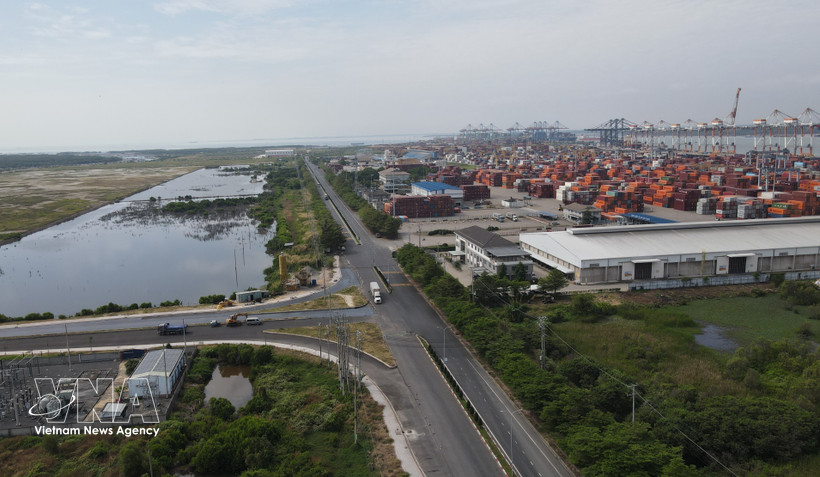
According to Tran Quang Lam, Director of the municipal Department of Construction, Ho Chi Minh City is fast-tracking a range of priority transport works. Of the 77 projects planned for the 2026–2030 period, more than 20 large-scale projects are expected to break ground this year. The municipal authorities have also approved several projects such as the Cai Mep Ha port, the Rach Chiec sports complex and a new political–administrative centre.
Most projects focus on improving transport infrastructure, including upgrades to National Highways 1, 22 and 13, construction of major expressways such as Ho Chi Minh City – Thu Dau Mot – Chon Thanh and Moc Bai – Ho Chi Minh City, as well as sections of the North–South Expressway passing through the southern metropolis. Bridge projects and inter-port connecting roads are also being developed to strengthen regional links between the southern economic hub and provinces in the Southern key economic region.
At the same time, the urban railway network is being expanded. The metro system is expected to be largely completed before 2030, forming the backbone of a modern public transport network. Two metro lines have already begun construction, while four others are being prepared to start building this year. Once completed, the metro network will support transit-oriented development, facilitate new urban areas and optimise land use around stations.
Beyond transport, cultural and sport facilities and digital infrastructure is emerging as another key pillar of the city’s economic structure.
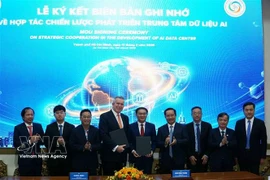
Ho Chi Minh City currently leads the country in digital infrastructure, with 5G coverage reaching all key areas and around 68% across the city. Investments in large-scale data centres by technology firms such as CMC, Viettel and FPT, together with a 2-billion-USD project by G42, are strengthening the city’s role in the global digital value chain.
Meanwhile, the planned establishment of Vietnam’s International Financial Centre in Ho Chi Minh City is expected to help build a modern financial ecosystem integrating fintech and green finance.
Engine for growth and better quality of life
Accelerated infrastructure development is expected to generate wide-ranging economic and social impacts.
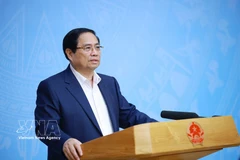
Hoang Vu Thanh, acting Director of the municipal Department of Finance, said infrastructure will be a key driver in achieving the city’s target of over 10% GRDP growth in 2026 and raising per capita GRDP to around 9,800 USD.
“Infrastructure is the lifeblood of economic integration, helping reduce transaction costs and strengthen global connectivity,” Thanh said , adding that synchronised investment is essential not only for economic growth but also for job creation and social inclusion.
Improved transport and logistics systems will lower costs for businesses and enhance competitiveness. Modern seaports such as Cai Mep – Thi Vai and the Lach Huyen international gateway port are helping enhance the economy’s export capacity, enabling businesses to expand into new markets and strengthen their competitiveness.
Infrastructure projects also support the labour market. In 2025 alone, the city created around 140,000 new jobs, keeping the urban unemployment rate at about 3.6%.
At the same time, infrastructure plays a vital role in improving social welfare and quality of life. Ho Chi Minh City is expanding social infrastructure, aiming to reach 35 hospital beds and 18 doctors per 10,000 residents by 2026 while implementing electronic health records for all citizens.
Urban upgrading and social housing programmes are also under way, including plans to build 28,500 social housing units and relocate nearly 1,900 makeshift houses along canals.
Mobilising social resources – key to infrastructure strategy
As infrastructure projects expand while public funding remains limited, mobilising private capital has become critical for realising development plans.
According to Chairman of the municipal People’s Committee Nguyen Van Duoc, the city needs about 1.2 quadrillion VND (45.7 billion USD) in investment in 2026 to achieve its double-digit growth target, while the state budget can cover only about 150 trillion VND.
To bridge this gap, the city is promoting public-private partnership (PPP) models and creating a more transparent investment environment. Authorities are also utilising special mechanisms under Resolution No. 260/2025/QH15 to pilot new models such as transit-oriented development (TOD), which maximises land value around metro stations and generates long-term funding for infrastructure.
With numerous large projects under way and institutional reforms aimed at attracting private investment, Ho Chi Minh City is entering a new phase of infrastructure expansion. If implemented effectively, these projects could remove key development bottlenecks and serve as a powerful lever to strengthen the city’s role as Vietnam’s economic engine./.