Mexico-based scholar unveils ideas to optimise Vietnamese NA’s efficiency

Talking with Vietnam News Agency correspondents in Mexico City, Dong pointed to important strides in the NA’s outgoing tenure, including improvements to the institutional framework, operating methods and stronger oversight of major national issues. In his view, the NA has increasingly asserted its role as the highest representative body of the people and a central pillar in the process of building a socialist rule-of-law state.

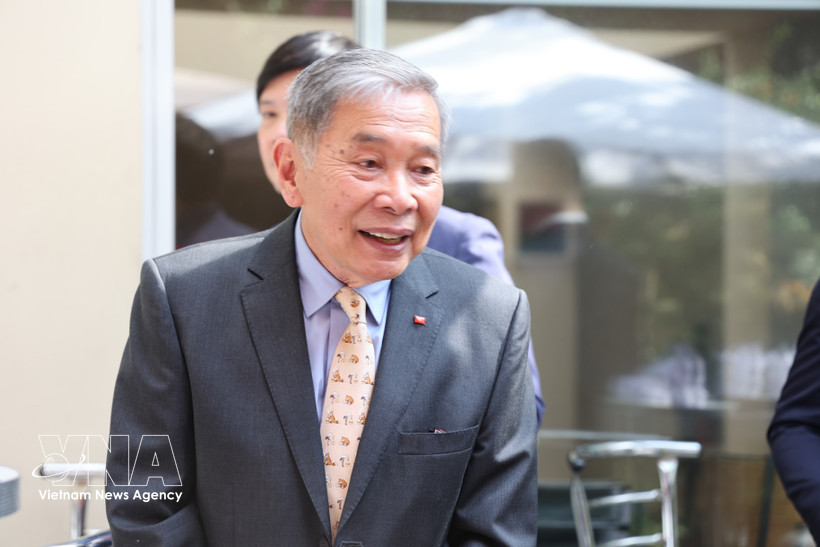
President of the Vietnamese Association in Mexico Nguyen Huu Dong (Photo: VNA)

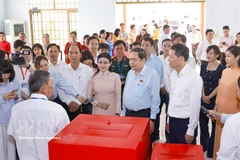
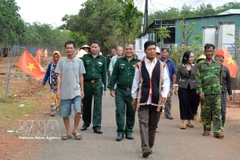
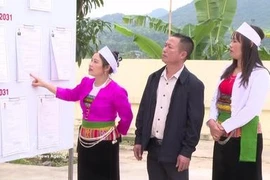
Mexico City (VNA) – President of the Vietnamese Association in Mexico Nguyen Huu Dong has put forward proposals to improve the National Assembly (NA)’s operational efficiency as Vietnam gears up for the election of deputies to the 16th NA and People’s Councils at all levels for the 2026–2030 tenure.

Talking with Vietnam News Agency correspondents in Mexico City, Dong pointed to important strides in the NA’s outgoing tenure, including improvements to the institutional framework, operating methods and stronger oversight of major national issues. In his view, the NA has increasingly asserted its role as the highest representative body of the people and a central pillar in the process of building a socialist rule-of-law state.

Drawing on decades of international experience, including becoming the first Vietnamese official introduced by the Government to serve at the United Nations in the early 1980s and undertaking election observation missions in more than 40 countries, Dong noted that Vietnam's overseas community, numbering more than six million living, studying, and working abroad, represents not only a vital economic and intellectual source but also “an inseparable part of the nation”.

He therefore suggested that Vietnam consider mechanisms enabling Vietnamese citizens living abroad to join the election, and, further ahead, have overseas Vietnamese (OV) representatives in the legislature. Such a step would better reflect the OV’s aspirations and protect their legitimate interests.

According to him, many countries have successfully adopted models reserving legislative seats for expatriate citizens, a practice that foster ties with the homeland and better harness the knowledge and international experience of overseas communities in policymaking.

Dong underscored the NA’s important role in translating the Party’s strategic resolutions into action, particularly in the process of building and refining the legal system to align with Vietnam's development trajectory in the new phase.

As Vietnam pursues the goal of becoming a high-income developed economy, Dong advocated for a legal system that remains long-term and stable while retaining sufficient flexibility to respond to rapid global changes. Individual laws, he said, should address immediate needs while paving the way for future trends such as digital economy, artificial intelligence, green transition, and global governance.

He also suggested expanding policy consultation mechanisms, including greater engagement with Vietnamese experts abroad, to incorporate diverse viewpoints and bring legislation closer to international standards.

From a foreign-relations standpoint, Dong highlighted the growing significance of parliamentary diplomacy in a changing global landscape. Intensifying inter-parliamentary ties and active participation in multilateral parliamentary forums would enable Vietnam to share legislative expertise, project a positive national image, and cultivate an international environment conducive to its development. Concurrently, aligning domestic legislation with international norms would enhance transparency and bolster confidence among global partners, he said.

He believed that preparations for the upcoming election would continue to affirm the vitality of socialist democracy in Vietnam./.
VNA

See more

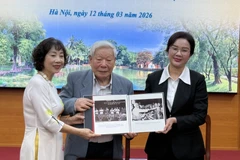
Adrien Jean (right) introduces his photos at the exhibition (Photo: VNA)

Vietnam - France friendship captured through photographs

The “Lyon – Ho Chi Minh City” exhibition showcases 14 large-format photographs by Adrien Jean, a French photographer living in Ho Chi Minh City, and Tony Noel, a French-Vietnamese photographer based in Lyon. The works are displayed along the exterior wall of the French Residence at 6 Le Duan street, making art accessible to a wide public - from passers-by to photography enthusiasts.

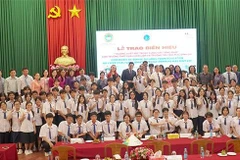
VNA General Director Vu Viet Trang (second from right) and Permanent Vice Chairman of the Vietnam Journalists Association Nguyen Duc Loi (fourth from right) present the A Prize to the winners. (Photo: VNA)

VNA Press Awards 2025 inspire professional commitment, innovation in digital era

A notable feature of this edition is the significant rise in both the number and diversity of entries across all categories. These figures reflect not only growing engagement but also a more coordinated and professional approach among editorial departments and domestic and overseas bureaus, forming a consistent and multi-dimensional flow of information.

Glenn Mathews and his wife hand over the diary of Vietnamese martyr Vo Van Cong to Minister Counsellor Nghiem Xuan Hoa, representing the Embassy of Vietnam in Australia. (Photo: VNA)

Australian veteran’s son returns diary of Vietnamese martyr

Entries in the diary show that Vo Van Cong was born in 1944 in the former Phuoc Tho commune, Nhon Trach district, Bien Hoa province, now Dong Nai province. He joined the revolutionary movement in April 1961 and was admitted to the Communist Party of Vietnam in May 1962.

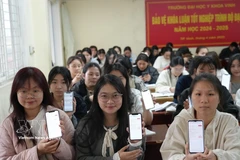
A number of youth union members at the Vietnam Academy of Social Sciences visit the exhibition space showcasing books and materials on culture. (Photo: VNA)

Book week underscores role of knowledge in policymaking

The highlight is a series of activities on April 21, including a book and document exhibition on culture, the launch of a special publication titled “Special scientific information for leadership” and initiatives promoting reading culture, including a book donation programme and a book review contest.

Hanoi has over 1,100 libraries and numerous cultural and educational spaces in the community. (Photo: VNA)

Spreading value of books, building foundations of learning society

Each weekend in Hanoi, the “Reading with Children” Club brings together students to practise reading, explore language, and express ideas creatively. According to founder of the club Nguyen Thuy Anh, the club encourages children to reflect, retell stories, and connect books with personal experiences, making reading more vivid and meaningful.

Automated ticketing system is used on the urban railway Cat Linh-Ha Dong line in Hanoi. (Photo: VNA)

Digital transformation powers Hanoi metro expansion

Beyond convenience, stable fares and the elimination of fuel, parking and maintenance costs have made urban rail increasingly attractive. The growing preference for metro travel is also contributing to a greener, more modern urban lifestyle.

Delegates cut the ribbon to inaugurate the operation of electric bus route No. 43. (Photo: VNA)

Hanoi accelerates shift to green buses, targets 100% by 2030

In the 2027–2030 period, the city will accelerate the transition towards the complete phase-out of fossil fuel-powered buses. The share of electric and green energy-fueled buses is projected to reach 79–89% by 2029 and 100% by 2030.

At the second session of the Ho Chi Minh City People’s Council (Photo: VNA)

Ho Chi Minh City greenlights central square, administrative centre in Thu Thiem

The new central city square and administrative centre will create a modern, centralised political-administrative complex for Ho Chi Minh City, designed to house around 8,000 officials, civil servants, and employees. It will also handle daily traffic of 1,500- 2,000 citizens and business representatives through a unified one-stop-shop administrative service system.