Vietnamese NA turns 80: From wartime lifeline to modern powerhouse

Over the past 80 years, the NA has guided Vietnam through an arduous path: from a fledgling state almost instantly engulfed by three decades of successive wars

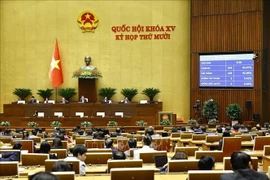
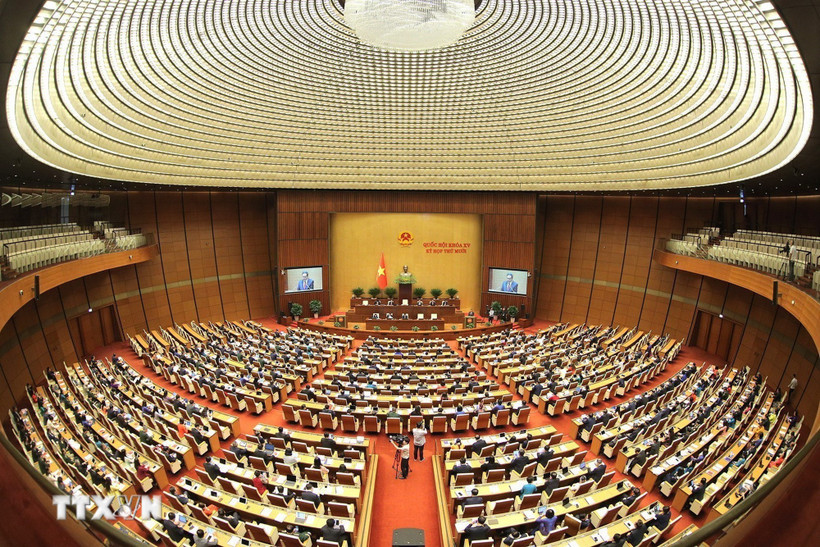
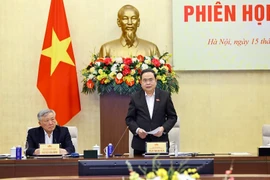
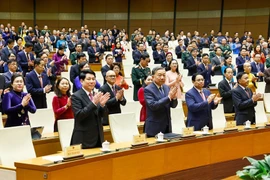
At the opening of the 15th NA's 10th session (Photo: VNA)

Hanoi (VNA) – Since Vietnam’s very first general election on January 6, 1946, the National Assembly (NA) has stood tall as a powerful emblem of national unity and the highest organ of State authority, powering through eight decades of profound changes.

Eighty years alongside the nation

Over the past 80 years, the NA has guided Vietnam through an arduous path: from a fledgling state almost instantly engulfed by three decades of successive wars, through the long labour of reconstruction from a devastated, low-income starting point, to the emergence of a far more integrated and dynamic economy today. In each historical phase, the legislature has played a central institutional role.

Assoc. Prof. Tao Thi Quyen from the Ho Chi Minh National Academy of Politics noted that the NA convening after the 1946 election affirmed Vietnam’s newly-won sovereignty and the people’s right to mastery, formally declaring the country an independent and sovereign nation while laying the legal groundwork for its nascent democratic system.

The adoption of the 1946 Constitution during the NA’s second session laid the cornerstone of a rule-of-law state, defining the structure and operation of the state apparatus and, for the first time in Vietnamese history, enshrining fundamental human rights in constitutional text.

Between 1954 and 1975, Vietnam pursued dual missions: socialist construction and socio-economic development in the North, and protracted resistance war in the South. The NA enacted the 1959 Constitution, amended laws to suit the changing context, and passed key resolutions on political, economic, foreign affairs, administrative, and personnel matters, all intended to shore up the North’s development efforts and sustain the anti-US struggle farther south.

In 1965, with American bombs raining down harder on the North, the pressure of immediate national imperatives left little room for deliberation. Major policies concerning the anti-US war, wartime economic management, the long-term prospect of national reunification and foreign relations were presented without delay by the Government to the NA or its Standing Committee and received prompt approval.

Dr. Ngo Hoang Nam from the Institute of History under the Vietnam Academy of Social Sciences observed that the legislature’s activities contributed to strengthening the people in implementing the strategic offensive, paving the way for successive victories that culminated in the Spring 1975 triumph, the collapse of the US-backed regime in the South, the completion of the national democratic revolution and national reunification. Dr. Bui Ngoc Thanh, a former member of the NA Standing Committee and former head of the NA Office, pointed out that across 15 terms, the NA has convened 137 regular sessions and nine extraordinary sessions Since 1976, the NA Standing Committee has met between 10 and 14 times annually.

In constitutional and legislative work, the NA has drafted and adopted five constitutions, along with hundreds of laws and legal codes, while its Standing Committee has issued hundreds of ordinances. Together, the NA and its Standing Committee have passed thousands of resolutions, more than half of which contain legally binding provisions, according to estimates through the end of 2025.

Reform to meet new demands

As Vietnam sets its sights on a new development stage through 2045, the NA has moved purposefully to modernise its legislative, oversight and organisational functions to meet evolving national priorities.

In lawmaking, deputies are allocating more time to policy debate during the drafting stage and refining analytical processes, while procedural adjustments have encouraged more open exchanges and strengthened the role of individual members.

Amendments to the Law on Promulgation of Legal Documents clarified that the NA focuses on broad principles, leaving detailed enforcement to the Government.

Decision making on major national issues has grown more structured, with clearer procedures and more frequent review cycles designed to improve policy quality and responsiveness to socio-economic needs.

Oversight and question-and-answer sessions have been streamlined for greater efficiency, with longer questioning time and new debate formats introduced to heighten accountability and public involvement. Legislative changes to oversight laws have added mechanisms to bolster monitoring effectiveness.

On the operational front, the NA has accelerated digital transformation, rolling out electronic document systems for lawmakers and trialing first-ever hybrid sessions during the COVID-19 pandemic. In the current term, deputies have been provided with artificial intelligence tools to assist in document review and analysis.

At its 10th session of the 15th term, the NA passed a record 51 laws and 39 resolutions, targeting institutional bottlenecks and delivering policy breakthroughs to support political and socio-economic advancement in the years ahead.
VNA

See more

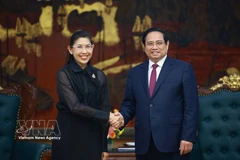
PM Pham Minh Chinh welcomes Thai Ambassador to Vietnam Urawadee Sriphiromaya in Hanoi on March 13. (Photo: VNA)

PM Pham Minh Chinh receives Thai Ambassador to Vietnam

PM Pham Minh Chinh proposed that Thailand consider facilitating stable fuel supply for Vietnam’s civil aviation sector, thus contributing to socio-economic stability and development, as well as bilateral trade and tourism.

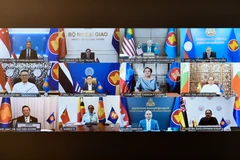
The special ASEAN foreign ministers’ meeting on the Middle East situation is held online on March 13. (Photo: Vietnamese Ministry of Foreign Affairs)

Vietnamese embassies in Middle East ready to assist ASEAN citizens: FM

Foreign Minister Le Hoai Trung stressed that ASEAN members should prioritise maintaining energy supplies for one another, particularly oil and gas, and make effective use of cooperation agreements with partners, including Gulf Cooperation Council (GCC) countries, to diversify energy sources.

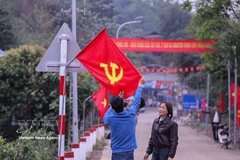
Muong Sai commune in Son La province is decorated to celebrate the election day. (Photo: VNA)

📝OP-ED: Facts shatter distorted allegations about general election

In reality, the capacity and effectiveness of Vietnam’s legislative body have been clearly demonstrated through major policy decisions that have contributed to maintaining political stability, promoting economic growth and enhancing the country’s standing in the international arena.

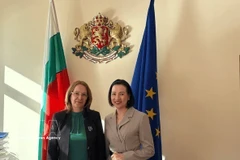
Vietnamese Ambassador Nguyen Thi Van Anh (L), Permanent Representative of the State President to the Permanent Council of La Francophonie, and Administrator of the International Organisation of La Francophonie (OIF) Caroline St-Hilaire at theri meeting in Paris on March 12. (Photo published by VNA)

OIF Administrator praises Vietnam’s role, contributions

The two sides discussed cooperation in French-language education in the Southeast Asian country, ways to encourage young people to choose French, and the development of French-speaking human resources, including language training for civil servants and for Vietnamese military and police personnel participating in United Nations peacekeeping operations.

Dr Julia Roknifard, senior lecturer in international relations at Taylor’s University in Malaysia (Photo: VNA)

Legislature proves strong support to Vietnam’s development, integration: Scholar

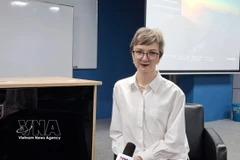
Dr Julia Roknifard, senior lecturer in international relations at Taylor’s University in Malaysia, shared her assessment of the role of Vietnam’s highest legislative body in promoting economic development and strengthening multilateral cooperation amid a rapidly changing global landscape in in an interview with Vietnam News Agency correspondents in Kuala Lumpur.

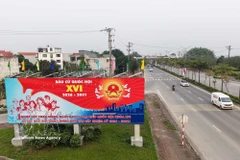
The election of deputies to the 16th National Assembly and People’s Councils at all levels for the 2026–2031 tenure is scheduled for May 15, 2026 (Photo: VNA)

General election helps strengthen overseas Vietnamese engagement with national development

According to Nguyen Duc Thang, Executive Committee member of the Germany–Vietnam Association and President of the October Arts Club, the 16th National Assembly election continues Vietnam’s electoral tradition dating back to the 1946 General Election and subsequent milestones in parliamentary development. Selecting capable, responsible and visionary representatives will help reinforce democratic foundations, ensure the people’s right to mastery, and enhance the effectiveness of the country’s highest state authority.

Lao ambassador highlights significance of Vietnam’s 16th National Assembly election

Lao ambassador highlights significance of Vietnam’s 16th National Assembly election

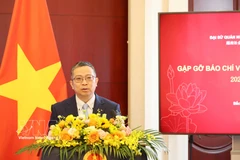
The Lao Ambassador voiced her confidence that Vietnam’s new-tenure National Assembly and People’s Councils would continue to deepen parliamentary cooperation between the two countries, while enhancing policy oversight and creating favourable conditions for expanded cooperation in trade, investment, infrastructure connectivity and people-to-people exchanges.

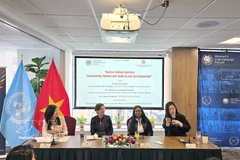
Speakers at the dialogue. (Photo: VNA)

Vietnam hosts dialogue on improving access to justice for women, youth

The dialogue brought together Deputy Minister of Home Affairs Nguyen Thi Ha, head of the Vietnamese delegation, ambassadors and delegation leaders attending the session, as well as representatives from UN agencies, international organisations, non-governmental organisations and scholars.

Pham Thi Minh Huong, Standing Committee member of the General Association of Vietnamese in Laos, Vice President of the Business Association of Overseas Vietnamese (BAOOV), and Chairwoman and CEO of the Gold Phuc Company (Photo: VNA)

Vietnamese businesses in Laos express confidence in national political system ahead of general elections

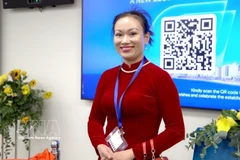
Pham Thi Minh Huong, Standing Committee member of the General Association of Vietnamese in Laos, Vice President of the Business Association of Overseas Vietnamese (BAOOV), and Chairwoman and CEO of the Gold Phuc Company, said the Vietnamese business community in Laos closely follows major political developments at home while contributing to socio-economic development and social welfare activities in Laos, particularly support for disadvantaged and disabled groups.