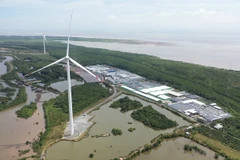
The power network on the island commune of Hon Tre in Kien Hai district of Kien Giang province (Photo: VNA)
Hanoi (VNA) – Deputies to the National Assembly have proposed structural transformation of the marine economy, towards sea-based urban development.
Marine tourism, a core aspect of Vietnam’s marine economy, has been severely affected by the COVID-19 pandemic over the past two years.
Against this backdrop, legislators have been debating the aspects of the 2021-2025 national financial plan that covers maritime investment.
Joint efforts by localities and communities
Nguyen Chu Hoi, a deputy from the northern port city of Hai Phong and Chairman of the Vietnam Association for Marine Environment and Nature, said investment must be carried out cautiously and the Government should review its investment priorities.
It is necessary to mobilise more social resources and give more power to provinces during the implementation process, he told VietnamPlus on the sidelines of the first session of the 15th legislature.
 NA deputy Nguyen Chu Hoi (Photo: VietnamPlus)
Maritime strategy should also serve economic development, not just scientific research, he said, adding that any strategy should be integrated into those already in place for local development.
Businesses and anyone else seeking to exploit maritime resources should also play a role in this regard, he suggested.
The legislator also stressed the role of coastal communities, explaining that all socio-economic sectors are stakeholders have to engage in any national strategy.
Hoi suggested pertinent regulations for seas and islands, as the existing relevant decrees are not enough to comprehensively cover specific maritime issues.
The deputy said he will raise suggestions to complete the legal framework regarding seas, islands and fisheries in Vietnam during his tenure in the legislature.
Marine economy can connect Vietnam to the world
With a vision towards 2030, the Vietnamese Government has defined maritime tourism as a spearhead of the marine economy. However, certain sectors within the economy have seen a decline in revenues due to COVID-19.
Coastal localities whose economic growth relies on marine tourism have been hardest hit by the pandemic, Hoi said.
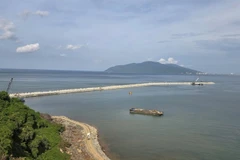
 A corner of Hon Tre island in Kien Hai district, Kien Giang province (Photo: VNA)
Service suppliers in tourism, such as hotels and transport companies, have been the most affected and many of them will go bankrupt if the situation lasts much longer, the legislator added.
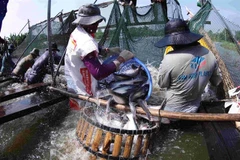
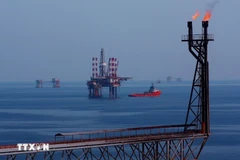
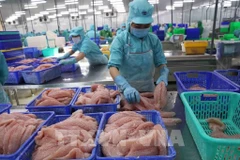
He suggested structural transformation, in a timely and flexible manner, by investing in renewable sources of marine energy. These include off-shore wind energy and new sectors such as off-shore aquaculture and recreational fishing that create strong economic value without damaging the natural habitat.
Many businesses are now ready for the transformation, and are just waiting for mechanisms to be put in place, he stressed.
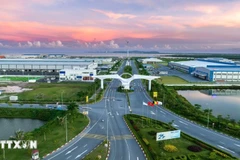
Hoi also proposed sea-based urban development in 28 coastal provinces and cities, giving urban areas as Quy Nhon, Nha Trang, Vung Tau and Da Nang as examples.
The legislator expressed his hope that other islands like Con Dao, Phu Quy and Cat Ba will follow suit and become investment magnets to help connect Vietnam with the world.
The strategy for the sustainable development of the marine economy defines the overall goal of making Vietnam a strong sea-based economy.
Vietnam is on track to meet the criteria for sustainable marine economic development by 2030 and become a strong, sustainable and prosperous marine nation by 2045.
By 2030, marine economic sectors are expected to contribute about 10 percent of the national gross domestic product (GDP). The economies of 28 coastal cities and provinces are estimated to account for 65-70 percent of GDP.
The strategy sets out five major policies and seven different solutions to achieve these goals.
These policies and solutions include developing the marine and coastal economy; sustainably developing coastal areas based on their natural advantages; balancing conservation and development; conserving and sustainably developing marine biodiversity; proactively responding to climate change and the corresponding rises in sea levels, bolstering natural disaster prevention; improving people’s lives and ensuring national defence, security, foreign affairs and international cooperation./.