Supporting industries expected to become key link in supply chains

The presence of multinationals like Samsung, Canon, Intel, and Bosch has provided a strong boost. These giants bring not only investment or technology but also stringent quality and management standards, compelling Vietnam’s enterprises operating in supporting industries to upgrade themselves.

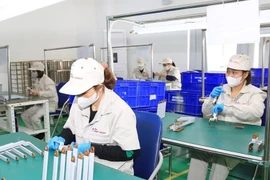
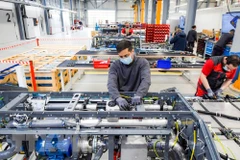
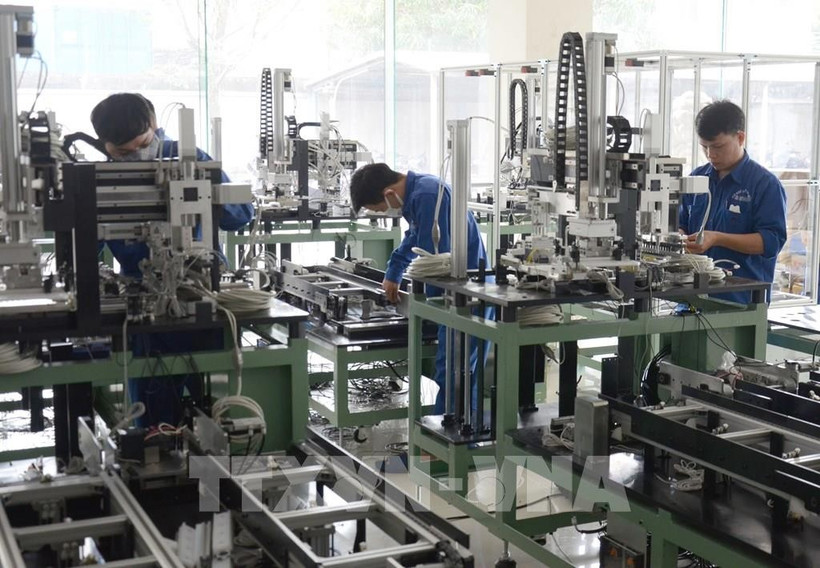
Vietnam is working to turn supporting industries into a key link in supply chains. (Illustrative photo: VNA)

Hanoi (VNA) – Now is a golden opportunity for supporting industries – a backbone of modern manufacturing – to break through as global “eagles” (multinational corporations) are actively seeking reliable partners for their supply chains, many insiders have said.

According to the Ministry of Industry and Trade, Vietnam’s industry has made great strides, with a growing number of enterprises, enhanced production capacity, and notable advancements in certain key areas.

Currently, Vietnam has over 40,000 enterprises operating in supporting industries, accounting for nearly 10% of the total industrial businesses.

The rate of locally made components in certain sectors such as automobile and electronics production, has increased but remains modest. The presence of multinationals like Samsung, Canon, Intel, and Bosch has provided a strong boost. These giants bring not only investment or technology but also stringent quality and management standards, compelling Vietnam’s enterprises operating in supporting industries to upgrade themselves.

Many local enterprises have boldly invested in modern machinery, adopted international quality management systems (ISO, IATF), and gradually become Tier-2 and Tier-3 suppliers in the supply chains of big corporations. It is increasingly common to see Vietnamese companies that once produced only simple packaging or plastic components now supplying precision mechanical parts and complex molds for global corporations. These success stories are vivid proof of the resilience and adaptability of Vietnamese firms.

Phan Dang Tuat, Chairman of the Vietnam Association for Supporting Industries (VASI), noted that although the number of supporting industry firms is large, most of them remain small or micro-sized, with limited finances, outdated technology, and weak management capacity. These make it difficult for them to meet large orders with high quality requirements and strict deadlines from multinational corporations.

Surveys on technology and production capacity conducted by independent financial institutions show that most supporting industry firms in the country still apply low to medium-level technology.

Insiders said weak investment in research and development (R&D) has left products lacking innovation and competitiveness. Meanwhile, training has not kept pace with market demand, creating a gap between labour supply and demand.

Despite efforts, links between Vietnamese supporting industry firms and foreign-invested corporations remain weak. Vietnamese firms often struggle to access information, technical requirements, or supplier evaluation processes of multinational firms. Conversely, multinationals face difficulty finding qualified local suppliers, forcing them to import most components. As a result, the rate of locally produced parts is still low, averaging 20–30% across most industries.

Nguyen Duc Trung, Chairman of the Board of Directors of the HBT Vietnam Precision Mechanics JSC, said that as global supply chains shift due to geopolitical concerns and trade tensions, Vietnam – with its strategic location, stable investment climate, and an extensive free trade agreement (FTA) network – has emerged as an ideal destination for multinationals, offering major opportunities for local supporting industry businesses.

The Government has introduced various incentives, including tax breaks, training support, and technology transfer programmes, to promote the industries. Notably, the Politburo's Resolution 23-NQ/TW, which outlines orientations for building national industrial development policies through 2030, with a vision to 2045, designates supporting industries as a priority area.

Experts said supporting industry enterprises should leverage preferential rules of origin and tariff incentives under the 16 new-generation FTAs Vietnam has signed to boost their export competitiveness. They added that Vietnam’s open foreign policy will also contribute to attracting more high-quality FDI, which in turn will further raise demand for supporting industries./.
VNA

See more

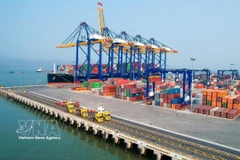
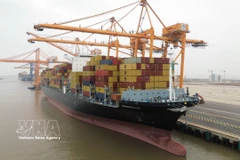
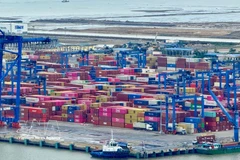
The vessel carrying the 2 millionth TEU arrives at Hai Phong Port. (Photo:VNA)

Hai Phong Port reaches 2-million-TEU milestone

Handling the 2 millionth TEU in 2025 not only demonstrates Hai Phong Port’s operational capacity and the collective efforts of its workforce, but also highlights its increasingly important role in regional and global supply chains, the confidence of shipping lines, logistics firms and the business community, and the effectiveness of policies to improve the investment climate and strengthen maritime infrastructure and services.

Melons labelled with traceability codes on display at the Song Van agricultural produce store in Ninh Binh city, Ninh Binh province. (Photo: VNA)

Tracing origins hindered by fragmented data systems

As the Government accelerates the digital economy, establishing a unified national traceability system has become a crucial move to end data fragmentation and disconnection among ministries, sectors and localities.

Hyundai unveils its new Avante Hybrid model in Seoul, the Republic of Korea, on August 13, 2020. (Photo: Yonhap/VNA)

Tax cuts poised to ignite Vietnam’s hybrid vehicle boom from 2026

Experts forecast that 2026-2030 will mark a period of strong growth for hybrid vehicles in Vietnam, a trend that will invigorate the automotive sector while supporting national objectives on emissions reduction, sustainable development and the broader transition to green mobility.

Illustrative image (Photo: VNA)

Vietnam targets 1 billion USD in banana exports

Bananas have been identified as a priority product under the Project for the Development of Key Fruit Crops to 2025, with a vision to 2030, approved in October 2022. Under the plan, banana acreage is projected to reach 165,000–175,000ha by 2030, with output of 2.6–3 million tonnes.

Deputy Minister of Foreign Affairs Nguyen Minh Hang (Photo: VNA)

Event connects Vietnamese businesses with African countries

Deputy Foreign Minister Nguyen Minh Hang held that to develop Vietnam – Africa ties more strongly and substantively, it is necessary to promote the engagement of businesses, and that the Government will create favourable conditions for them to enhance fruitful cooperation.

Deputy Prime Minister Ho Duc Phoc (R) and Independent Non-executive Chairman of AIA Mark Tucker at their meeting in Hanoi on December 12. (Photo: VNA)

AIA Group envisions long-term investment, cooperation in Vietnam

Over 25 years of operation in Vietnam, AIA has achieved positive results. Its premium revenue ranks among the top five life insurers, reaching nearly 14.83 trillion VND (563.71 million USD) in 2024 and an estimated 15.73 trillion VND in 2025, equivalent to around 10% of the market share.

A view of the 2025 Japan business roundtable in HCM City on December 12. (Photo: VNA)

Ho Chi Minh City courts Japanese investment with growth blueprint

Ha underscored the pivotal contributions of Japanese firms, which have long supported local socio-economic progress through major infrastructure projects, industrial zones and workforce training courses. To date, Japanese companies have invested more than 15 billion USD in over 2,200 projects, reflecting sustained confidence and commitment to the market.

Deputy Prime Minister Bui Thanh Son receives Kounlaphanh Vongnathy, Vice President of Phongsupthavy Group, in Hanoi on December 12, 2025. (Photo: VNA)

Lao group urged to deepen energy ties with Vietnam

Deputy Prime Minister Bui Thanh Son has commended Phongsupthavy Group as one of Laos’ leading investors supplying electricity to Vietnam, noting its pledge to ramp up power exports and actively contribute to the implementation of energy cooperation agreements endorsed by senior leaders of the two Parties and States.