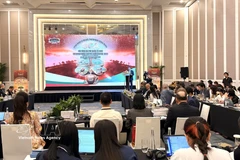
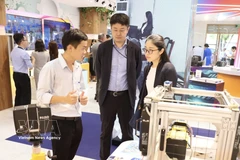
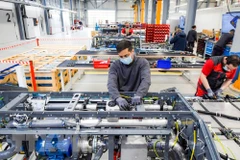
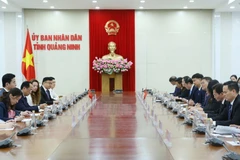
Hanoi (VNA) – An international conference on promoting investment in supporting industries was held on August 5 in Hanoi, sharing updates about Vietnam’s investment climate and policies while connecting domestic localities, industrial zones, and businesses with foreign investors exploring opportunities in Southeast Asia.
The event was co-organised by the Vietnam Trade Promotion Agency (Vietrade), the Industry Agency, and the Foreign Investment Agency under the Ministry of Industry and Trade, the Hai Phong Economic Zone Authority, and the Japan External Trade Organisation (JETRO). It brought together over 200 delegates, including representatives from more than 25 embassies, international organisations, industry associations, and foreign investors.
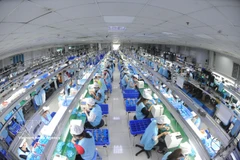
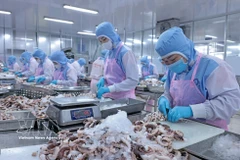
Speaking at the event, Vietrade Director Vu Ba Phu highlighted Vietnam’s growing role as a strategic manufacturing hub amid continuous global supply chain restructuring. Seizing this opportunity, the Vietnamese Government pays special attention to developing supporting industries by offering various incentives to facilitate domestic and foreign firms' participation in the industrial production ecosystem, thus boosting the rate of locally made components and reducing reliance on imports.
Stressing the particular importance of foreign direct investment (FDI) to supporting industries, he noted that in 2024 alone, Vietnam attracted over 25.5 billion USD in newly registered FDI in the manufacturing – processing industry, accounting for nearly 67% of the total FDI commitments.
Such areas as electronic component, precision engineering, and electric vehicle part manufacturing are emerging as magnets for multinationals, reflecting a value chain shift to the countries with competitive costs and stable investment environment like Vietnam, Phu went on, citing a JETRO survey as showing 56% of Japanese firms in Vietnam plan to expand investments in the next one to two years, and half of them are involved in industrial manufacturing.
Currently, around 1,700 FDI enterprises are operating in Vietnam’s supporting industries, accounting for 40% of the firms in this field. Phu described this strong presence as a demonstration of foreign investors' increasing interest and Vietnam's standing in regional and global supply chains.
However, he added, the rate of locally made components remains modest in key industries: 45–50% in textiles and footwear, 15–20% in mechanical manufacturing engineering, and 5–20% in automotive assembly. Only about 10% of domestic demand for components and spare parts is met by local suppliers.
The official held that there remains huge room for supporting industries to growh. He emphasised the need for the Government to not only selectively attract FDI but also assist domestic enterprises to improve manufacturing capacity, product quality, governance, and readiness to integrate into global value chains.
Building strong links between foreign investors and local firms is crucial for boosting competitiveness and facilitating technology transfer, he opined.
Pham Thanh Binh, Director of the Northern Investment Promotion, Information and Support Centre at the Foreign Investment Agency, shared that in the first half of 2025, Vietnam attracted 21.52 billion USD in the registered FDI, up 32.6% year-over-year, while 11.72 billion USD was disbursed, up 8.1%. The country now hosts over 43,700 valid projects, with a combined registered capital of some 519.5 billion USD, from 151 countries and territories. Japan is the third-largest investor with 79.47 billion USD in capital across 5,603 projects.
The Vietnamese Government views supporting industries as a cornerstone for the development of others. Given this, a large number of incentives and support policies have been issued and implemented strongly to attract investment to these industries.
For example, under the 2020 Investment Law, investors in supporting industries will benefit from corporate tax breaks in four years, import duty exemptions for the machinery and equipment unavailable in Vietnam, land rental incentives, and access to concessional loans. Administrative reforms and the application of the National and ASEAN Single Window systems have also helped streamline licensing and customs procedures.
The country is also investing in workforce development through public-private training programmes for such sectors as precision engineering, electronics, and manufacturing.
At the event, major industrial zones, including DEEP C and Amber Yen Quang, presented their potential, development orientations, and investment incentives for investors in supporting industries.
The conference provided a thorough overview of investment trends and gave recommendations. Participants highlighted the importance of establishing a strong supporting industry ecosystem, saying robust supporting industries are crucial for Vietnam’s technological innovation and economic integration./.
VNA