Vietnam issues new policies to back supporting industries

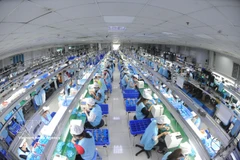
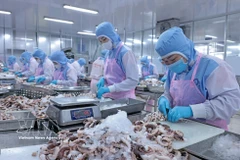
Under the Government’s new decree on the development of the supporting industries, various favourable policies and incentives regarding technology, human resources, land and administrative procedures were outlined, expected to lure stronger investments in the sector, especially in the context that enterprises are restructuring the global supply chain and shift to domestic production.

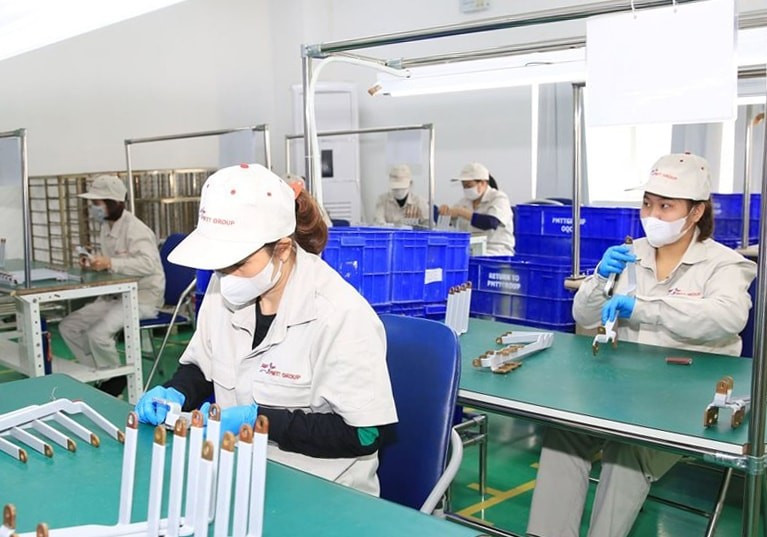
The Government's new policies create new development opportunities for the supporting industries. (Photo: Hanoimoi.vn)

Hanoi (VNA) – Despite proactively opening its doors to numerous processing and manufacturing sectors, Vietnam's supporting industries have yet to fully tap on their potential, grappling with market access, technology adoption, human resources, and capital constraints. Recognising these weaknesses, the Government has rolled out new policies to catalyse the sector's development.

Struggles behind growing numbers

According to Director of the Ministry of Industry and Trade’s Agency of Industrial Safety Techniques and Environment Pham Tuan Anh, supporting industries have made positive progress on the back of the State’s support policies as well as the business community’s efforts. To date, the country is home to some 5,000 supporting firms which provide electrical cables, gearbox, and plastic components, among others for both domestic and foreign markets.

Among them, some 100 firms are tier-1 suppliers to multinational corporations, while around 700 companies operate as tier-2 and tier-3 suppliers.

Despite the Government’s efforts to foster linkages between foreign direct investment (FDI) enterprises and local firms, these connections remain weak. Social capital has not flowed sufficiently into the sector due to long investment return cycles and less attractive profit margins as compared to investments in many other sectors.

Standing Vice Chairman of the Hanoi Supporting Industry Business Association Nguyen Van said although Hanoi boasts the largest number of supporting industry firms, at around 900, the sector encounters limitations, including low technological content and localisation rate, and shortage of resources for renewal. Most Vietnamese suppliers cannot yet deliver high-tech or precision-engineered parts required for deep integration into global supply chains.

General Director of the MBT Electrical Equipment JSC Tran Van Nam said that many industrial producers need support from the Government and business associations. These associations should play a greater role in bridging supply and demand, coordinating collaboration among firms, and helping local manufacturers enhance product quality and scale up consumption, he said.
phu-2.jpg
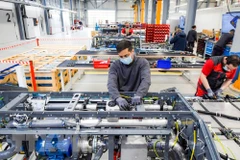
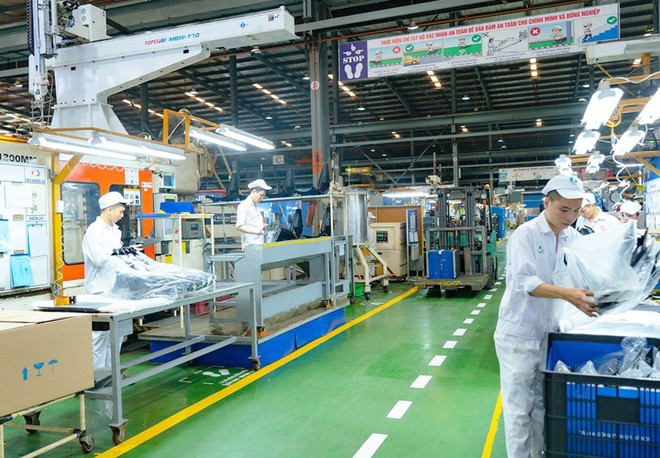
High-quality plastic component production at Hanoi Plastics Joint Stock Company (Photo: Hanoimoi.vn)

Government’s decree sparking hope for supporting industries

Under the Government’s new decree on the development of the supporting industries, various favourable policies and incentives regarding technology, human resources, land and administrative procedures were outlined, expected to lure stronger investments in the sector, especially in the context that enterprises are restructuring the global supply chain and shift to domestic production.

Dr. Mac Quoc Anh, Vice Chairman and General Secretary of the Hanoi Association of Small and Medium Enterprises, said businesses have new development opportunities as the Government expands incentives in terms of capital, technology, human resources, and markets. Financial, technical, and market support mechanisms are expected to be significantly scaled up, while efforts in R&D, technology transfer, and workforce training could receive subsidies of up to 70%.

Meanwhile, General Director of KNTECH Company Nguyen Trung Kien said that new policies will help enterprises with access to advanced technologies, enabling them to improve product quality and competitive edge. Besides, they have received legal consultancy and enjoyed simplified administrative procedures.

Deputy Director of the Hanoi Department of Industry and Trade Nguyen Kieu Oanh held that the incentives are vital, given the domestic manufacturing sector's dependence on imported raw materials and the modest number of enterprises participating in foreign direct investment supply chains./.
VNA

See more

Can Tho, Belarus eye trade, investment opportunities

Can Tho, Belarus eye trade, investment opportunities

Belarusian Consul General in Ho Chi Minh City Alexander Sidoruk said his working visit to Can Tho city exposes ample untapped economic potential. The Belarus side brings strengths in exporting fertilisers, crop protection chemicals, agricultural equipment, and high-tech products, and is interested in importing Vietnamese rice, coffee, rubber, seafood, and dairy products.

Retail fuel prices are simultaneously reduced from 15:00 on May 14. (Photo: VNA)

Retail fuel prices cut from May 14 afternoon

Retail fuel prices were simultaneously reduced from 15:00 on May 14 following the latest adjustment by the Ministry of Industry and Trade (MoIT) and and the Ministry of Finance, with E5RON92 biofuel recording the sharpest decline.

A chip assembly and testing plant of Intel at the Saigon Hi-Tech Park in Ho Chi Minh City (Photo: VNA)

Intel deepens engagement in Vietnam’s semiconductor industry

According to the Saigon Hi-Tech Park (SHTP) management board, Intel has relocated part of its production line from Costa Rica to SHTP as part of its global manufacturing restructuring strategy aimed at improving efficiency and competitiveness.

A customer purchase E10 biofuel petrol at a PVOIL filling station on Thai Thinh street in Hanoi. (Photo: VNA)

Biofuel ready for nationwide rollout

For biofuels, particularly E10, to develop successfully, stronger and more coordinated policies are needed, especially pricing mechanisms capable of creating a sufficiently attractive gap between E10 and mineral-based petrol, an expert has said.

An automobile assembly line of the THACO Truong Hai Group in Da Nang. (Photo: VNA)

Da Nang promotes investment attraction to achieve over 11% growth

Da Nang's foreign direct investment (FDI) attraction showed strong growth, reaching 237.7 million USD, double the level recorded a year earlier. The city granted licences for 47 new FDI projects, approved capital adjustments for 16 projects and recorded 10 transactions involving capital contributions and share acquisitions in economic organisations.

Deputy Prime Minister Nguyen Van Thang speaks at the forum. (Photo: vneconomy.vn)

Vietnam pivots to selective, high-quality FDI attraction for sustainable growth: Deputy PM

The FDI sector remains a key pillar of Vietnam’s economy, with more than 46,500 valid projects and total registered capital exceeding 543 billion USD so far. Disbursed capital has reached around 357.6 billion USD. The FDI sector contributes over 20% of GDP, accounts for around 70% of total export turnover, and creates jobs for millions of workers. Vietnam continues to rank among ASEAN’s leading FDI destinations despite global investment slowdowns.

Customs officers inspect vehicles and imported goods at the Huu Nghi International Border Gate in Lang Son province. (Photo: VNA)

Customs intensify crackdown on counterfeit goods, trade fraud

The customs sector has identified the fight against smuggling, trade fraud, counterfeit goods and intellectual property violations as a key task. Customs units nationwide have stepped up inspections and supervision of import-export activities along major routes and at key checkpoints.