Techcombank targets 13 trillion VND pre-tax profit in 2020

The Vietnam Technological and Commercial Joint Stock Bank (Techcombank) has set a pre-tax profit target of 13 trillion VND (558.8 million USD) in 2020, just 1 percent higher than the figure last year.
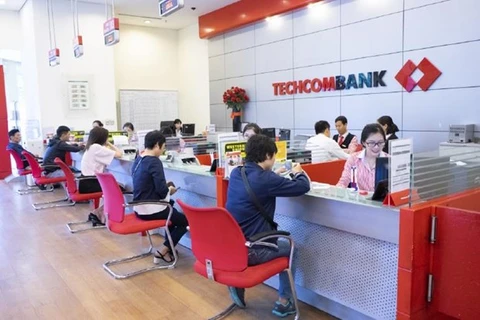
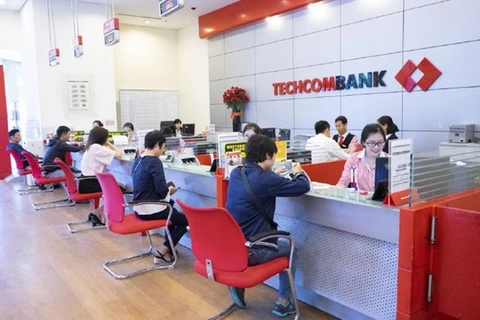
Techcombank targets 13 trillion VND pre-tax profit in 2020 ảnh 1Techcombank targets 13 trillion VND pre-tax profit in 2020 (Source: VNA)

Hanoi (VNS/VNA) – The VietnamTechnological and Commercial Joint Stock Bank (Techcombank) has set a pre-taxprofit target of 13 trillion VND (558.8 million USD) in 2020, just 1 percenthigher than the figure last year.

This target was approved at itsannual general meeting of shareholders (AGM) held in Hanoi on June 20.

Answering shareholders’question about the bank's modest profit growth goal, Chairman of Techcombank'sBoard of Directors Ho Hung Anh said this was a cautious plan due to the impactof the COVID-19 pandemic. In addition, it would also focus strongly on digitaltransformation, leading to an increase in investment costs and interest ratesupport for customers affected by the disease, resulting in a decline in profitmargin.

“However, if the economicsituation of Vietnam and the world recover soon, the bank's business resultswould have changes in the third and fourth quarter of this year,” Anh said.

The bank’s total assets weretargeted to increase to 431.4 trillion VND, posting a 12 percent year-on-yearincrease. Deposits will grow to 268.8 trillion VND and loan balance to 291.5trillion VND, both increasing by 13 percent against 2019, in line with thecurrent credit allowance from the State Bank of Vietnam (SBV). The bank alsoplanned to keep non-performing loans (NPL) below 3 percent, as stipulated bythe central bank’s guidance.

Techcombank’s shareholdersapproved the plan for retained earnings and investment into fundamentalcapabilities to continue future growth momentum. The bank’s strong investmentin people and systems accounts for its remarkable success in its transformationjourney. Techcombank topped the banking sector in terms of profitability andoperational efficiency with return of asset (ROA) of 2.9 percent and was amongthe Top 2 most profitable banks in 2019.

It also approved the increasein charter capital to 35 trillion VND in conjunction with the issuance of 4.7million ESOP shares for key outstanding employees, in line with resolutionspassed in the previous AGM. The shares issued are for purchase rights awardedto eligible employees for performance in 2017.

Anh said Techcombank’s strategywas to focus on some sectors and segments in which they have good control andthe largest market share.

For example, five years ago,Techcombank identified the real estate segment as having advantages and rapiddevelopment. They could be fully able to control risks, develop business andreality showed that this option was a right selection in the past five years.

He said Techcombank had alwayschosen big customers with high prestige to create attractive products andservices in the market. The bank had been very cautious in selecting customers,not much but be good; not spreading to customers who have high risks.

“Techcombank always follows thetrend of low risk, high profit. Instead of working with all 10 customers, weonly work with the best three customers. Instead of working in 10 fields, only2-3 services that the bank can control,” he said.

With concerns from shareholdersabout the real estate market expected to freeze due to the pandemic, thechairman said that the bank had developed a plan to forecast risks andeverything has been under control according to Basel II.

“The bank's capital adequacyratio (CAR) is nearly 16 percent, nearly doubling the minimum requirement ofBasel II’s Pillar 1. So it is all under control.”

Techcombank planned to expandthe ecological model approach for the fast-moving consumer goods value chainand reduce the dependence on housing chains (ReCoM). It would continue toaccelerate the digital banking model to meet with demands and enhancecustomers' experience./.
VNA

See more

Cargo handling operations at Berths 3 and 4 of the Hai Phong International Gateway Port. (Photo: VNA)

AI reshapes logistics, raising bar for workforce skills

According to the Vietnam Logistics Business Association (VLA), the logistics sector will require around 2.2 million workers by 2030, including 1.6 million employees for logistics service providers and nearly 600,000 personnel supporting logistics operations in manufacturing and trading enterprises.

The site planned for the Ninh Thuan 1 nuclear power plant in Phuoc Dinh commune of Khanh Hoa province (Photo: VNA)

Nuclear power projects to transform Khanh Hoa coastal communities

Khanh Hoa province aims to hand over fully cleared sites to investors by June 30, 2026. For Ninh Thuan 1, both the plant site and the resettlement zone are scheduled for completion by June 30. For Ninh Thuan 2, the plant site is due on June 15, with the resettlement area following by June 30.

Professor Tao Yitao, Director of the China Centre for Special Economic Zone Research (Photo: VNA)

Stable beginnings, powerful breakthroughs for Vietnam’s private economic sector

Vietnam is now at a critical juncture in pursuing what its leadership has described as a new era of national rise. In the long term, the development of the private economic sector will depend not only on supportive policies but also on a stable, transparent institutional environment that guarantees fair competition, said Professor Tao Yitao, Director of the China Centre for Special Economic Zone Research.

The trade policy review of Uruguay at the WTO headquarters. (Photo: VNA)

Vietnam participates in WTO review of Uruguay's trade policy

Vietnam also welcomed Uruguay's active engagement in the multilateral trading system as a founding member of the WTO. Uruguay has ratified the Agreement on Fisheries Subsidies, joined the Multi-Party Interim Appeal Arbitration Arrangement (MPIA), and contributed to Joint Statement Initiatives (JSIs) on e-commerce and micro, small and medium-sized enterprises (MSMEs).

Experts discuss cooperation opportunities in Vietnam-Germany manufacturing value chains at the forum. (Photo: VNA)

Vietnam-Germany cooperation creates new opportunities for sustainable manufacturing

Germany is an important partner of Vietnam and a global leader in green technology, smart manufacturing, automation and circular economy solutions. The combination of German technological expertise and Vietnam's manufacturing capabilities and strong commitment to transformation would create significant opportunities in green production, supporting industries, digital transformation, supply chain management and eco-industrial park development.

Businesses introduce Halal market products at the workshop. (Photo: VNA)

Da Nang businesses eye growth in booming global Halal market

Huynh Xuan Son, Deputy Director of the Da Nang Department of Industry and Trade, said the Halal market has emerged as a strategic destination for Vietnamese exporters amid persistent global economic uncertainties. Serving more than two billion consumers across over 110 countries and territories, the market offers significant opportunities for business expansion.

Vietnamese bananas are sold at an AEON supermarket in Japan. (Photo: VNA)

Vietnamese products promoted at AEON stores across Japan

Speaking at the opening ceremony, Deputy Minister of Industry and Trade Phan Thi Thang highlighted the significance of 2026, which marks a decade of cooperation between the ministry and AEON in organising Vietnam Week in Japan.

Growing demand for financing for infrastructure and green transition projects is driving Vietnam’s search for new sources of capital. In the photo: A section of Noi Bai – Lao Cai Expressway. (Photo: VNA)

Vietnam seeks to unlock capital for infrastructure, green transition

As Vietnam advances its sustainable growth agenda and commitment to achieving net-zero emissions by 2050, the need for long-term capital is rising rapidly. Experts say meeting these financing requirements will depend not only on expanding available resources but also on broadening funding sources and improving project financing models.