Thailand, Laos aim to boost bilateral trade

Laos is Thailand’s 7th largest trading partner in ASEAN and 18th globally. From January to October 2025, two-way trade grew by 18.65% to 8.18 billion USD, with Thai exports increasing by 16.90% to 4.81 billion USD and imports rising by 21.23% to 3.60 billion USD.

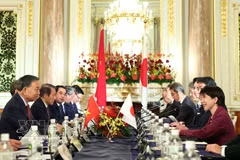
The 8th Cooperative Plan Meeting between the Ministry of Commerce of Thailand and the Ministry of Industry and Commerce of Lao PDR, December 17, Bangkok, Thailand (Photo: nationalthailan.com)

Hanoi (VNA) — Thailand and Laos have set a target of raising bilateral trade to 11 billion USD by 2027, with a focus on logistics, agriculture and cross-border trade to strengthen economic ties.

The goal was announced at the eight Thailand–Laos joint cooperation plan meeting, held on December 17 in Bangkok. The meeting was co-chaired by Thai Minister of Commerce Suphajee Suthumpun and Lao Minister of Industry and Commerce Malaythong Kommasith.

The two sides discussed expanding economic cooperation and positioning Thailand and Laos as key transport and logistics hubs in the Mekong River basin, facilitating trade between ASEAN and China.

Both countries agreed to increase bilateral trade from over 8.2 billion USD in 2024 lto 11 billion USD by 2027, the highest level in a decade. They will also develop a five-year cooperation plan for 2026–2030, with clear timelines. The plan will also revitalise agricultural mechanisms to develop product standards and strengthen the supply chain from farm to market, aiming to become a global food security hub, focusing on agricultural products free from burning to reduce cross-border PM 2.5 pollution.

Another key topic was improving the efficiency of the Laos–China railway, including cutting procedures and transit time for goods from Thailand and eliminating transshipment between different modes of transport. The two sides also discussed transparent transport fee structures to help businesses better plan logistics costs, in line with Laos’ “land-linked” strategy.

The meeting also agreed on exchanging statistics on key import-export products, including fuel, which is currently controlled for export at the permanent border checkpoint in Chong Mek, Ubon Ratchathani. Laos has confirmed that oil imports from Thailand are for domestic use only and not for export to third countries.

Suphajee further stated that the meeting also provided an opportunity for the Joint Standing Committee on Commerce, Industry and Banking (JSCCIB) of Thailand and the Lao National Chamber of Commerce and Industry to discuss private sector collaboration.

A joint private sector committee and subcommittees will be set up to focus on areas such as production and supply chains, trade and branding, tourism, policy and regulations, digital development and AI, and finance, ensuring continuous engagement between the private sectors of both countries.
Laos is Thailand’s 7th largest trading partner in ASEAN and 18th globally.

In 2024, two-way trade amounted to 8.28 billion USD, with Thailand exporting 4.93 billion USD and importing 3.36 billion USD, resulting in a trade surplus of 1.57 billion USD. From January to October 2025, the figure grew by 18.65% to 8.18 billion USD, with Thai exports increasing by 16.90% to 4.81 billion USD and imports rising by 21.23% to 3.60 billion USD.

Thailand’s key exports to Laos include refined petroleum, gems and jewellery, chemicals, cars, equipment and parts, and sugar, while imports from Laos include electricity, vegetables, fruits, processed vegetable and fruit products, jewellery, gemstones, and gold./.

VNA

See more

An overview of the dialogue between ASEAN leaders and the ASEAN Business Advisory Council (ASEAN-BAC) in Manila on November 15 (Photo: VNA)

Vietnam puts forward priorities to advance ASEAN cooperation

Appreciating ASEAN-BAC’s report and recommendations, Deputy Minister of Foreign Affairs Dang Hoang Giang, head of Vietnam’s ASEAN Senior Officials’ Meeting (SOM) delegation, called for simplifying procedures, reducing costs, accelerating digitalisation, upgrading the ASEAN Single Window (ASW) and effectively implementing the ASEAN Digital Economy Framework Agreement (DEFA) to make the regional market more accessible.

ASEAN signs Digital Economy Framework Agreement

ASEAN signs Digital Economy Framework Agreement

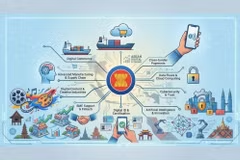
The Digital Economy Framework Agreement (DEFA), the bloc’s first standalone and legally binding digital economy agreement, establishes common rules covering digital trade, cross-border data flows, electronic payments, cyber security and artificial intelligence (AI).

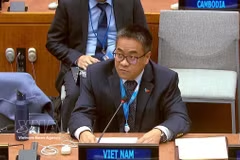
Minister Counsellor Nguyen Hai Luu, Deputy Permanent Representative of Vietnam to the UN, speaks at the discussion on November 12, 2026. (Photo: VNA)

Vietnam supports peace, reconstruction efforts in Gaza: diplomat

Minister Counsellor Nguyen Hai Luu, Deputy Permanent Representative of Vietnam to the UN, expressed deep concern over the dire humanitarian situation in Gaza, particularly as recent heavy rains and flooding have worsened living conditions for residents.

Thailand diversifies oil sources to ensure energy security

Thailand diversifies oil sources to ensure energy security

Although the diversification of oil import sources has helped reduce the risk of domestic oil shortage, it has not immediately reduced energy costs because import prices depend on market mechanisms, transportation costs, foreign exchange rates and the terms of oil contracts.

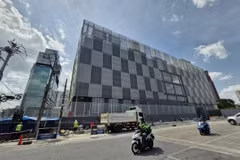
ST Telemedia Global Data Centres (Thailand), an affiliate of Singapore Telecom, is developing three data cehtres in Thailand including this facility on Rama IX Road in Bangkok. (Photo: bangkokpost)

Thailand tightens regulations on data centres

The new rules focus on controlling investment scale, electricity and water consumption, environmental impacts, and preventing investors from reserving resource quotas beyond their actual needs.

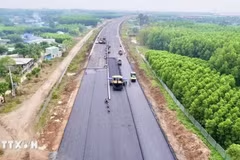
A road is under construction in Dong Nai city, Vietnam. (Photo: VNA)

ADB: Southeast Asia needs 7.1 trillion USD in infrastructure investment by 2040

ADB estimates that the region will need an average of 476 billion USD in infrastructure investment annually during 2026–2040, equivalent to 8.7% of GDP. However, at current investment levels, government budget resources would cover only around 45% of this demand, leaving an annual financing gap of 264 billion USD.

Kyodo News publishes an article titled “Sculptures by Japanese, Vietnamese artists on display in Yokohama,” (Screenshot photo)

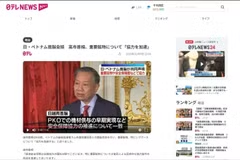
Japanese media widely cover top Vietnamese leader ’s visit

Japanese media have continued extensive coverage of General Secretary of the Communist Party of Vietnam (CPV) Central Committee and President To Lam’s activities in Japan, highlighting his meetings with representatives of leading financial institutions at the Tokyo Stock Exchange, witnessing of cooperation agreement signing and participation in cultural exchanges.

Thailand pushes for establishment of ASEAN emergency public health centre

Thailand pushes for establishment of ASEAN emergency public health centre

The draft agreement stipulates that ACPHEED will comprise three specialised centres based in three ASEAN member states. Vietnam will oversee the centre for prevention and preparedness; Indonesia will host the centre for detection and risk assessment; and Thailand will be responsible for the centre for response and risk communication.

Indonesia designates 31 mln ha of waters as conservation areas

Indonesia designates 31 mln ha of waters as conservation areas

Head of the Convention and Marine Resource Balance working team at the ministry’s Directorate of Ecosystem Conservation Ahmad Sofiullah said this week that it is a strategic effort to ensure the sustainability of Indonesia’s marine ecosystems.