The allure of Phu Quoc’s timeless architectural DNA

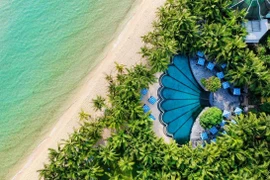
Phu Quoc’s architectural allure doesn't merely stop at honoring the past; it actively creates "contemporary heritage" that cements the Pearl Island's name on the map. A shining example is the Kiss Bridge, envisioned by architect Marco Casamonti—a profound piece of humanistic art where mankind and Phu Quoc’s natural beauty become one.

Hanoi (VNA) - A timeless clock tower, an Italian Colosseum, a sun-drenched corner of Santorini, or the poetic cliffs of Amalfi… all find their way to Phu Quoc. Here, against a backdrop of white sands and azure waters, unfolds an extraordinary gathering of the world's most iconic architectural heritage. This is how this emerging "global city" chooses to converse with the world.

As noted in the journal Sustainability, the true magnetism of modern destinations lies not in a monolithic identity, but in a rich tapestry of culture and space. Cities that weave a diverse array of activities, architecture, and experiences naturally command an unparalleled edge in tourism. Viewing this through the lens of destination branding, scholar Keith Dinnie emphasises that a city’s image is cultivated through multiple "layers" of symbols, with architecture acting as the cornerstone of a multi-dimensional urban narrative.

In Phu Quoc, this philosophy is unfolding in spectacular fashion, transforming the island from a mere tropical getaway into a vibrant crossroads of human architectural legacy.
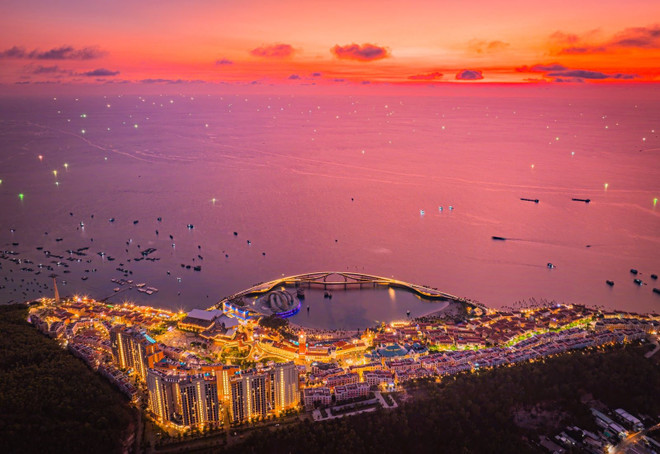
sunset-town.jpg
Phu Quoc is becoming a crossroad for the world's architectural marvels


Architecture: Phu Quoc’s dialogue with the world

European architecture has long served as the fundamental "DNA" shaping urban landscapes worldwide. From the golden ratios of the Renaissance to the proud elegance of Neoclassicism, these aesthetic principles have set the gold standard globally.

It is the irresistible pull of this timeless cultural DNA that has sparked global phenomena: like the Bavarian charm of Leavenworth nestled in the US, or the Republic of Korea’s Petite France, a whimsical tribute to The Little Prince.
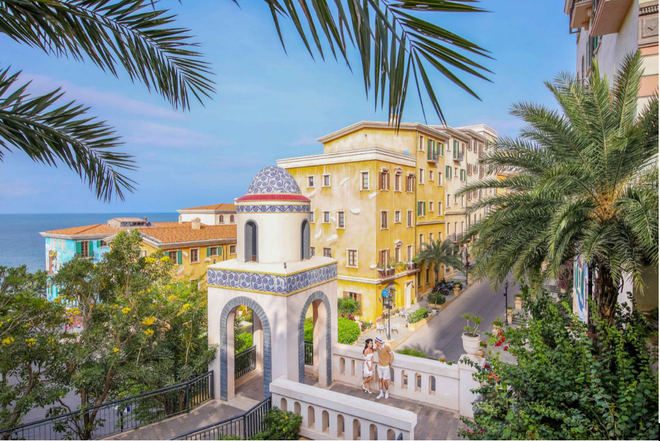
2pq.png
Here on the Pearl Island, the soul of European architecture finds its perfect rhythm amidst the lush, vibrant tropics

Following in the footsteps of the world's elite destinations, Phu Quoc has embraced this design language as a deliberate strategy to "speak" to a global audience. Roman arches and Mediterranean piazzas forge a "visual harmony," allowing wanderers to "travel across continents" in a matter of footsteps.

Yet, for this dialogue to truly resonate, architecture must transcend mere imitation. It requires the alchemy of transforming classical values into a living, breathing entity that thrives within the local ecosystem. Thus, Sunset Town was born.

Here, architects have reimagined that classical spirit through a meticulous "tropicalisation" of every detail. Unlike the original Mediterranean style, crafted to welcome cool temperate breezes through expansive doors, the windows here are gracefully scaled down to soften the tropical sun. Walls are thickened and bathed in radiant hues to reflect the heat, while sweeping roofs and wide verandas are extended to cast cooling shadows and invite the natural sea breeze.
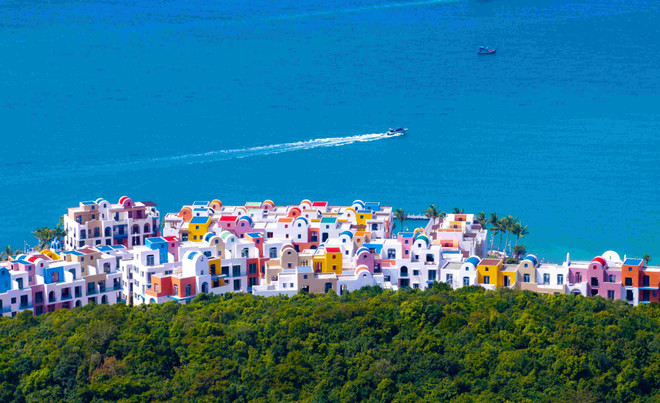
santo-port-hon-thom-island.jpg
Santo Port: A warmer, more luminous interpretation of Santorini

The master plan of Sunset Town masterfully plays with this cascading topography, carving out sea-facing piazzas and expanding canopies for natural shade. This poetic recalibration of scale and material breathes profound new meaning into familiar silhouettes.

Through this thoughtful "localisation" process, European icons take on an entirely new persona under the Phu Quoc sky. From the Roman Colosseum at the Sun World Hon Thom cable car station to the white, domed clusters of Santo Port tumbling gracefully toward the waves—these are no longer foreign imitations. They have seamlessly woven themselves into the very fabric of Phu Quoc’s tourism ecosystem.

As The New York Times once famously quipped: If you want to take a cable car to the Colosseum, you have to go to... Phu Quoc.

When architecture is elevated by endless festivity

Phu Quoc’s architectural allure doesn't merely stop at honoring the past; it actively creates "contemporary heritage" that cements the Pearl Island's name on the map. A shining example is the Kiss Bridge, envisioned by architect Marco Casamonti—a profound piece of humanistic art where mankind and Phu Quoc’s natural beauty become one.

Meanwhile, the Sun Signature Gallery, crafted by "design wizard" Bill Bensley, sweeps visitors into the bold, expressive realm of Mid-Century Modernism. These are the fresh "layers" of symbolism Keith Dinnie spoke of, propelling Phu Quoc into a multi-tiered, cosmopolitan destination.
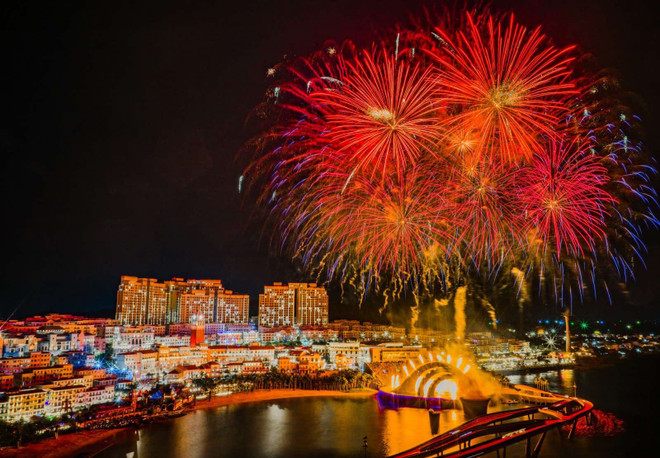
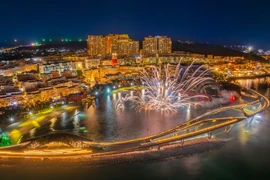
phao-hoa-sunset-town.jpg
Santo Port: A warmer, more luminous interpretation of Santorini

Building upon these symbolic layers, the architectural landscape blossoms into a full-fledged ecosystem of experiences. Wandering down European-infused promenades, one finds diversity not just in the brick and mortar, but in the vibrant cultural flow of global wanderers. Halal eateries, European bistros, and the refined culinary arts of Japan and Korea sit harmoniously alongside spectacular multimedia shows like Kiss of the Sea and Symphony of the Sea. Together, they orchestrate a seamless symphony of gastronomy, entertainment, and culture.

The "rendezvous" of European icons on the tropical shores of Phu Quoc is far more than a visual homage; it is a profound, ongoing dialogue between cultures. And this is the path Phu Quoc has chosen—to integrate, to captivate, and to truly emerge as a "global city."./.
VNA

See more

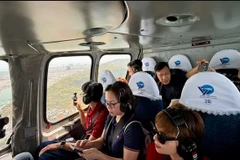
Visitors admire Ho Chi Minh City from above. (Photo: VNA)

Ho Chi Minh City launches helicopter sightseeing tours

Globally, helicopter tourism has become a popular offering in many major destinations. By introducing this experience, Ho Chi Minh City aims to expand its portfolio of high-end tourism products and further enhance its destination image.

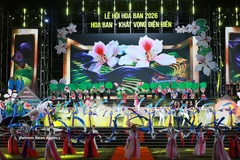
A view of the opening ceremony of the Ban Flower (Bauhinia) Festival 2026 in Dien Bien province on March 8 evening. (Photo: VNA)

Government leader attends Ban Flower Festival 2026 in Dien Bien province

Themed “Hoa Ban – Khat vong Dien Bien,” the festival was a highlight of the Dien Bien Culture and Tourism Week running from March 6 – 12. The annual event celebrated the beauty of the iconic Ban flower and promoted the culture, history and tourism potential of the Northwestern region.

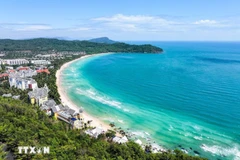
Khem beach in Phu Quoc island of An Giang province. (Photo: VNA)

Phu Quoc strengthens appeal as international arrivals soar in early 2026

Phu Quoc special zone is increasingly affirming its strong appeal to international visitors with impressive growth, positioning the “pearl island” as a standout destination in Southeast Asia and a direct competitor to renowned resort islands such as Bali in Indonesia and Phuket in Thailand.

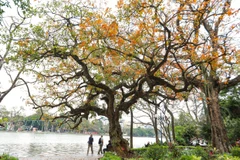
Leaves of loc vung (Barringtonia acutangula tree) change colour beside Hoan Kiem Lake (Photo: VNA)

Hanoi named among world’s 50 most beautiful cities by Condé Nast Traveler

Hanoi’s appearance within the global media ecosystem of Condé Nast Traveler is expected to provide a significant boost to the city’s tourism appeal. Beyond enhancing its credibility as a travel destination, the recognition could also help attract high-end tourism services and encourage higher spending by international visitors.

Overseas Vietnamese in traditional ao dai explore Nguyen Hue flower street. (Photo: qdnd.vn)

Overseas Vietnamese amplify Ho Chi Minh City’s tourism appeal

With their understanding of both local traditions and international contexts, OVs are proving to be an effective “soft bridge” in promoting the city globally, contributing to rising international arrivals and reinforcing Ho Chi Minh City’s position as a creative, globally integrated and culturally rich urban tourism destination

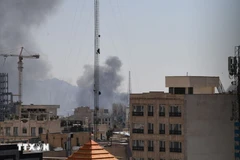
Smoke rises following US and Israeli airstrikes on Tehran, Iran, on March 1. (Photo: XINHUA/VNA)

Hanoi urges suspension of tours to Middle East conflict zones

Vietnamese citizens have been advised not to travel to Iran, Israel, and other countries in the Middle East at present due to ongoing conflicts and complicated security developments, according to an official dispatch sent by the department to the above-mentioned units on March 3.

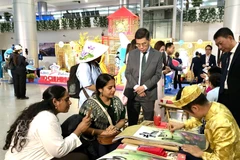
A representative of a Vietnamese enterprise shows it products at ITB Berlin 2026. (Photo: VNA)

Vietnamese firms promote tourism at ITB Berlin 2026

Vietnam’s exhibition area stands out with spacious and visually striking booths featuring businesses' most outstanding products as well as Vietnam's cultural icons such as cyclo models and traditional ao dai attire while a Vietnamese cuisine counter has drawn long queues of visitors.

International tourists are increasingly choosing Phu Quoc over giants like Bali and Phuket, driven by the freshness that Phu Quoc offers (Photo: Sun Group)

US media explains why Phu Quoc is becoming a tourism phenomenon

In 2025, international arrivals to Phu Quoc surged by nearly 60%, marking a new breakthrough cycle. As 2026 begins, during the Lunar New Year alone, the island welcomed nearly 366,000 visitors (a 30% increase year-on-year), with international guests accounting for nearly 93,000 (up 24.3%).

The crystal-clear waters and powdery white sands of Kem Beach are especially appealing to visitors (Photo: Fabl Belek)

Australian magazine hails Phu Quoc as a worthy alternative to Bali

In its list of “the best Bali alternatives worth exploring,” published by Australia’s leading travel site Escape, Phu Quoc is highlighted as a standout Southeast Asian destination, thanks to its appealing blend of reasonable costs, striking scenery, and diverse experiences.

Young locals explore Co Loa Citadel in digital space (Photo: nhandan.vn)

Hanoi festivals embrace digital tools to modernise management

During spring festival season 2026, Hanoi's major celebrations have aggressively adopted digital technologies across management, organisation, communications and promotion, presenting a more orderly and civilised image for traditional events.