Hanoi (VNA) – Despite recording a third consecutive month with international arrivals surpassing 2 million, Vietnam’s tourism industry is facing fresh challenges in 2026 as Middle East tensions and rising fuel prices push up airfares and operating costs.
Slight dip in international arrivals seen as seasonal
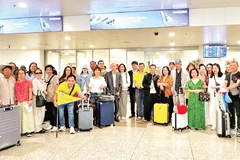
Latest figures from the National Statistics Office show Vietnam welcomed more than 2.2 million international visitors in February, marking the third straight month that arrivals exceeded the 2-million threshold. This follows 2.45 million in January and 2.02 million in December last year. Overall, nearly 4.7 million foreign visitors arrived in the first two months of the year, up 18.1% year-on-year.
However, February arrivals declined by more than 9% compared with January. Assoc. Prof. Dr Nguyen Quyet Thang of the Faculty of Tourism and Hospitality Management at Ho Chi Minh City University of Technology said the drop reflects seasonal trends. January typically coincides with peak winter travel demand and major holiday periods in several markets, while February often represents a post-peak adjustment phase.
He noted that strong year-on-year growth in the first two months still signals a positive recovery trajectory and continued expansion for Vietnam’s tourism sector.
Nevertheless, rising global operating costs, volatile fuel prices and geopolitical uncertainties are reshaping travel behaviour and putting pressure on the industry’s ability to meet its business targets this year.
Tran Tuong Huy, Deputy Director of the Institute for Social Tourism Research, said escalating tensions in the Middle East have driven up fuel prices, increasing operational costs for airlines and travel companies alike. Higher input costs have forced tour operators to adjust prices, potentially influencing travellers’ decisions or delaying travel plans. As the Middle East sits along key flight routes connecting Europe and Vietnam, instability in the region could directly affect inbound visitor flows, he added.
Dr Pham Huong Trang, lecturer in Tourism and Hospitality Management at RMIT Vietnam, said the slight decline in February arrivals should be viewed as an early warning sign the industry should not overlook. Competition among regional destinations is intensifying, with countries such as Thailand and Indonesia continuing to ease visa policies and strengthen promotional campaigns. Against this backdrop, Vietnam’s tourism sector must proactively adopt solutions to safeguard market share and achieve its target of welcoming 25 million international visitors this year.

Promoting Vietnam as a safe destination
Recent developments in the Middle East have already begun affecting long-haul travel markets. Vietluxtour, for instance, has postponed several European tour departures. According to company representative Tran Thi Bao Thu, travel firms are prioritising closer and more stable markets in the short term while boosting domestic tourism products to sustain demand among Vietnamese travellers.
In the longer term, airlines and travel companies need closer coordination to optimise transport solutions, including selecting suitable transit hubs to reduce costs and maintain two-way travel flows, she said.
Pham Anh Vu, Deputy General Director of Du Lich Viet, noted that long-haul markets such as Europe, the Middle East and the US primarily serve high-spending travellers who tend to plan trips well in advance, meaning short-term disruptions are unlikely to trigger immediate cancellations. If flight routes are affected, tour operators can adjust itineraries or switch airlines to maintain travel schedules. Tour prices may increase by about 1–3 million VND (38–114 USD) due to higher transport costs, but such adjustments are generally manageable for long-haul travellers, he added.
A representative of BenThanh Tourist highlighted Vietnam’s competitive advantages, including a safe tourism environment, reasonable costs and an expanding international flight network, particularly with Northeast Asian markets, factors expected to support continued growth in international arrivals.
To sustain long-term growth, Nguyen Quyet Thang stressed the importance of diversifying source markets and reducing dependence on traditional ones. The domestic market, with nearly 100 million people, remains a critical foundation for maintaining stable visitor flows amid global uncertainties. Over time, Vietnam’s tourism structure should achieve a more balanced mix between nearby markets and high-spending long-haul destinations.
Only through market diversification and improved product quality can Vietnam’s tourism industry maintain sustainable growth and minimise risks from global travel disruptions, he said.
Trang added that a diversified market structure is essential to industry resilience during periods of instability. Vietnam’s domestic tourism market has evolved significantly since 2020–2021, with travellers taking more frequent trips, spending more and demanding higher-quality experiences. Rather than serving as a temporary fallback, the domestic market should now be positioned as a strategic pillar alongside international tourism, she emphasised./.